
On The Other Hand -
Book Reviews
Lifestyle, Cigars & More
Musings
About
On The Other Hand -
  • Book Reviews
  • Lifestyle, Cigars & More
  • Musings
  • About
Book Reviews

The Iron Flood by A. Serafimovich

December 6, 2023 by Barry J. Klazura No Comments

The author (1863-19490) was born on the Don and his father was paymaster in a Cossack regiment of the Czar.  In University (St. Petersburg), he was a close associate of Lenin’s brother who was executed for his part in the attempt to kill Czar Alexander III in 1887.  Shortly after this, the author was expelled from the University for a proclamation concerning the Czar.  Exiled, he graduated from a second, “Marxist University” while in the far north.  He then continued to write and be involved in revolutionary activities; this book was written in 1921-23.

Although a short book, it is considered a classic of early Soviet literature and was required reading by students until the fall of the Soviet Union.  It is a typical novel of the time, reflecting “Soviet heroic realism” as it tells the story of, in 1918, the march of thousands of Red soldiers with their families across the Caucasian mountains.  Poorly equipped, often barefoot and hungry, they overcome every obstacle in their march, fighting through various White detachments until they reach their own lines.  Initially they are poorly organized, but under the leadership of a steely leader (who naturally rises from their own ranks), they find increasing cohesion and they strike fear into the hearts of their enemies.

I would recommend this little book for anyone interested in seeking to find how the Soviets viewed themselves and of course, their enemies.  The Soviets are simple, salt of the earth individuals who band together to defeat the shallow, cowardly oppressors.  One reads the book and tends to roll one’s eyes, but it reflects the times and the need for heroics in a time of defeat, starvation and lack of order. 

Share:
Reading time: 1 min
Book Reviews

Life and Fate by Vasily Grossman

November 22, 2023 by Barry J. Klazura No Comments

 When the manuscript for this book was first reviewed by the Soviet censor, he told Grossman that the book could be published, in about two hundred years.  Grossman, a Jew who reported on the Great Patriotic War directly from the front lines while in Stalingrad, at the battle of Kursk and all the way through to the battle of Berlin, was rapidly falling out of favor with his Soviet masters.  His book broke so many Soviet taboos; it did not portray the soldiers with Stalin’s name on their lips as they fought, he specifically mentioned the murder of Jews by the German invaders (officially, the Jews were not to be singled out as special victims of the war), a Soviet scientist is self-centered and has a huge ego, etc..  Other writers, such as Babel (executed in 1949) and Ehrenburg (who worked on the Black Book with Grossman) felt the sting of Stalin’s wrath but fortunately for Grossman, Stalin died before the final reckoning.

The novel traces the usual myriad of Russian characters through their lives during World War II.  They like millions of others are caught in the struggle between two totalitarian states who have little if any regard for the “average” man.  Unlike War and Peace, there are not dramatic battle scenes (surprising since Grossman did spend so much time at the front), and in the first reading I could not grasp the general direction of the story.  Except for the egotistical scientist, many of the characters seem to move along in a rather haphazard manner. I would suggest that one keep a pad of paper handy to make notes as there are many individual characters and the names can be confusing.

I certainly do not pretend to be an expert of Russian literature, but I have found these “great” Russian novels to be overly long and missing a clear-cut story (with the exception of the three-book trilogy by Anatoli Rybakov).  Is it indictive of the Russian or Soviet mind set where subterfuge was a means of survival or is it merely a great desire to write another War and Peace? Or, perhaps it is just to my American mind set that I seek writing that is more direct and to the point. I must admit however, that I did find this novel more direct than other Russian novels, such as Solzhenitsyn’s March 1917. 
 

Share:
Reading time: 1 min
Book Reviews

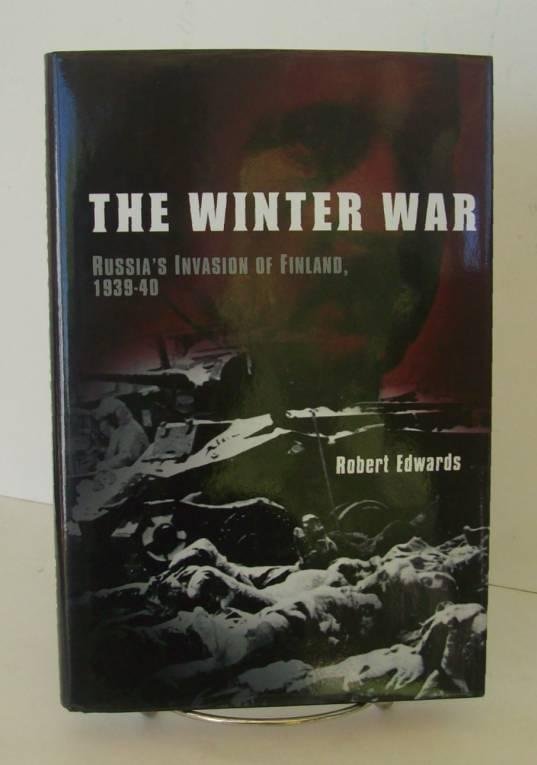
The Winter War: Russia’s Invasion of Finland, 1939-40 by Robert Edwards

November 16, 2023 by Barry J. Klazura No Comments

For 105 days, the small and ill-equipped Finnish army held off the full might of the Soviet Union.  Outnumbered in men, tanks, artillery and aircraft, the Finns were able to cut off, surround and literally slaughter several Soviet offensive thrusts in the northern part of their country.  Striking silently on their skis, the Soviets who were confined to the few roads had little opportunity to bring their superior firepower to bear.  In the end, entire columns of Soviets along with their trucks and tanks, were found literally frozen to death.  With each new defeat however, new masses of men and materials were thrown into the fight.

It was an amazing fight for a country that had gained its own freedom from the Czar only some twenty years before, especially as the nation had fought a civil war between the Whites and the Reds which left the nation divided.  Suddenly, the nation had to fully unite or simply be overrun.  Fortunately, they found a strong if controversial leader in Baron Carl Gustav Mannerheim.  Mannerheim had been instrumental in defeating the Finnish red forces but was an experienced soldier.  He wisely used his forces and was able to switch his forces to key points to blunt the Soviet attacks.

For the most part, Finland fought alone.  Volunteers were being raised in Sweden and Norway, despite the potential problems Sweden could have with the Soviet Union.  France made moves to put together a professional force to help and funds were raised in the U.K., but in the end, there was little real help, especially considering that only a couple of previous months, the Germans had invaded Poland and the Baltic states were swallowed by the Soviet Union. 

Numbers finally told as the Soviets concentrated their forces in the Southern part of Finland were the ports and roads were more friendly to the Soviets level of expertise.  Although the exact numbers will never be known, it appears that the Soviets lost some 400,000 killed, wounded, and permanently crippled, while Finnish losses were around 70,000.

With the end of the war, the Finns had to give up certain territories which Stalin felt was key to the protection of Leningrad as well as some ports and fortifications.  When the Germans invaded the Soviet Union in June 1941, the Finns joined the Germans but only advanced as far as their old borders.

The war showed Stalin that his military suffered poor logistics, tactics, misapplication of force and a ruined officer corps.  Of course, Stalin was the one who ruined his office corps with his purges of the military (some 40,000 officers were killed, arrested, or put into camps).  Stalin quickly tried to reorganize his army and even release numerous officers from the camps.  Those officers were more forward thinking that Stalin’s clique and many were key in successful actions later against the Germans.

Can one draw a parallel between that war and Putin’s current problems in the Ukraine?  One of the largest differences is the terrible corruption which exists in Putin’s time as opposed to Stalin’s army.  Stalin’s army was not as corrupt, it merely suffered from the paranoia of its commander, Stalin, and the commissar system of command.  Another difference is that Finland never received the level of support from other nations.  In many cases, the only way for the Finns to survive was to turn around captured Soviet tanks and artillery as opposed to the billions of dollars which has been showered on the Ukraine (although at a pace that negates some of its usefulness). In the end, it is a story as old as man; beware they who have that lean and hungry look.

Share:
Reading time: 3 min
Book Reviews

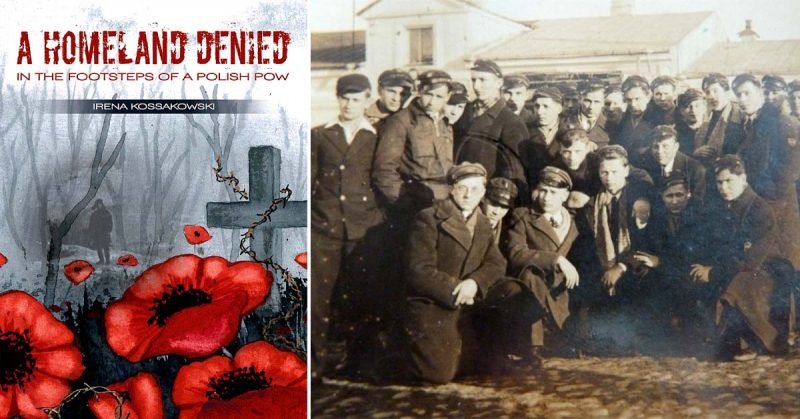
A Homeland Denied by Irena Kossakowski

November 8, 2023 by Barry J. Klazura No Comments

As we are growing up, we have a tendency to either ignore or tune out the stories and experiences of our parents.  We think their ideas are so old fashioned, or that their experiences do not impact on our lives, little realizing that their stories and memories are in reality subtle learning tools for us to lead better lives.  Later, when they are old and we have families and real lives of our own, we sometimes ask them about some memory or story they mentioned years ago, but with failing memories or sadness caused by those stories, they may be reluctant to dredge them up.  We then are sad and realize that experiences in their lives will be lost forever and that someday, we shall be like them, trying to remember the good and trying to keep their sorrows and mistakes buried.

This book was written by a woman whose father (Waclaw=Walter) was 19 when Poland was invaded by the Nazis and Communists.  Barely two weeks into cadet school, he was captured by the Soviets and like 3,000,000 other Poles, was shipped off to a gulag camp in Siberia.  Along the way, tens of thousands died from malnutrition, disease, beatings or simply giving up.  But he was lucky, for unlike tens of thousands of Polish officers, he was executed in the forests of Katyn, hands tied by a bullet to the back of the head and thrown into mass graves (over 10,000 were executed by two executioners!).

When Germany invaded the Soviet Union, the Soviets offered to release some of the Poles so they could fight for Stalin against the invaders.  Another young man, standing next to Irena’s father, after surviving years of cold, hard labor and beatings said that he would not fight for Stalin and was immediately executed with a shot to the head, splattering brains and blood on everyone around.

Finding his way to Iran over several months (no money or food was provided to the men on their journey), he was nursed back to health by the British army and enlisted in the Polish Corps which was to fight in Italy.  He fought in the battles at Monte Cassino, Ancona and Bologna and at the wars end managed to emigrate to England as going back to Poland would have been a sure way to be executed as a spy.

He was not able until about 1966, and still at risk, to go back to Poland for a visit, to see his mother (his father had died), the girl he had dreamed of throughout the war, to see the farm on which he had grown up on, etc.  All the while, despite the continued nightmares of the gulag experiences, he never really spoke of his earlier life and it was only when Irena was a grown woman did you begin to gradually pull the story of his life from him, bit by bit.

This little book is a sobering look at the mostly unknown brutality that millions endured at the hands of the Soviet Union as they attempted to destroy the will of a nation instill a system of government in which the individuals only purpose was to serve the all powerful state.  The idealism of the early 1920’s had been long crushed by the slaughter of the kulaks, the collectivization of the farms and the bloody purges of the Party and military.  Poland, like the other countries of Eastern Europe were given to the Soviets by Churchill and Roosevelt (one did it from practicality, one from personal indifference).

If nothing else, after reading this book, you may sit down with your parents and gently listen to some of the stories and lessons their offered when they went in one ear and out the other during your youth.

Share:
Reading time: 3 min
Book Reviews

Stalinism as a Way of Life by Lewis Siegelbaum and Andrei Sololov

August 19, 2023 by Barry J. Klazura No Comments

After the fall of the Soviet Union, many archives were temporarily opened, and historians and researchers were given access to files which had been locked away for decades.  The authors chose to focus on the average Soviet citizen and how they dealt with the system that was evolving as the country and economy was undergoing huge changes.  How would an almost illiterate peasant react to the collectivization of his farm?  To whom would he write and what would he request?  Or, a young girl whose father, divorced from her mother, was arrested as an enemy of the people and thus she was not allowed to enter the University and pursue her goal of becoming a doctor.  Who could help her or even attempt to make her understand her great genetic sin as passed to her through her father?  With over 157 documents, we reach back in time to feel the pain, the anguish, the confusion and in some cases, the hopes of people lost in the dustbin of history.

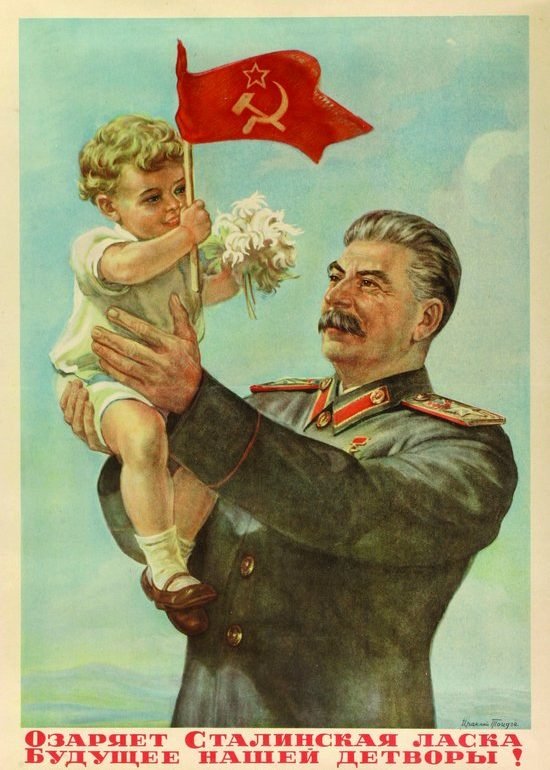
Many of the letters were written to Stalin himself.  Why not?  Stalin was portrayed as the “best friend of all children”, as being “wise and just”, “farsighted” and the best of “Leninists”.  He was concerned about the people, for hadn’t he written his famous article, “Dizzy with Success” that temporarily halted some of the worse aspects of collectivization?  He wrote it as soon as he heard that some had gone beyond sound judgement and he wanted to correct the wrongs done.  So, individuals wrote to Stalin, because if Stalin knew of that individuals’ problems, they were sure he would correct the error.  When nothing was done, it was because those around Stalin kept the truth from him and of course, the proof was in the confessions during the show trials of those closest to him.  The letters were received by the Kremlin, or the local administrator and filed for safe keeping in case the writer was ever accused of anti-Soviet behavior.

There where also those who wrote to praise the hard work of the local Soviets, but they were mostly the letters of the young who had been raised within the system that was systemically murdering millions of its own citizens.  For the youth believed in the opportunity before them and only asked for more opportunity to prove they were worthy of the great Revolution.

In many ways, this is a sad book, filled with the hopes, dreams and questions of individuals who could not and did not understand the system they inhabited.  So much was so illogical, so set against the known norms of Western man, that there had to be an answer somewhere, some beam of knowledge that could come to the writers to help them cope with their lives and dreams.  But the letters only gathered dust as the individuals would have gradually lost hope and accepted their broken dreams and lives.

Share:
Reading time: 2 min
Book Reviews

A Sniper on the Eastern Front: The Memoirs of Sepp Allerberger by Albrecht Wacker

April 29, 2023 by Barry J. Klazura No Comments

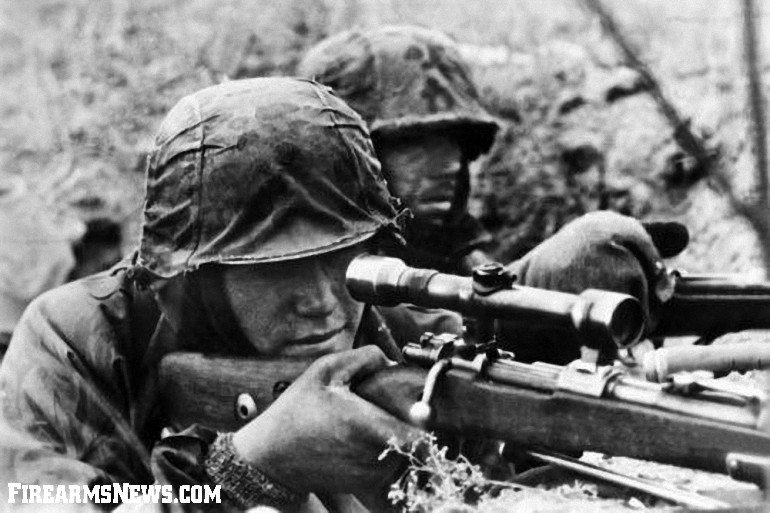
From July 1942 until the end of the war, Sepp Allerberger was a sniper fighting against the Soviet Union.  During that time, his official tally of 257 confirmed kills, made him the second most deadly sniper in the German Army (the record of 345 kills was held by Mathias Hetzenauer).  It is important to note that a sniper “kill” had to meet certain requirements, such as it had to be done during an actual sniper assignment (ordinary defensive or offensive kills are not counted) and must be confirmed by either an officer or an NCO.  Allerberger states only that his individual kills, taking unconfirmed sniper kills was much higher. 

Allerberger did not come from a military family; his home was a small village on the Austrian side of the Bavarian Alps near Salzburg.  He was drafted at the age of eighteen and trained as a machine gunner.  After his first battle, he realized that he was a marked man for machine gunners were prime targets of the enemy.  He decided to try for a safer job and accidently found out that he was an excellent shot.  As the German Army was behind the Soviet in the development and training of snipers, it was a “learn as you go” decision.  He quickly learned the trade and was highly valued at the front where many assignments were to kill his Soviet counterpart who was causing losses in his vicinity.  Sniper to sniper battles pit individual skill, patience, and determination at the personal level and yet Allerberger does not exhibit any emotion other than pride for his victories.

As noted, all kills had to be confirmed and that could be a problem as many in the German Army felt that being a sniper was a “dirty” job.  Hiding, sneaking up on the enemy, killing when ever possible, including when a soldier is going to the bathroom carried a bad odor.  This view extended to the artillery officers who somehow believed throwing a high explosive shell miles at an unseen and unsuspecting enemy was more “honest”.  For the infantry, enemy snipers were hated thought to fight dirty, but their own snipers were well liked and protected.  War has its own value system.

Given that many snipers were killed after 15-20 shots, his score is amazing.  He seemed to lead a charmed life, receiving no major wounds, and suffered only minor scratches.  His detailed descriptions of many encounters are excellent, and one clearly see the barbarity of warfare on the Eastern Front. 

His story brings to light the mentality of an army in retreat. Months of constant retreat and serious losses in manpower and equipment left the average soldier demoralized, dirty, hungry and constantly looking over their shoulders at the Russians who seemed to have unlimited resources. During the retreats, seriously wounded men were left behind even though everyone knew that the oncoming Russians would at best, quickly kill them or more likely, torture them before killing them. One has to remember that the Russians were not only out for victory, but also for revenge for the deeds of the Germans on their homes and loved ones. It was a war with little or more mercy. Often, the Russians had more to fear from their own officers who subjected them to beatings, penal battalions and early on in the war, cases of cannibalism.

This is only the third book I have read by a veteran which reflects a certain mindset.  Ernst Junger’s Storm of Steel is one example, another is by an American, James Megellas’s All the Way to Berlin. Reading their stories, one sees an individual who calmly picks up a weapon, kills will great proficiency and then afterwards, go on to lead a normal life. They offer a fascinating view of war by very uncommon men.

Share:
Reading time: 3 min
Book Reviews

The House of the Dead; Siberian Exile Under the Tsars by Daniel Beer

April 21, 2023 by Barry J. Klazura No Comments

Siberia after it was conquered by the Russian Empire, was consider a land of huge wealth, from the priceless furs (a single Ermine pelt was enough to buy a good farm in Russia) to timber and gold, it was also known as the world’s largest prison without a roof.  A land where landless free peasants to go to in order to escape the tyranny of the Tsars and to build a new life, it also served as a great dumping ground for all manner of criminals, both political and non-political (one could be sent to Siberia for life long exile for being a vagrant).  As the population of Russia grew, and the central government could not provide the services for the population, Siberia became a way for lazy local officials to get rid of those they considered problematic.

The journey to Siberia until the advent of the Trans-Siberian railway was most on foot.  Imagine walking, 6 days out of 7, week in, week out, in the Siberian summer and winter for one to two years just to reach your place of exile.  And, your term of punishment did not begin until you completed that journey.  During that journey you were, unless supported by your family who could provide you funds, at the mercy and budget of the prison system which provided a minimum of food and clothing both during the trek and at your place of exile.  The system was so terrible, that some male prisoners would often write their wives telling them to sell everything and come to Siberia where the government was providing each prisoner with land, a cow, horse, house and funds.  In reality, nothing was provided and when the wife arrived with children in hand, their husbands would sell them all into prostitution in order to get enough money to live.

After the term of punishment was completed, as the theory went, the ex-prisoners who had been taught discipline and hard work, would stay in Siberia and begin new farms which would colonize the vast land.  In reality, the prisoners had been so brutalized by the guards, other prisoners and hard labor, that they turned to the only things they had really learned in exile; stealing, forgery, murder, etc.  The large numbers of former prisoners would often wander in bands, laying siege to individual farms and even smaller villages and towns.

Continue reading
Share:
Reading time: 3 min
Book Reviews

Former People, the Final Days of the Russian Aristocracy by Douglas Smith

March 13, 2023 by Barry J. Klazura No Comments

This is a book of survival, of innocence, foolishness and bravery as a class of people finds itself suddenly outcasts from those that they had exploited for hundreds of years.  In the chaos of the Russian revolution, even before the seizure of power by Lenin, the very ground beneath a once powerful class was shifting and no one had any idea what the outcome of those movements would be.

For powerful aristocratic families (some who had owned up to 500,000 serfs) and for the poorest of the aristocrats, their world with it’s table of titles and addresses, it’s position above the law and its belief in the Czar would all be lost, almost without a whimper.   They would suddenly find themselves thrown out of their houses and palaces, their valuables seized by the State and thrown onto resources that most of them had never dreamed they possessed.  Despised as useless exploiters, they were often hunted down and shot or hung (if they were fortunate in their manner of death), while they tried to keep their families together often during a time when they were fleeing from town to town to stay ahead of the Red Terror.  Throw into this mix the chaos caused by the Russian Civil War and it is easy to see how literally hundreds of thousands of “aristocrats” (a term used for the highest to the poorest of the species) were destroyed. 

Some aristocrats decided to join the White armies, others believing that Russia needed to be purged, joined the Reds.  If they had joined the Reds, it was no ticket to survival for they were always viewed as a danger to the new Soviet state.  With the coming of the purges under Stalin, they were singled out after having led quiet lives for years, often in the service of the State; suddenly once again they were denounced and hunted, shipped to Siberia or executed.   Even their children were targeted as the stain of the exploiters was believed to be passed on from mother and father to son and daughter.

In the end, ancient families who had served the Czarist state for better or worse were exterminated.  Some were fortunate to flee to the West, ending up often as door men or waiters in the exile’s haunts. Even there, in France and other countries they could be murdered to sooth the paranoid images of the rulers in Moscow.

One reads this book and may question why the hatred of that class was so strong; everything they possessed or stood for was either destroyed or mocked and held up as an example of that classes uselessness.  We must remember that for hundreds of years the aristocrats had exploited millions, bought and sold them like so many lumps of coat while living a life of unimagined luxury.  Some aristocrats tried and did contribute to society, but they were a small handful against a tide of greed and cruelty.  And so, they died, hunted and hated and because of their past sins, and millions more would have to pay a price as a bold new world was created which was more corrupt and crueler than what they had destroyed. 

Share:
Reading time: 2 min
Book Reviews

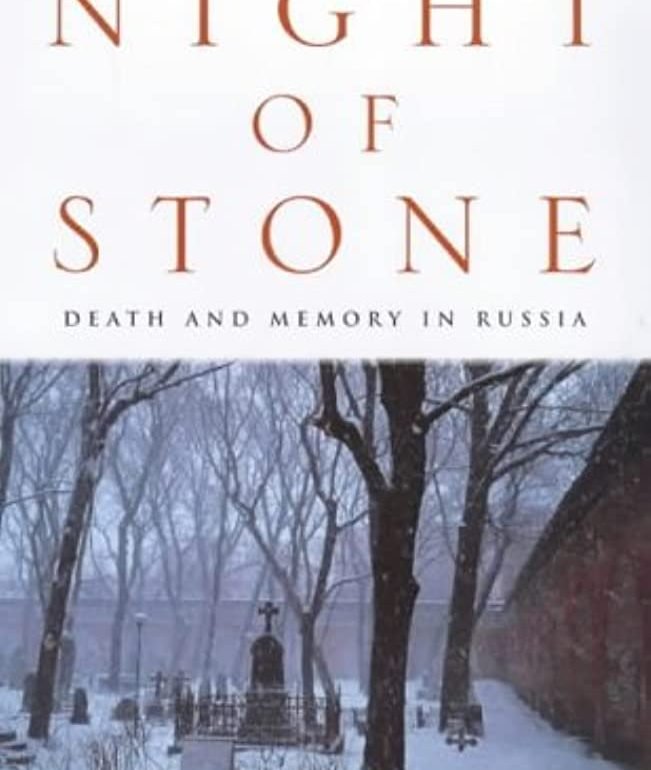
Night of Stone; Death and Memory in Twentieth-Century Russia by Catherine Merridale

March 6, 2023 by Barry J. Klazura No Comments

During the twentieth-century, Russia has suffered through two World Wars, a civil war, and numerous famines (both natural and manmade).  The result was a population that suffered upwards of 70-100,000,000 million dead.  This on top of a long history filled with carnage, tyranny and cruelty.  The dead when they could be buried faced a bureaucracy which required numerous forms, not enough cemeteries (in the cities) and waiting times that could often lead to the literal rotting of the dead.  During the siege of Leningrad, the dead were warehoused during the winter as the ground was too frozen to dig and their grave diggers were all dead. Now, in the midst of another war, many of the dead, the Russian soldiers are not buried, they are merely cremated in an effort to hide the true casualities.

How does death on such a scale affect the mind of the average Russian?  Illnesses such as PTSD were denied in the Soviet Union (and later) as a capitalist plot and the average Russian was deemed “too tough” to fall for such capitalist tricks.

The author spent years roaming Russia talking with survivors of the purging of kulaks, victims of the forced collectivization and its famine, survivors of the German invasion, of the purges by Stalin, etc.  How did they cope with seeing starved bodies piled up in the streets, or watch everyone in their village slowly die of starvation? How were they able to lead seemingly “normal” lives and how were they able to keep buried their emotions. What impact does that have on the development of the survivors, their children and the society?

What comes out of the book are stories of great human strength, of tragedy and the realization that the average Russian who lived through those terrible times and experienced the strange world of Communism had a very different mindset so they could survive.  Memories passed on as history die hard and the question that remains is how long will it take for the average Russian to move beyond those memories, that history to a world where they truly believe they have some control over their own destinies. Unfortunately, they appear to being no closer to “normalcy” under the current regime, one in which censorship and strict guidelines for behavior are not that far from those under the old Soviet system.

Share:
Reading time: 1 min
Book Reviews

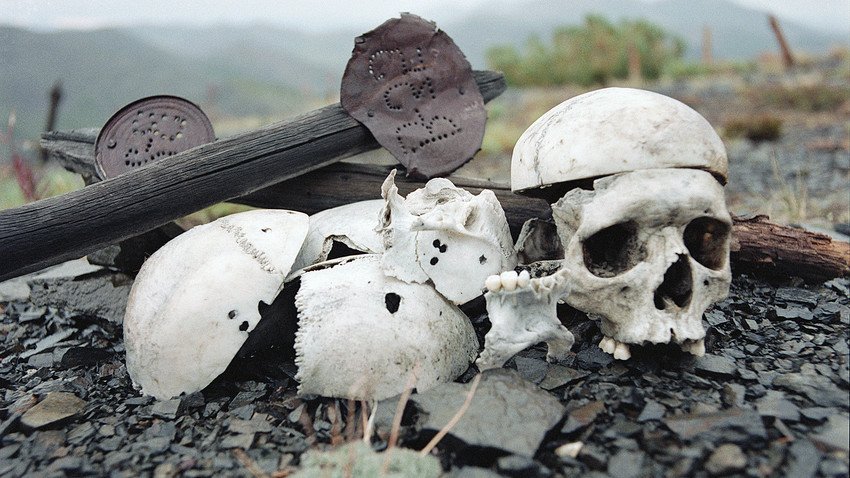
Kolyma, the Artic Death Camps by Robert Conquest

December 9, 2022 by Barry J. Klazura No Comments

The Magadan area of Siberia is known for its harsh climate, where the weather is sub-zero for up to six months a year.  Now picture that you are in that climate, working in a lead or gold mine (which tend to kill its workers in about six months) in a thin cotton jacket and wooden clogs.  You want to get a better job, but you have nothing to trade to the criminals who run the camp with the approval of the military guards.  Your diet consists of a cup of hot water for breakfast, perhaps a slice of bread for lunch and if you make it back to the barracks in time, a cup of hot water with perhaps a fish head or a bit of turnip.  Then after lights out, you wait for the criminals to rob you of your blanket or gang rape your bunk mate.  If you do manage to get out of the mines, you get a better job such as cutting trees for 12 hours a day.  You do not know what has happened to your family (as you are held without the right of correspondence) and you realize that that routine will go on for the length of your sentence, which is probably fifteen to twenty years.

When you do come out of the camp, you may not receive a permit to return to the town where your family lived and there are few ways to contact them.  In fact, everyone who encounters you shuns you as being seen with a former “political” may be reason enough for them to be arrested.  There is a good chance that your children were put in State orphanages and had their names changed so there is little possibility of ever finding them.  In fact, you have only a small chance of ever leading a “normal” life.

This then was the story of this early work by one of the premier historians on the Soviet Union.  Conquest lays out a story of brutality that is an important part of the Gulag system of the Soviet Union.  And, as terrible as the above description is of life in the camps, it was worse for the women who were sentenced to the Gulag.  From mass rape on the transportation to the camps, to forced lesbian relationships in order to gain a bit more to eat, women were the lowest of the low in the system.

It is often said that the camps were not the fault of the ideology, but rather the fault of the leaders.  But what type of system would allow the leaders to develop a system staffed by hundreds of thousands of brutal individuals who could live and work in a system like the Gulags.  What type of system would allow to be created a system of laws and regulations where people are arrested and convicted based on nothing more than a quota for arrests and, in some cases, being picked out at random from a telephone book.

Each time I read something on the Gulag system, I thank my lucky stars for the life I lead, in the country where I live which is a true anomaly in the history of mankind.   There but for the grace of God, or the decision of my grandparents could have gone I.

Share:
Reading time: 2 min
Page 2 of 6«1234»...Last »

Barry J. Klazura

Barry Klazura sipping grappa

With a Masters Degree in Guerrilla Warfare and Totalitarianism, Mr. Klazura was well prepped for a career in Sales and General Management, consulting on corporate startups and turnarounds as well as lecturing on history and politics.  For the past twenty years he has focused on being a financial advisor and consulting.

Delivered To Your Inbox

Sign up to get an email when a new article is published.

Topics

  • American Civil War
  • Biography
  • Book Reviews
  • Cigar Reviews
  • Coronavirus
  • Current Affairs
  • Education
  • Environment
  • Factoids
  • Government
  • Lifestyle, Cigars & More
  • Liquid Refreshments
  • Musings
  • Quips and Historical Facts
  • Society
  • Travel
  • Uncategorized
  • World War I

Subjects

book Books-Russia/Soviet Union Books 21st Century Books 1919-2000 Books Ancient to 1900 Books Asia Books Biography Books Fiction Books Germany 1919-1945 Books Pre-WWI books Viet Nam books world war I Books WW1 Books WWI Books WWII Cigar Friendly Location Amsterdam Cigar Friendly Locations-London Cigar Friendly Locations-New Orleans Cigar Friendly Locations-New York Civil War Coronavirus Environment Korean War World War I World War One

Recent Articles

At Stalin’s Side by Valentin Berezhkov

July 15, 2026
The Price of Victory by N.A.M. Rodger

The Price of Victory by N.A.M. Rodger

June 26, 2026
Frontsoldaten: The German Soldier in World War II by Stephen G. Fritz

Frontsoldaten: The German Soldier in World War II by Stephen G. Fritz

June 5, 2026
Organizer of Victory, 1943-1945, George C. Marshall by Forrest C. Pogue

Organizer of Victory, 1943-1945, George C. Marshall by Forrest C. Pogue

May 26, 2026
Illegals Released & Our Leaders

Illegals Released & Our Leaders

May 10, 2026

Inquiries and Comments

For general inquiries and comments, email AOTOHcomments@gmail.com.

Facebook
© 2020 And On The Other Hand. All rights reserved.