
On The Other Hand -
Book Reviews
Lifestyle, Cigars & More
Musings
About
On The Other Hand -
  • Book Reviews
  • Lifestyle, Cigars & More
  • Musings
  • About
Book Reviews

Nazi Billionaires: The Dark History of Germany’s Weathiest Dynasties by David De Jong

June 12, 2024 by Barry J. Klazura No Comments

Who were the financiers who provided the manufacturing and technical expertise which allowing Hitler and the Nazis to overrun so much of Europe and commit the Holocaust?  And, after the war, what actions if any were taken against them not only for their material support of Hitler, but also for the use of slave labor on a scale not seen since the Roman Empire?

Mr. De Jong spent four years researching this book focusing on four major German families; the Quandts, the Flicks, the von Fincks and the Porsche-Piechs.  How is it that the Krupps are so well known and yet these families contributed in so many ways to the Nazi war machine, producing tanks, guns of every caliber, ammunition, drugs, medicines and almost every other item that a nation needs for war.

Some of the named above were successful industrialists before Hitler’s rise to power, such as the Quandts while other took advantage of the “Aryanization” of Jewish businesses.  “Aryanization” was the concept that with the introduction of the Nuremberg Laws, Jews were forbidden to own factories and businesses.  In order to comply with the law, Jewish businesses were “bought out” by Germans for pennies on the dollar and then those few pennies were determined to be the cost of an exit visa from Germany as many of the Jews fled to other countries. Such theft was in itself a crime that these and other families committed but add to the list the inhuman treatment of the slave laborers and the wheels of justice should have centered on these families.  Why weren’t these families the targets of justice?

Continue reading
Share:
Reading time: 4 min
Book Reviews

Poland 1939 by Roger Moorhouse

May 12, 2024 by Barry J. Klazura No Comments

Through the mists of time, the campaign against Poland in September 1939 has seemed to have almost disappeared.  Memoirs and campaign histories of other actions of World War II have stuffed libraries around the world to overflowing and even today new volumes are produced which seldom contribute something new to our understanding of these events.  Aside from an occasional article in a history magazine, about the most complete history of the campaign that I found was by Major Robert M. Kennedy as published by the Department of the U.S. Army (1956).  Roger Moorhouse’s new book promised to bring some new facts to bare, especially around personal narrative from the Polish defenders.  To some extent, this has been achieved.

I say to some extent as there are some actions where the thoughts and activities of the defenders are noted, but not as many as I personally would have enjoyed.  The strength of this book is in putting the lead up to the war in good context, especially in the alliance between the U.K., France, and Poland.  To be brutally truthful, Poland was betrayed by its allies, who promised aid and an offensive against the Germans but had no intention or desire; instead the “allies” of Poland were depending on bluff to stop the Germans. Just two days before the invasion, when the German army was deployed on three sides of Poland, the French Minister of War assured his Polish counter parts that France was fully committed to invading Germany with the full might of its military if war were to begin.  Of course, the French “offensive” thrust a few kilometers into Germany and then quickly pulled back, while the British did not begin a bombing offensive as “private property” might be damaged.

The Polish defense of Westerplatte is covered well, but other actions such as those on the Hel peninsula and at the fortress of Modlin are barely touched.  The famous cavalry actions of Poland’s Uhlans are put into proper perspective and the Soviet invasion of Eastern Poland are also covered adequately.  Other weaknesses include not discussing the escaped of over 100,000 Polish troops through Romania and their contribution to the allied victory (as well as their betrayal in England where they were not allowed to participate in the victory parade for fear of offending Stalin and the domestic Labor Party), and a summation of German losses during the campaign.  It is known that the war costs the Germans over fifty-thousand casualties and approximately twenty percent of their tanks.

From the very start of the war, the Germans embarked on a reign of terror, executing both Polish “intellectuals” including policemen, lawyers, doctors, priests, and teachers.  In the beginning theses individuals were primarily Polish but Jews were also targeted.  The key was to break the will of the Poles to resist, the view being that the Jews had no where to go and could be handled on a larger scale in time.

In the end, the nation which was the first to stand up to Nazi Germany and who stood by the Allies in spite of bad faith, was a loser in the Second World War. There were no victory parades, no awarding of honors but there was forty-four years more years of terror under the rule of Communism. Perhaps that is why Poland realizes the danger of Russia so much more clearly than the Western Europeans.  

This work is a good introduction to the campaign and basic reference book for anyone who wishes to understand the importance of the politics on both sides and a bird’s eye view of the battles. Moorhouse follows in the footsteps of his mentor, Norman Davies so we should see additional fine histories in the future.

Share:
Reading time: 3 min
Book Reviews

Engines of War by Christian Wolmar

February 18, 2024 by Barry J. Klazura No Comments

The logistics of war is a science often neglected.  A prime example of this was when Japan attacked the US, their soldiers went to war with 2 pounds of logistical support (supplies, shipping, etc.) while the US soldier had 4000 pounds to support him.  The result was a forgone conclusion and not even Japan’s best-case scenario (a negotiated truce where they could keep some of their gains) was possible.

     The advent of trains added new dimensions to war; suddenly campaigns could be supplied further from the homeland and war did not have to take a break during the winter when traditionally armies were broken up and dispersed widely in order to not totally plunder the land.  More men, more supplies could be moved to threatened points of conflict and the result was longer, bloodier wars.

     This book is a bit of a disappointment in that it does not fully portray the full scope of the impact of railroads.  There is an interesting discussion of A.J.P. Taylor’s thesis that railroad tables led to wars, but it is counter balanced by the strategic goals (in this case of Russia and France against Germany).  Other volumes have pointed out the huge logistical undertaking of war; while it is interesting to try to grasp that 11,000 trains were re-directed in a campaign, that number does not tell you of the freight involved.  How many meals, guns, coats, boots, etc. were moved and delivered to the right units at the right time?  Or, there is no real discussion of how the lack to railroads going in the right direction led to French armies being beaten during mobilization by the more strategically designed Prussian railway system.

     This is a good book for the novice, for someone who wants to get a very basic grasp of the impact of railways on war, but it will lead one to look for follow up volumes on the subject.

Share:
Reading time: 1 min
Book Reviews

The Good Old Days; the Holocaust as Seen by Its Perpetrators and Bystanders: Drnet Klee, Willi Dressen and Volker Riess, editors

February 5, 2024 by Barry J. Klazura No Comments

Hannah Arendt, the noted political theorist and philosopher was on the receiving end of her fellow Jewish intellectual’s fury when she coined the phrase,” banality of evil” to describe Adolf Eichman. The question was asked, “How could she use such a phrase to describe those who had been responsible for the murder of six-million Jews? Surely those men were monsters, outside the norm of humanity.”  Yet she did not make that statement in a vacuum, but rather after covering the trial of Adolf Eichmann for The New Yorker magazine. Friends and compatriots turned on her as she even dared to suggest that some Jews made the work of the Nazi’s easier by co-operating with the Nazis.

In The Good Old Days, we investigate the letters home, photo albus, confidential reports and diaries of those involved in mass murders. The title is drawn from a caption in a photo album belonging to the last commander of Treblinka. During its operation, it was visited by a professor of medicine who “was appalled” by what he saw, yet in his diary he notes the excellent food and “first-rate vanilla ice cream.”  This was only one of many references from the letters and diaries of others including ordinary policy battalions (there were about one hundred fifty such battalions). The police battalions contained ordinary police officers which were formed to “police” the rear areas of Eastern Front. Shipped to the East with no special training, they were  instructed to proceed with the murder of mostly Jews in the occupied territories. On the site they were instructed as to the types and depth of the trenches where the victims were led, the order of execution, and so forth. As time went on, the men became more proficient and were able to conduct the executions much more quickly.

How did the men of the police battalions react to their commanding officers’ instructions for their first mass killing? Most of the men went along with and followed the instructions although the commanders made it truly clear that if any individual felt they could not comply, there would be no serious repercussions. A few, very few accepted the offer and were normally given kitchen duties or placed in charge of the latrines. Those few might be subject to comments from the rest of the battalion and a few of the dissenters would eventually relent and join their comrades in the killing.

Throughout the book, one is aware of the banality of the men. They complained about their sore feet, wrote home about “items” they picked up while doing their duty, noted especially tasty food, and longed for the day when they could return to their police duties back home. Some felt that they were doing a great service to mankind, but few would qualify as sadistic in the sense that they took pride in taking clean shots in order to minimize the suffering of the killed. At the same time, the drivers of the gas vans were responsible for cleaning the vans of blood, feces, hair, etc. and seemed to have seen it as another necessary if dirty job.

If one is looking for some special glimpse into the psyche of mass murderers, one will be disappointed by this book. In fact, it goes a long way to confirm Hannah Arendt’s phrase and observation. After the war, out of the one hundred and fifty battalions (up to 75,000 men), only a handful were convicted of war crimes. Most members when back to their old jobs, to their old towns and lived ordinary lives. Reunions were well attended and in their own way, celebrated the good old days.
Share:
Reading time: 3 min
Book Reviews

Churchill and Sea Power by Christopher M. Bell

January 28, 2024 by Barry J. Klazura No Comments

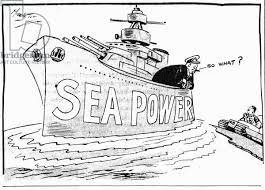
This is a well-balanced history of Churchill’s interaction with the British navy both as a Sea Lord, head of the Exchequer and war time leader.  Churchill had a real love affair with the Navy and was blamed for the disaster at the Dardanelles, the budget cuts after WWI, the fiasco in Norway as well as the loss of Force Z in the Pacific.  Yet despite these “errors”, he returned again and again to positions of power to lead his country during their darkest hours.  And, despite his love of Empire, he knew that the price for defeating Hitler would be the loss of Empire but he was willing to do what needed to be done (taking a back seat to the rising power of the United States and being humiliated by Roosevelt to Stalin) in order to attain his goals.

Each of the disasters attributed to Churchill are carefully examined and other historians’ arguments are discussed in trying to reach a meaningful conclusion.  For example, even though Churchill was looking for a different strategy from that of frontal attacks during WWI, he was initially against the Dardanelles attack but was brought around to supporting it and when he supported something, Churchill pulled out all the stops!  In the end, the timidity of the British Admirals and the poor choice of landing beaches caused in large part by poor intelligence lead to disaster and it was hung on Churchill.  Bell goes through each of the other scenarios and one comes away with a much more balanced picture of Churchill and his decision making process.

Was Churchill a genius or a meddling fool; these seem to be the two extremes offered by most historians.  In reality, he was a leader who did not shirk the responsibilities of his office and who had to make hard and difficult decisions which ran risks but had to be balanced against the enemies and limitations he faced.

A well written book not for the novice, but for the naval historian a very valuable addition to your library.

Share:
Reading time: 1 min
Book Reviews

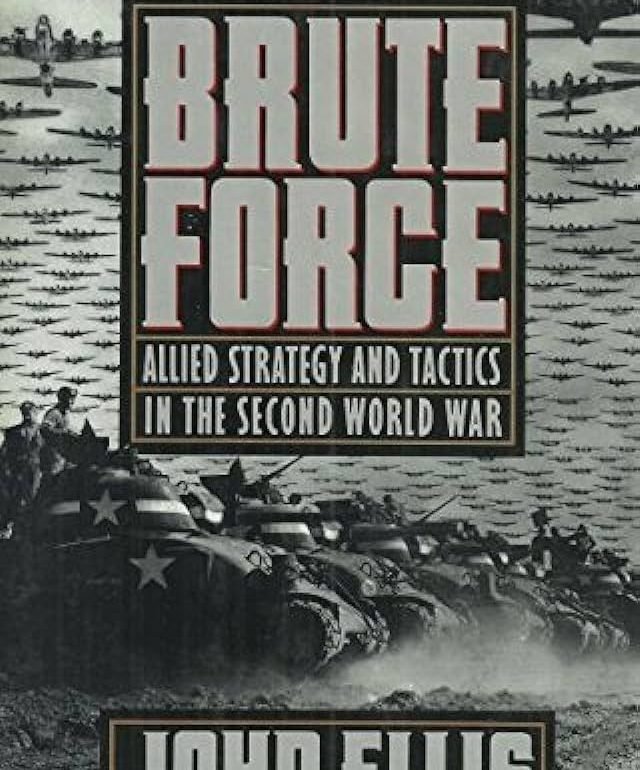
Brute Force: Allied Strategy and Tactics in the Second World War by John Ellis

December 28, 2023 by Barry J. Klazura 2 Comments

There is a scene in the movie “Patton” where he is standing as a mass of tanks, trucks and men roll past him toward battle.  As that might fleet of metal giants roll past, he says to himself, “God forgive me, but I love this”.  By this, he means the feeling of power, the sheer force of the military as it goes to meet the enemy.  But how did that mass of steel come to be?  How did all those men manage to be housed, trained, fed, clothed and armed.  This book tells part of the story; it is a story of the might of the United States, a country late to the war and how it mobilizes its resources to provide the materials for victory.

In a mass of charts, graphs and columns of numbers, as well as an excellent overview of campaigns from the steppes of the Soviet Union, to the Atlantic Ocean, to the vastness of the Pacific, Ellis overwhelms the reader with the productivity of the American system.  The materials which overwhelmed the Germans and Japanese did not spring from the earth overnight and the strategies which finally provided victory were not designed to end a world war quickly.  Unlike the Germans, where centralization and local power struggles stifled production, the U.S. managed to harness the individuality of the average American in a patriotic and profitable way to go to war.  The Germans thought they could win, the Japanese hoped for a stalemate, but the Americans knew they could win based on their individual contribution to the war. 

In the end, logistics won out.  While the average Japanese soldier or sailor went to war with four pounds of logistics to back him up, the American went to war with four thousand pounds of logistical support.  While Hitler laughed when FDR said the U.S. could produce 50,000 airplanes a year, in 1944 the U.S. produced over 91,000 aircraft. But it was not enough to produce those planes, not enough to produce nine times the trucks that the Germans could produce, not enough to produce two to 10 times as many tanks or artillery pieces as the enemy; no, you had to keep they maintained.  While the Japanese were able to put into the air 150 planes, the U.S. was able to put up over 1500.  The Japanese had a total throughout the war of some 35,000 flying personnel (not all pilots) while the U.S. by 1944 had graduate 226,000 pilots alone and nearly 1,000,000 mechanics for all the armed forces.  In the end, the Axis powers were swamped beneath a flood of men and material that they could not hope to match.

The one weak point of the book is that it does not explain how a nation which entered the war with an army about the same size as that of Belgium (the United States), was able to produce all those tanks, planes, ships, etc., when the lead time is normally eighteen months to switch production. This is especially true today with our leaders tell us that orders for munitions from our allies, such as Taiwan will take two to three years to fulfill. How is it that we do not have the ability to equal the effort of the Second World War? Has our manufacturing base been so degraded? Do we lack the techincal or financial expertise? If so, given the means available to those who oppose us, are we unable or unwilling to shift priorities to provide the protection to our homeland in these dire times?  That story, exciting is told in Freedoms Forge; it is the story of capitalists like Henry Ford, Henry Kaiser and Bill Knudsen.  Taken together these two books create the story of the might of the American system even during the time of the Great Depression.  If you are prepared to be astounded by the force of Ellis’ numbers, Brute Force is an outstanding read.  Even if you are not, it is inspiriting as it shows what is possible in a free society when there is strong and united leadership.

Share:
Reading time: 3 min
Book Reviews

What If?

November 20, 2023 by Barry J. Klazura No Comments

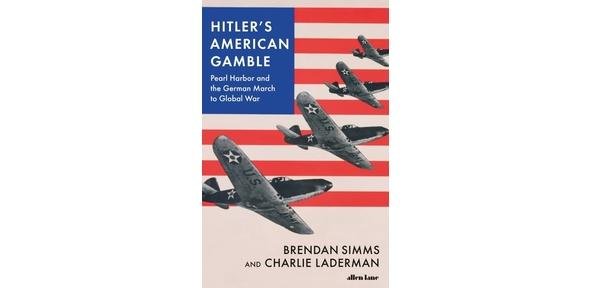
History is full of “what ifs”, “near things”, and “almost”.  In Hitler’s American Gamble by Brendan Simms and Charlie Laderman, the authors discuss the various scenarios had Hitler not declared war on the United States after the Japanese attack on Pearl Harbor.

What makes this book more interesting than one would expect is that the authors follow the fears, thoughts, actions and discussions of the Roosevelt, Hitler, Stalin, Mussolini, Churchill, and various Japanese officials on a day-to-day basis from December 7th until the German declaration of war on December 11th.  They point out that serious questions were raised during that four-day period and that contrary to popular history, it was an agonizing time for Churchill.  While he may have been buoyant to those around him, he had numerous concerns about the actions the Americans might take and how it would impact the British.

For four days, Axis, Soviet and British leaders held their breath and pondered the American course.  Concerns included:

  1. Would the U.S. begin to scale back Lend Lease support to the U.K. and the Soviets to rearm themselves against the Japanese?
  2. If they did, by how much and would that help the Germans at a time when the U.K. especially were just handing on in the Battle of the Atlantic, North Africa, etc.?
  3. As Roosevelt only called for a declaration of war against Japan, and with a seriously damaged U.S. navy, would support in the Battle of the Atlantic be scaled back?
  4. For the Japanese, their concern was whether Hitler would honor his pledge to declare war on the U.S. and thus force the U.S. to divert some of its immense industrial strength away from Japan and towards Germany.
  5. With the sinking of the British warships Repulse and Prince of Wales, not only Singapore but also Australia was in grave danger and the British were fearful of a Japanese thrust into the Indian Ocean towards India.
  6. Roosevelt believed Germany to be the greater threat but how to enter the war against Germany when most Americans were either isolationist or calling for revenge against Japan?
  7. Aware of the industrial might of the U.S., Hitler knew that sooner or later Germany and the U.S. would fight one another directly, so was it better to declare war now when Japan could divert some of the U.S. strength or stay out of the war and force Roosevelt to zero in on Japan?
  8. For the Soviets, who had a non-aggression pact with Japan, would the U.S. cut back on the munitions, supplies, trucks, food, etc., that was vital to keeping the Soviets in the war and would Japan break its pact with the Soviets and attack, creating a two-front war for Stalin?
  9. Churchill knew that without increased U.S. aid, he would have to cut back military aid to Stalin to stay in the battle with Germany.  If the U.S. did not declare war on Germany, the future for the Empire was bleak at best.

Fortunately for the world, on December 11th, Hitler honored his pact and declared war on the United States.  Now Churchill fully believed that the war was won as the U.S. was fully committed to a world war.  Hitler still believed that he had the time build from his European conquests the industrial might to counter the eventual direct struggle with the U.S. and that it was better to begin the fight now rather than wait until the fully industrial might of the U.S. could be brought to bare on Germany.  For Japan, who managed to seriously underestimate the potential might of the U.S., they believed that they could create the defensive zones and exploit the areas they had so easily conquered. And, for Stalin, he had proof that Japan would focus on the U.S. and the danger of a second front was avoided.

In some ways, this book reads like a novel in that the day-to-day questions, routines, discussions, etc. of various leaders takes the reader into the mindset of leaders on a day-to-day basis.  It is an excellent history both for someone who seeks to capture the days and for more advanced amateur historians as a fine reference point. 

Share:
Reading time: 3 min
Book Reviews

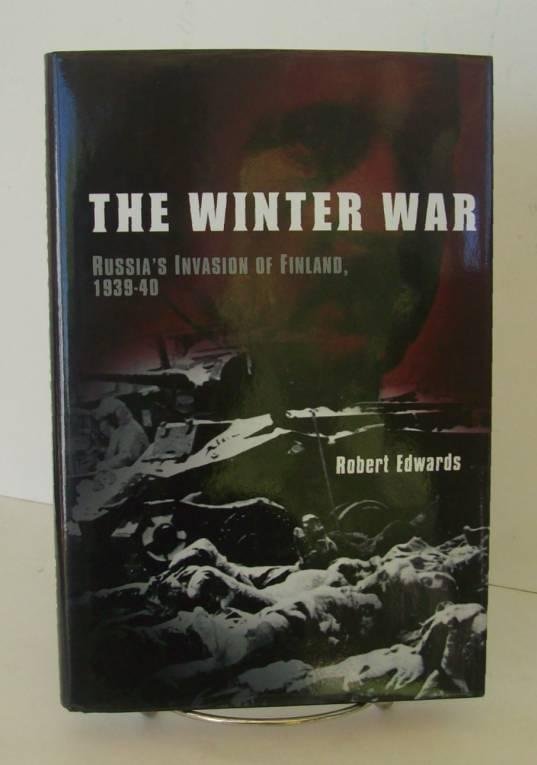
The Winter War: Russia’s Invasion of Finland, 1939-40 by Robert Edwards

November 16, 2023 by Barry J. Klazura No Comments

For 105 days, the small and ill-equipped Finnish army held off the full might of the Soviet Union.  Outnumbered in men, tanks, artillery and aircraft, the Finns were able to cut off, surround and literally slaughter several Soviet offensive thrusts in the northern part of their country.  Striking silently on their skis, the Soviets who were confined to the few roads had little opportunity to bring their superior firepower to bear.  In the end, entire columns of Soviets along with their trucks and tanks, were found literally frozen to death.  With each new defeat however, new masses of men and materials were thrown into the fight.

It was an amazing fight for a country that had gained its own freedom from the Czar only some twenty years before, especially as the nation had fought a civil war between the Whites and the Reds which left the nation divided.  Suddenly, the nation had to fully unite or simply be overrun.  Fortunately, they found a strong if controversial leader in Baron Carl Gustav Mannerheim.  Mannerheim had been instrumental in defeating the Finnish red forces but was an experienced soldier.  He wisely used his forces and was able to switch his forces to key points to blunt the Soviet attacks.

For the most part, Finland fought alone.  Volunteers were being raised in Sweden and Norway, despite the potential problems Sweden could have with the Soviet Union.  France made moves to put together a professional force to help and funds were raised in the U.K., but in the end, there was little real help, especially considering that only a couple of previous months, the Germans had invaded Poland and the Baltic states were swallowed by the Soviet Union. 

Numbers finally told as the Soviets concentrated their forces in the Southern part of Finland were the ports and roads were more friendly to the Soviets level of expertise.  Although the exact numbers will never be known, it appears that the Soviets lost some 400,000 killed, wounded, and permanently crippled, while Finnish losses were around 70,000.

With the end of the war, the Finns had to give up certain territories which Stalin felt was key to the protection of Leningrad as well as some ports and fortifications.  When the Germans invaded the Soviet Union in June 1941, the Finns joined the Germans but only advanced as far as their old borders.

The war showed Stalin that his military suffered poor logistics, tactics, misapplication of force and a ruined officer corps.  Of course, Stalin was the one who ruined his office corps with his purges of the military (some 40,000 officers were killed, arrested, or put into camps).  Stalin quickly tried to reorganize his army and even release numerous officers from the camps.  Those officers were more forward thinking that Stalin’s clique and many were key in successful actions later against the Germans.

Can one draw a parallel between that war and Putin’s current problems in the Ukraine?  One of the largest differences is the terrible corruption which exists in Putin’s time as opposed to Stalin’s army.  Stalin’s army was not as corrupt, it merely suffered from the paranoia of its commander, Stalin, and the commissar system of command.  Another difference is that Finland never received the level of support from other nations.  In many cases, the only way for the Finns to survive was to turn around captured Soviet tanks and artillery as opposed to the billions of dollars which has been showered on the Ukraine (although at a pace that negates some of its usefulness). In the end, it is a story as old as man; beware they who have that lean and hungry look.

Share:
Reading time: 3 min
Book Reviews

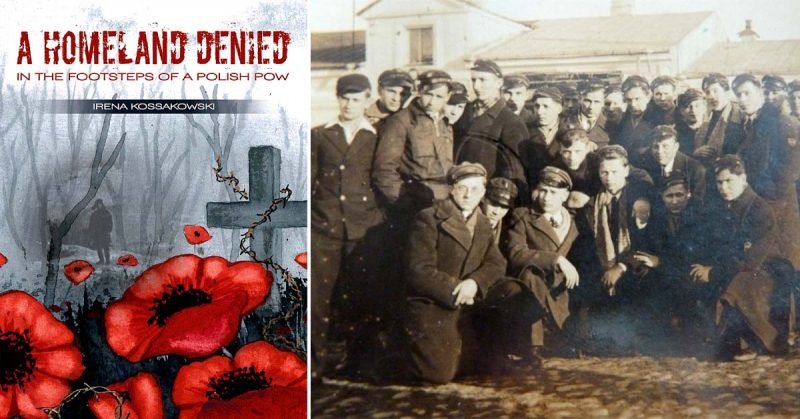
A Homeland Denied by Irena Kossakowski

November 8, 2023 by Barry J. Klazura No Comments

As we are growing up, we have a tendency to either ignore or tune out the stories and experiences of our parents.  We think their ideas are so old fashioned, or that their experiences do not impact on our lives, little realizing that their stories and memories are in reality subtle learning tools for us to lead better lives.  Later, when they are old and we have families and real lives of our own, we sometimes ask them about some memory or story they mentioned years ago, but with failing memories or sadness caused by those stories, they may be reluctant to dredge them up.  We then are sad and realize that experiences in their lives will be lost forever and that someday, we shall be like them, trying to remember the good and trying to keep their sorrows and mistakes buried.

This book was written by a woman whose father (Waclaw=Walter) was 19 when Poland was invaded by the Nazis and Communists.  Barely two weeks into cadet school, he was captured by the Soviets and like 3,000,000 other Poles, was shipped off to a gulag camp in Siberia.  Along the way, tens of thousands died from malnutrition, disease, beatings or simply giving up.  But he was lucky, for unlike tens of thousands of Polish officers, he was executed in the forests of Katyn, hands tied by a bullet to the back of the head and thrown into mass graves (over 10,000 were executed by two executioners!).

When Germany invaded the Soviet Union, the Soviets offered to release some of the Poles so they could fight for Stalin against the invaders.  Another young man, standing next to Irena’s father, after surviving years of cold, hard labor and beatings said that he would not fight for Stalin and was immediately executed with a shot to the head, splattering brains and blood on everyone around.

Finding his way to Iran over several months (no money or food was provided to the men on their journey), he was nursed back to health by the British army and enlisted in the Polish Corps which was to fight in Italy.  He fought in the battles at Monte Cassino, Ancona and Bologna and at the wars end managed to emigrate to England as going back to Poland would have been a sure way to be executed as a spy.

He was not able until about 1966, and still at risk, to go back to Poland for a visit, to see his mother (his father had died), the girl he had dreamed of throughout the war, to see the farm on which he had grown up on, etc.  All the while, despite the continued nightmares of the gulag experiences, he never really spoke of his earlier life and it was only when Irena was a grown woman did you begin to gradually pull the story of his life from him, bit by bit.

This little book is a sobering look at the mostly unknown brutality that millions endured at the hands of the Soviet Union as they attempted to destroy the will of a nation instill a system of government in which the individuals only purpose was to serve the all powerful state.  The idealism of the early 1920’s had been long crushed by the slaughter of the kulaks, the collectivization of the farms and the bloody purges of the Party and military.  Poland, like the other countries of Eastern Europe were given to the Soviets by Churchill and Roosevelt (one did it from practicality, one from personal indifference).

If nothing else, after reading this book, you may sit down with your parents and gently listen to some of the stories and lessons their offered when they went in one ear and out the other during your youth.

Share:
Reading time: 3 min
Book Reviews

Operation Paperclip: The Secret Intelligence Program that Brought Nazi Scientist to America by Anne Jacobsen

October 26, 2023 by Barry J. Klazura No Comments

French President Charles de Gaulle once said, “The State is a harsh mistress”.  He may have said that thinking about the French members of the long-range recon groups who were left behind to wither and die as France left Viet Nam.  Living with the locals, fighting without resupply against the Viet Minh who were relentless in hunting them down, they pleas and curses asking for support finally tapered off as the last were killed in unknown and unremembered hills and valleys.

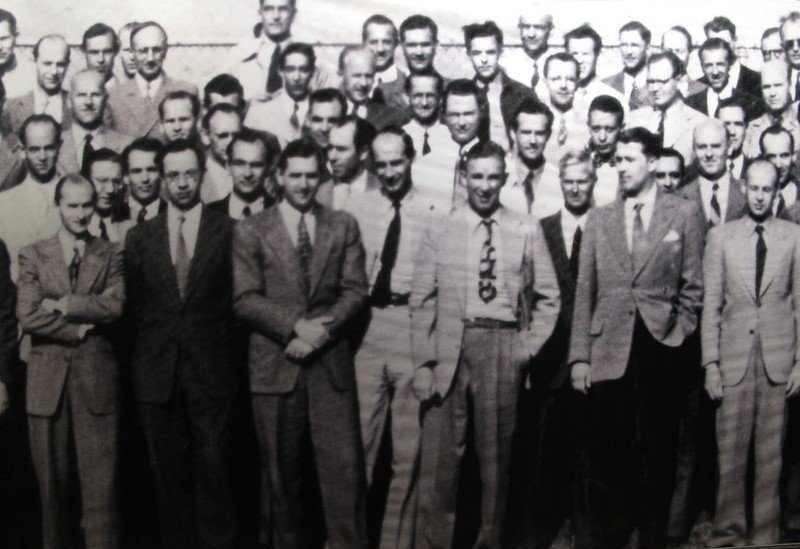
So, it was after the Allied victory of World War II.  Former enemies, including known war criminals were suddenly provided shelter, jobs, and safety in many of the victorious nations.  The United States, Canada, France, the Soviet Union all began to recruit German scientists as the new lines of the Cold War were being drawn.  Much of the recruiting was done secretly in the United States by military officers who were concerned that the new missile technology and secrets of biological warfare could not be left to the Soviets who, aside from plundering a conquered Germany, was abducting every scientist they could find. 

In Operation Paperclip, Jacobsen provides a detailed history of the various forces who struggled with the physical and moral choices which had to be faced.  There were those who believed that having defeated the Nazi war machine, that enlisting the scientists who worked on missiles, nerve/poison gasses and who had in fact committed war crimes was beyond the pale for the U.S.  Others viewed the victorious Soviet Union as the next great enemy, once which had shown that the difference between them and Nazi Germany was at best, minimal.  It was a time of moral questioning and a time of future planning.

Infighting between the CIA, the Joint Intelligence Objectives Agency, the Joint Chiefs of Staff, State Department, and the FBI continued for years with the CIA showing its ability to operate outside of normal channels and continue to pursue its own policies. Some of the arguments against the use of German scientist were moral, as is today arguments of using medical results from the doctors at the concentration camps.  Some were political as a growing Germany resented their best scientist being employed by other nations.  In the end, thanks to the space race, reality won the day as the competition between the U.S. and the Soviet Union became hardened.

This is not only a history, but also a morality play, one which could have been used when ethics classes were not so political.  It is well written, and it would be easy to understand how the reader could have a difficult time balancing the morality of the program vs. the fears and beliefs of those years.  Indeed, the State is a harsh mistress.

Share:
Reading time: 2 min
Page 3 of 8« First...«2345»...Last »

Barry J. Klazura

Barry Klazura sipping grappa

With a Masters Degree in Guerrilla Warfare and Totalitarianism, Mr. Klazura was well prepped for a career in Sales and General Management, consulting on corporate startups and turnarounds as well as lecturing on history and politics.  For the past twenty years he has focused on being a financial advisor and consulting.

Delivered To Your Inbox

Sign up to get an email when a new article is published.

Topics

  • American Civil War
  • Biography
  • Book Reviews
  • Cigar Reviews
  • Coronavirus
  • Current Affairs
  • Education
  • Environment
  • Factoids
  • Government
  • Lifestyle, Cigars & More
  • Liquid Refreshments
  • Musings
  • Quips and Historical Facts
  • Society
  • Travel
  • Uncategorized
  • World War I

Subjects

book Books-Russia/Soviet Union Books 21st Century Books 1919-2000 Books Ancient to 1900 Books Asia Books Biography Books Fiction Books Germany 1919-1945 Books Pre-WWI books Viet Nam books world war I Books WW1 Books WWI Books WWII Cigar Friendly Location Amsterdam Cigar Friendly Locations-London Cigar Friendly Locations-New Orleans Cigar Friendly Locations-New York Civil War Coronavirus Environment Korean War World War I World War One

Recent Articles

At Stalin’s Side by Valentin Berezhkov

July 15, 2026
The Price of Victory by N.A.M. Rodger

The Price of Victory by N.A.M. Rodger

June 26, 2026
Frontsoldaten: The German Soldier in World War II by Stephen G. Fritz

Frontsoldaten: The German Soldier in World War II by Stephen G. Fritz

June 5, 2026
Organizer of Victory, 1943-1945, George C. Marshall by Forrest C. Pogue

Organizer of Victory, 1943-1945, George C. Marshall by Forrest C. Pogue

May 26, 2026
Illegals Released & Our Leaders

Illegals Released & Our Leaders

May 10, 2026

Inquiries and Comments

For general inquiries and comments, email AOTOHcomments@gmail.com.

Facebook
© 2020 And On The Other Hand. All rights reserved.