When the Cold War ended, many felt that it signified the end of totalitarianism and dictatorship. The world would move forward into a new age where individuals and societies would be freer to determine their futures. As we have seen however, there are those societies and individuals who seem to have chosen to continue along the path which limits the freedom of the individual and seeks to continue what is the main course of human history, that of strong leaders who believe they have found the true path to a better world as outlined by their own vision, paranoia and sense of victimhood.
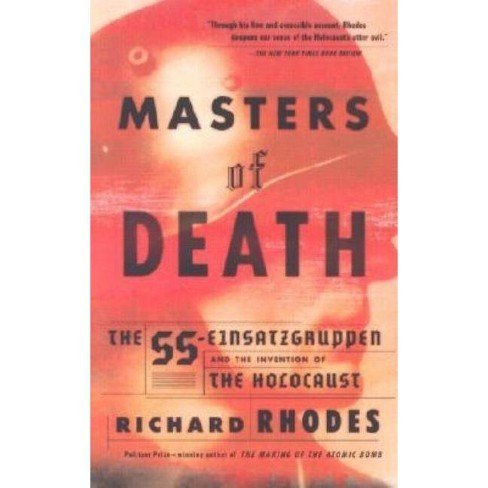
Are the visions of the leaders of Russia, China, Turkey, North Korea, and others simply anomalies or do they reflect a natural inclination of mankind? How is it that leaders can be supported as they move to limit freedoms, begin to imprison opponents, and even move toward genocide, often of their own citizens? This book allows us to learn from the past and see how it is often those who are considered the “best and the brightest” to begin to move down the path of tyranny and destruction.
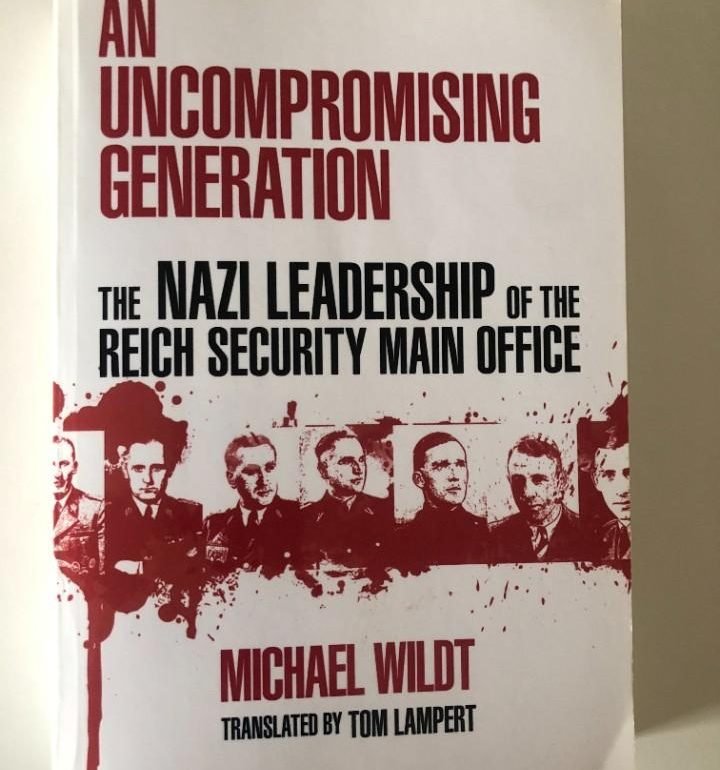
From my reading of the subject, this is the best history of the RSHA which incorporated the SD, Gestapo, and the Criminal Police and provided the leadership for the killing squads that roamed through Europe from the invasion of Poland in September 1939 until late in the war.
Unlike the popular image of the SA, the street enforcers of the Nazis especially prior to the “revolution” when Hitler rode into power, much of the leadership of the RSHA came out of the university student unions which gained such power after WWI. Today, at many of our universities, we see leftist demonstrations aimed at seizing administrative power at all levels, blocking dissenting views, demanding the ouster of “unenlightened” professors, etc. But in the 1930’s it was the right wing at the universities which interrupted lectures, led massive demonstrations and frequently started violent conflicts with those who dared to challenge them. Although most of the students had little contact with Jews, by 1930 only a couple of fraternities accepted Jews as members and the anti-Semitism was directed not only at students but also professors and administrators.
With the Nazi seizure of power, leading students joined first the SA, then moved into the SS and were transferred to the RSHA. Many had received their doctorates in law and were perfectly trained to administer the ever-expanding realm of the RSHA.
Totalitarian states such as Nazi Germany and the Soviet Union operate on several levels. You have the official state apparatus which is called the “Normative State” and then you have the “Prerogative State” which exists and operates outside the normal boundaries of the State and Society. The “Prerogative State” consists of paramilitary militias, the secret police, informers, etc. Both Nazi Germany and the Soviet Union relied on the police to maintain control and not the army (which was co-opted, infiltrated, etc.). The real rule of the secret police, according to Hanna Arendt, begins when domestic opposition (traditional political foes) ends (usually through extermination) and then the search for “objective” foes begins.
This is an excellent book for those who are genuinely interested in this subject. It traces numerous individuals, often from their university days through their movement within the RSHA. With no indication of previous thoughts or actions, top university students move from studies to anti-Semitism to active participation in the shooting of hundreds, then thousands, then tens of thousands of men, women, and children. And in the end, after the war, the overwhelming majority went back to Germany and led ordinary lives. Some became government officials in post-war Germany while others became police officials and even members of the bar. How those men who had ordered and participated in the slaughter of thousands could escape any form of retribution is due in part to the post-war fear of the Soviet Union, the efforts of the average Germans to deny any knowledge of crimes and blame it all on the highly visible SS, the ignorance of the victors about the organization of the Nazi state and smart politicians such as Konrad Adenauer who managed to play East against West in his effort to resurrect the new German state.
Thousands of youthful, idealistic minds were bent to oppressing others all in the name of a greater good. It should serve as a lesson to responsible adults that youth throughout history are more easily led by demigods and that indulging them in their folly without adult guidance can lead to terrible, even deadly consequences.
This is not an easy book to read as it is extremely detailed, and the novice will quickly be lost in the details. But for anyone interested in this fascinating subject, it is well worth the effort.