
On The Other Hand -
Book Reviews
Lifestyle, Cigars & More
Musings
About
On The Other Hand -
  • Book Reviews
  • Lifestyle, Cigars & More
  • Musings
  • About
Book Reviews

The Battle of the River Plate by Dudley Pope

September 25, 2024 by Barry J. Klazura No Comments

When we think of war, we tend to think of great campaigns, great Generals, and the struggle between nations. The countless small battle actions done by the millions of people who make up the battles are often overlooked. We know no individual combat action by any of those millions will be decisive in the war, but taken together, they create the victory or defeat in war.

The battle of the River Plate, off the coast of Montevideo in mid-December 1939 was a single action that was not a major factor in the loss by Nazi Germany. It was a battle that was more symbolic for the British and a lesson learned by the German Navy. On the surface it was a battle between a German “pocket battleship” and the British navy; one ship against a professional navy that could call on aircraft carriers, battleships, heavy cruisers, and other ships by the dozen. Logically, there was no doubt of the outcome of the battle, yet it had to be fought for war is not a gentleman’s game.

The German ship was the Graf Spee, a lone ship whose main purpose was to seek out and destroy Allied merchant ships in both the Atlantic and even the Indian oceans. The presence of such a ship, armed with six-eleven-inch guns put every merchant ship, destroyer, and light cruiser in harm’s way. If the Graf Spee could not sink any ships, her existence and presence would disrupt the passage of merchant ships and with every ship valuable to the survival of England, she had to be hunted and destroyed.

The author does and excellent job of outlining and following how the British reacted to the realization that the Graf Spee was lose in the Atlantic. They immediately reached out to their major ports to gather ships capable of destroying the German raider and created several hunting groups. From the North Atlantic to the Med to the southern tip of Africa, heavy units of the British navy all joined the hunt for the Graf Spee.

For anyone not familiar with navy ships, the book does leave something to be desired regarding the match up between the Graf Spee and the British; speed, armor, firepower are briefly covered by the assumption seems to be that the reader at least has a glancing knowledge of these topics. Also missing are the stories of the individual sailors for both sides. Anyone who has read the excellent Last Stand of the Tin Can Sailors by James D. Hornfischer will be disappointed at the lack of personal depth in this book.

In the end, the British sank the German raider, the war moved on to the Battle of the Atlantic and one episode in a great war ended. Yet today, it is a tradition when sailing off Montevideo to sail over the graveyard of the Graf Spee and think even if only briefly, of those men who fought and died some eighty-five years ago.

Share:
Reading time: 2 min
Book Reviews

Nazi Billionaires: The Dark History of Germany’s Weathiest Dynasties by David De Jong

June 12, 2024 by Barry J. Klazura No Comments

Who were the financiers who provided the manufacturing and technical expertise which allowing Hitler and the Nazis to overrun so much of Europe and commit the Holocaust?  And, after the war, what actions if any were taken against them not only for their material support of Hitler, but also for the use of slave labor on a scale not seen since the Roman Empire?

Mr. De Jong spent four years researching this book focusing on four major German families; the Quandts, the Flicks, the von Fincks and the Porsche-Piechs.  How is it that the Krupps are so well known and yet these families contributed in so many ways to the Nazi war machine, producing tanks, guns of every caliber, ammunition, drugs, medicines and almost every other item that a nation needs for war.

Some of the named above were successful industrialists before Hitler’s rise to power, such as the Quandts while other took advantage of the “Aryanization” of Jewish businesses.  “Aryanization” was the concept that with the introduction of the Nuremberg Laws, Jews were forbidden to own factories and businesses.  In order to comply with the law, Jewish businesses were “bought out” by Germans for pennies on the dollar and then those few pennies were determined to be the cost of an exit visa from Germany as many of the Jews fled to other countries. Such theft was in itself a crime that these and other families committed but add to the list the inhuman treatment of the slave laborers and the wheels of justice should have centered on these families.  Why weren’t these families the targets of justice?

Continue reading
Share:
Reading time: 4 min
Book Reviews

Poland 1939 by Roger Moorhouse

May 12, 2024 by Barry J. Klazura No Comments

Through the mists of time, the campaign against Poland in September 1939 has seemed to have almost disappeared.  Memoirs and campaign histories of other actions of World War II have stuffed libraries around the world to overflowing and even today new volumes are produced which seldom contribute something new to our understanding of these events.  Aside from an occasional article in a history magazine, about the most complete history of the campaign that I found was by Major Robert M. Kennedy as published by the Department of the U.S. Army (1956).  Roger Moorhouse’s new book promised to bring some new facts to bare, especially around personal narrative from the Polish defenders.  To some extent, this has been achieved.

I say to some extent as there are some actions where the thoughts and activities of the defenders are noted, but not as many as I personally would have enjoyed.  The strength of this book is in putting the lead up to the war in good context, especially in the alliance between the U.K., France, and Poland.  To be brutally truthful, Poland was betrayed by its allies, who promised aid and an offensive against the Germans but had no intention or desire; instead the “allies” of Poland were depending on bluff to stop the Germans. Just two days before the invasion, when the German army was deployed on three sides of Poland, the French Minister of War assured his Polish counter parts that France was fully committed to invading Germany with the full might of its military if war were to begin.  Of course, the French “offensive” thrust a few kilometers into Germany and then quickly pulled back, while the British did not begin a bombing offensive as “private property” might be damaged.

The Polish defense of Westerplatte is covered well, but other actions such as those on the Hel peninsula and at the fortress of Modlin are barely touched.  The famous cavalry actions of Poland’s Uhlans are put into proper perspective and the Soviet invasion of Eastern Poland are also covered adequately.  Other weaknesses include not discussing the escaped of over 100,000 Polish troops through Romania and their contribution to the allied victory (as well as their betrayal in England where they were not allowed to participate in the victory parade for fear of offending Stalin and the domestic Labor Party), and a summation of German losses during the campaign.  It is known that the war costs the Germans over fifty-thousand casualties and approximately twenty percent of their tanks.

From the very start of the war, the Germans embarked on a reign of terror, executing both Polish “intellectuals” including policemen, lawyers, doctors, priests, and teachers.  In the beginning theses individuals were primarily Polish but Jews were also targeted.  The key was to break the will of the Poles to resist, the view being that the Jews had no where to go and could be handled on a larger scale in time.

In the end, the nation which was the first to stand up to Nazi Germany and who stood by the Allies in spite of bad faith, was a loser in the Second World War. There were no victory parades, no awarding of honors but there was forty-four years more years of terror under the rule of Communism. Perhaps that is why Poland realizes the danger of Russia so much more clearly than the Western Europeans.  

This work is a good introduction to the campaign and basic reference book for anyone who wishes to understand the importance of the politics on both sides and a bird’s eye view of the battles. Moorhouse follows in the footsteps of his mentor, Norman Davies so we should see additional fine histories in the future.

Share:
Reading time: 3 min
Book Reviews

The Good Old Days; the Holocaust as Seen by Its Perpetrators and Bystanders: Drnet Klee, Willi Dressen and Volker Riess, editors

February 5, 2024 by Barry J. Klazura No Comments

Hannah Arendt, the noted political theorist and philosopher was on the receiving end of her fellow Jewish intellectual’s fury when she coined the phrase,” banality of evil” to describe Adolf Eichman. The question was asked, “How could she use such a phrase to describe those who had been responsible for the murder of six-million Jews? Surely those men were monsters, outside the norm of humanity.”  Yet she did not make that statement in a vacuum, but rather after covering the trial of Adolf Eichmann for The New Yorker magazine. Friends and compatriots turned on her as she even dared to suggest that some Jews made the work of the Nazi’s easier by co-operating with the Nazis.

In The Good Old Days, we investigate the letters home, photo albus, confidential reports and diaries of those involved in mass murders. The title is drawn from a caption in a photo album belonging to the last commander of Treblinka. During its operation, it was visited by a professor of medicine who “was appalled” by what he saw, yet in his diary he notes the excellent food and “first-rate vanilla ice cream.”  This was only one of many references from the letters and diaries of others including ordinary policy battalions (there were about one hundred fifty such battalions). The police battalions contained ordinary police officers which were formed to “police” the rear areas of Eastern Front. Shipped to the East with no special training, they were  instructed to proceed with the murder of mostly Jews in the occupied territories. On the site they were instructed as to the types and depth of the trenches where the victims were led, the order of execution, and so forth. As time went on, the men became more proficient and were able to conduct the executions much more quickly.

How did the men of the police battalions react to their commanding officers’ instructions for their first mass killing? Most of the men went along with and followed the instructions although the commanders made it truly clear that if any individual felt they could not comply, there would be no serious repercussions. A few, very few accepted the offer and were normally given kitchen duties or placed in charge of the latrines. Those few might be subject to comments from the rest of the battalion and a few of the dissenters would eventually relent and join their comrades in the killing.

Throughout the book, one is aware of the banality of the men. They complained about their sore feet, wrote home about “items” they picked up while doing their duty, noted especially tasty food, and longed for the day when they could return to their police duties back home. Some felt that they were doing a great service to mankind, but few would qualify as sadistic in the sense that they took pride in taking clean shots in order to minimize the suffering of the killed. At the same time, the drivers of the gas vans were responsible for cleaning the vans of blood, feces, hair, etc. and seemed to have seen it as another necessary if dirty job.

If one is looking for some special glimpse into the psyche of mass murderers, one will be disappointed by this book. In fact, it goes a long way to confirm Hannah Arendt’s phrase and observation. After the war, out of the one hundred and fifty battalions (up to 75,000 men), only a handful were convicted of war crimes. Most members when back to their old jobs, to their old towns and lived ordinary lives. Reunions were well attended and in their own way, celebrated the good old days.
Share:
Reading time: 3 min
Book Reviews

What If?

November 20, 2023 by Barry J. Klazura No Comments

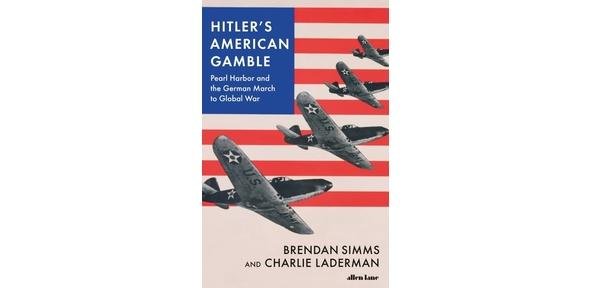
History is full of “what ifs”, “near things”, and “almost”.  In Hitler’s American Gamble by Brendan Simms and Charlie Laderman, the authors discuss the various scenarios had Hitler not declared war on the United States after the Japanese attack on Pearl Harbor.

What makes this book more interesting than one would expect is that the authors follow the fears, thoughts, actions and discussions of the Roosevelt, Hitler, Stalin, Mussolini, Churchill, and various Japanese officials on a day-to-day basis from December 7th until the German declaration of war on December 11th.  They point out that serious questions were raised during that four-day period and that contrary to popular history, it was an agonizing time for Churchill.  While he may have been buoyant to those around him, he had numerous concerns about the actions the Americans might take and how it would impact the British.

For four days, Axis, Soviet and British leaders held their breath and pondered the American course.  Concerns included:

  1. Would the U.S. begin to scale back Lend Lease support to the U.K. and the Soviets to rearm themselves against the Japanese?
  2. If they did, by how much and would that help the Germans at a time when the U.K. especially were just handing on in the Battle of the Atlantic, North Africa, etc.?
  3. As Roosevelt only called for a declaration of war against Japan, and with a seriously damaged U.S. navy, would support in the Battle of the Atlantic be scaled back?
  4. For the Japanese, their concern was whether Hitler would honor his pledge to declare war on the U.S. and thus force the U.S. to divert some of its immense industrial strength away from Japan and towards Germany.
  5. With the sinking of the British warships Repulse and Prince of Wales, not only Singapore but also Australia was in grave danger and the British were fearful of a Japanese thrust into the Indian Ocean towards India.
  6. Roosevelt believed Germany to be the greater threat but how to enter the war against Germany when most Americans were either isolationist or calling for revenge against Japan?
  7. Aware of the industrial might of the U.S., Hitler knew that sooner or later Germany and the U.S. would fight one another directly, so was it better to declare war now when Japan could divert some of the U.S. strength or stay out of the war and force Roosevelt to zero in on Japan?
  8. For the Soviets, who had a non-aggression pact with Japan, would the U.S. cut back on the munitions, supplies, trucks, food, etc., that was vital to keeping the Soviets in the war and would Japan break its pact with the Soviets and attack, creating a two-front war for Stalin?
  9. Churchill knew that without increased U.S. aid, he would have to cut back military aid to Stalin to stay in the battle with Germany.  If the U.S. did not declare war on Germany, the future for the Empire was bleak at best.

Fortunately for the world, on December 11th, Hitler honored his pact and declared war on the United States.  Now Churchill fully believed that the war was won as the U.S. was fully committed to a world war.  Hitler still believed that he had the time build from his European conquests the industrial might to counter the eventual direct struggle with the U.S. and that it was better to begin the fight now rather than wait until the fully industrial might of the U.S. could be brought to bare on Germany.  For Japan, who managed to seriously underestimate the potential might of the U.S., they believed that they could create the defensive zones and exploit the areas they had so easily conquered. And, for Stalin, he had proof that Japan would focus on the U.S. and the danger of a second front was avoided.

In some ways, this book reads like a novel in that the day-to-day questions, routines, discussions, etc. of various leaders takes the reader into the mindset of leaders on a day-to-day basis.  It is an excellent history both for someone who seeks to capture the days and for more advanced amateur historians as a fine reference point. 

Share:
Reading time: 3 min
Book Reviews

Operation Paperclip: The Secret Intelligence Program that Brought Nazi Scientist to America by Anne Jacobsen

October 26, 2023 by Barry J. Klazura No Comments

French President Charles de Gaulle once said, “The State is a harsh mistress”.  He may have said that thinking about the French members of the long-range recon groups who were left behind to wither and die as France left Viet Nam.  Living with the locals, fighting without resupply against the Viet Minh who were relentless in hunting them down, they pleas and curses asking for support finally tapered off as the last were killed in unknown and unremembered hills and valleys.

So, it was after the Allied victory of World War II.  Former enemies, including known war criminals were suddenly provided shelter, jobs, and safety in many of the victorious nations.  The United States, Canada, France, the Soviet Union all began to recruit German scientists as the new lines of the Cold War were being drawn.  Much of the recruiting was done secretly in the United States by military officers who were concerned that the new missile technology and secrets of biological warfare could not be left to the Soviets who, aside from plundering a conquered Germany, was abducting every scientist they could find. 

In Operation Paperclip, Jacobsen provides a detailed history of the various forces who struggled with the physical and moral choices which had to be faced.  There were those who believed that having defeated the Nazi war machine, that enlisting the scientists who worked on missiles, nerve/poison gasses and who had in fact committed war crimes was beyond the pale for the U.S.  Others viewed the victorious Soviet Union as the next great enemy, once which had shown that the difference between them and Nazi Germany was at best, minimal.  It was a time of moral questioning and a time of future planning.

Infighting between the CIA, the Joint Intelligence Objectives Agency, the Joint Chiefs of Staff, State Department, and the FBI continued for years with the CIA showing its ability to operate outside of normal channels and continue to pursue its own policies. Some of the arguments against the use of German scientist were moral, as is today arguments of using medical results from the doctors at the concentration camps.  Some were political as a growing Germany resented their best scientist being employed by other nations.  In the end, thanks to the space race, reality won the day as the competition between the U.S. and the Soviet Union became hardened.

This is not only a history, but also a morality play, one which could have been used when ethics classes were not so political.  It is well written, and it would be easy to understand how the reader could have a difficult time balancing the morality of the program vs. the fears and beliefs of those years.  Indeed, the State is a harsh mistress.

Share:
Reading time: 2 min
Book Reviews

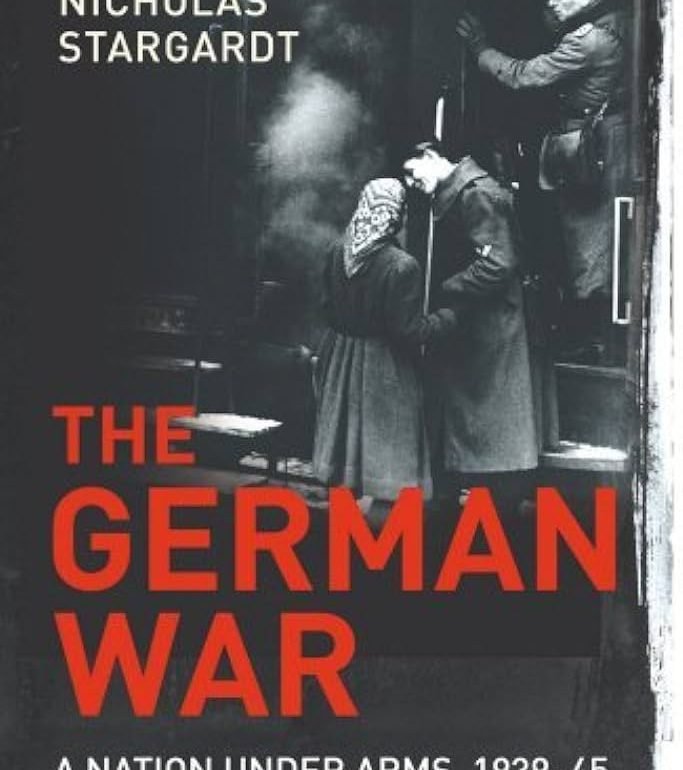
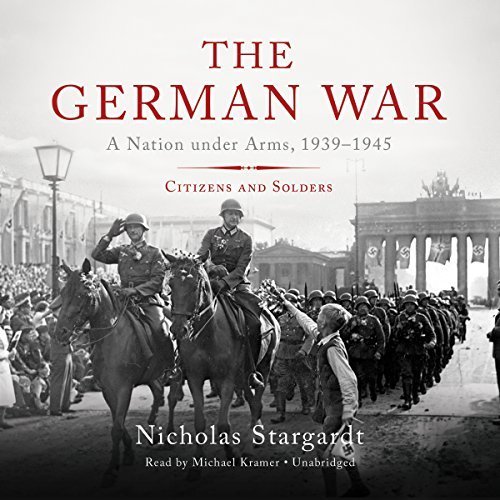
The German War by Nicholas Stargardt

October 8, 2023 by Barry J. Klazura No Comments

 I seldom read any books on WWII any longer (as my library is chuck full of WWII histories and little that is new is published except for information provided by the opening of the Soviet archives in the early 1990’s), but this book caught my attention as it was reviewed as facing the question of the average German’s knowledge of the mass killings in the East.

From the Nuremburg Trials to the last 1980’s, Reitlinger’s The SS; Alibi of a Nation, shifted the blame and knowledge of mass murder to the SS, both front line and those SS in the concentration camps.  It did not matter that many SS were drafted from the navy or army or even the air force late in the war, those veterans were all branded as the ones to blame for all the crimes of Hitler’s Germany.

In the late 1980s, a new generation of academics and historians came out with important books such as Omer Bartov’s Hitler’s Army, Riess’s The Good Old Days, Ordinary Men  by Christopher Browning and even The Nazi Conscience by Claudia Koonz, in which the participation and knowledge of the murders became more widespread among the wider German nation during the period of 1939-45. 

Stargardt’s book, while not revolutionary (to anyone with basic knowledge of the period and subject), is interesting in that he lays out the argument that the combination of soldier’s letters home, amateur films taken by the troops at the locations where mass executions were taking place and soldiers stories while on home leave gave ample knowledge of the murders to the civilians on the home front. Further proof is offered as civilians, under increasing Allied bombing, stated that it was a reprisal for all that had been done to the Jews, while even as the Jews were expelled from Germany, Nazi propaganda blamed the Jewish worldwide conspiracy for the bombings and went on to exclaim that the war would only end up with the extermination of the Jews.

Near the end of the book (and the war), one can feel the desperation and hopelessness of the Germans as their illusions of miracle weapons evaporate and the realization that the war is lost; the sacrifice and work was for naught and the German’s came to see themselves as victims not only of the Allied bombing, but of a failed Nazi leadership (but they still retained faith in Hitler until he betrayed them by committing suicide).

A good book, well documented, a good read and I would recommend it to anyone interested in a concise history of the period.

Share:
Reading time: 2 min
Book Reviews

The Forsaken Army by Heinrich Gerlach

September 18, 2023 by Barry J. Klazura No Comments

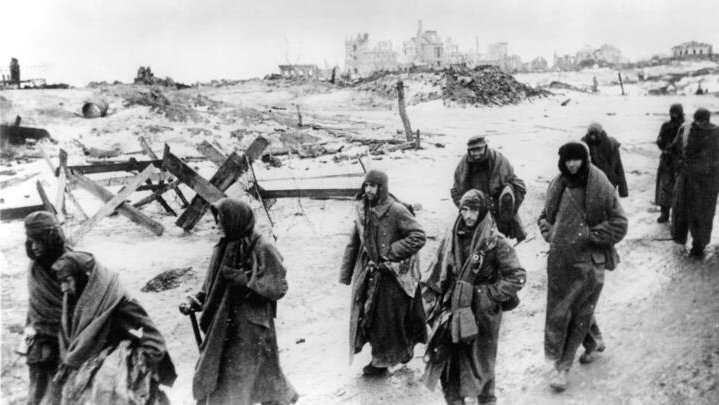
One of the great battles of World War II, Stalingrad consumed the lives of an estimated 1,000,000 men on both sides.  The stories of human suffering, and bravery, of lost illusions and shattered idealism are legion and yet we seldom really can understand the pain of the men involved in epic battles.

When you think of it, the concept of men fighting in sub-zero temperatures, with little or no shelter, for months on end with little food, who are shelled, outgunned and faced by a foe who is both vengeful and afraid is unknowable to we who read about the battles.  But Gerlach, who fought at Stalingrad and was one of the few (5000 out of 91,000 captured), did manage to survive and create a story woven from the experiences of other Germans who were captured. 

What few people realize is that the fighting was to a large extent, carried on by the few frontline troops who had to face the guns, tanks and cold alone on a windswept steppe.  Tens of thousands of other Germans were the support troops who lived in the ruins of the city in basements, shattered rooms and dug outs which provided them with a level of protection and comfort that was unknown to the frontline soldiers.  These support troops stayed behind the lines until late in the battle when some of them were placed into special “assault” battalions; untrained in combat, they were simple cannon fodder, thrown into the breach and accomplished little other than to die for the Fuehrer.

The unsung heroes of the battle were the doctors and orderlies who tried to perform miracles for the wounded.  Tired and overworked, lacking pain killers, clean bandages, even a warm room from which to work, they spent long hours cutting, stitching and battling to save lives.  And yet, even if they were successful in their operations, the wounded most likely faced little food, no heat and unsanitary conditions as they were lined up by the hundreds in basements or even outside to suffer and freeze.  The images of wagon loads of wounded men, slowly freezing to death because there was simply no more room for them in the pathetic shelters will make any reader realize how terrible and pitiless war is to the participants.

Gerlach has created an excellent history of a battle, seen from men at the point of danger.  No sweeping scenes of mass movements of men, no brave words to stir one’s heart, this novel brings war down to its lowest level; the men in the trenches whose only knowledge of the war and battle is as far as they can see.

Share:
Reading time: 2 min
Book Reviews

Why Air Forces Fail, edited by Robin Higham and Stephen J. Harris

May 31, 2023 by Barry J. Klazura No Comments

An excellent little book which reviews why various military air forces have failed since WWI. They cover the Imperial German and Russian air forces, the Polish air force of 1939, the French of 1933-40, Luftwaffe, Arab air forces, etc. Broken into short easy to read chapters, the common failures center around the following key factors:

  • Lack of strategic vision
  • Lack of logistics
  • Inability to meet changing challenges
  • Lack of governmental support in key areas

Some air forces started strong (Luftwaffe), some were the victims of national degeneracy (France), some the result of inability to deal with reality (Italy), but all went through a cycle of attempting to deal with forces beyond their control. Most of those forces were civilian, some were political, and most examples attempted to fulfill missions that were clearly beyond their means from any objective standpoint. While the pilots and mechanics did their best, the politicians simply failed to understand the weapon that they had at their disposal.

This little book is a quick informative read for anyone who wishes to understand the importance of logistics, strategy, tactics and will as they seek to come together to create a successful weapon.  The interesting thing that comes out is that no matter what has happened in the realm of military science, many are slow to recognize and learn from history. This book goes to prove a point that those who do not learn from history are doomed to repeat it.

Share:
Reading time: 1 min
Book Reviews

A Sniper on the Eastern Front: The Memoirs of Sepp Allerberger by Albrecht Wacker

April 29, 2023 by Barry J. Klazura No Comments

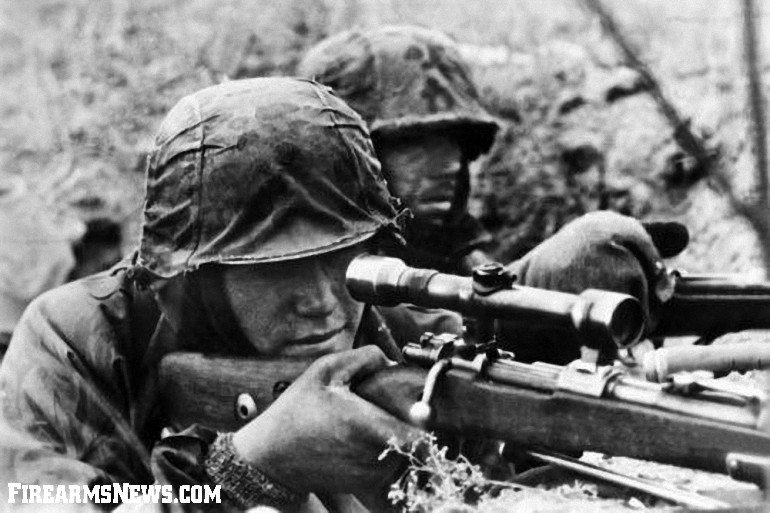
From July 1942 until the end of the war, Sepp Allerberger was a sniper fighting against the Soviet Union.  During that time, his official tally of 257 confirmed kills, made him the second most deadly sniper in the German Army (the record of 345 kills was held by Mathias Hetzenauer).  It is important to note that a sniper “kill” had to meet certain requirements, such as it had to be done during an actual sniper assignment (ordinary defensive or offensive kills are not counted) and must be confirmed by either an officer or an NCO.  Allerberger states only that his individual kills, taking unconfirmed sniper kills was much higher. 

Allerberger did not come from a military family; his home was a small village on the Austrian side of the Bavarian Alps near Salzburg.  He was drafted at the age of eighteen and trained as a machine gunner.  After his first battle, he realized that he was a marked man for machine gunners were prime targets of the enemy.  He decided to try for a safer job and accidently found out that he was an excellent shot.  As the German Army was behind the Soviet in the development and training of snipers, it was a “learn as you go” decision.  He quickly learned the trade and was highly valued at the front where many assignments were to kill his Soviet counterpart who was causing losses in his vicinity.  Sniper to sniper battles pit individual skill, patience, and determination at the personal level and yet Allerberger does not exhibit any emotion other than pride for his victories.

As noted, all kills had to be confirmed and that could be a problem as many in the German Army felt that being a sniper was a “dirty” job.  Hiding, sneaking up on the enemy, killing when ever possible, including when a soldier is going to the bathroom carried a bad odor.  This view extended to the artillery officers who somehow believed throwing a high explosive shell miles at an unseen and unsuspecting enemy was more “honest”.  For the infantry, enemy snipers were hated thought to fight dirty, but their own snipers were well liked and protected.  War has its own value system.

Given that many snipers were killed after 15-20 shots, his score is amazing.  He seemed to lead a charmed life, receiving no major wounds, and suffered only minor scratches.  His detailed descriptions of many encounters are excellent, and one clearly see the barbarity of warfare on the Eastern Front. 

His story brings to light the mentality of an army in retreat. Months of constant retreat and serious losses in manpower and equipment left the average soldier demoralized, dirty, hungry and constantly looking over their shoulders at the Russians who seemed to have unlimited resources. During the retreats, seriously wounded men were left behind even though everyone knew that the oncoming Russians would at best, quickly kill them or more likely, torture them before killing them. One has to remember that the Russians were not only out for victory, but also for revenge for the deeds of the Germans on their homes and loved ones. It was a war with little or more mercy. Often, the Russians had more to fear from their own officers who subjected them to beatings, penal battalions and early on in the war, cases of cannibalism.

This is only the third book I have read by a veteran which reflects a certain mindset.  Ernst Junger’s Storm of Steel is one example, another is by an American, James Megellas’s All the Way to Berlin. Reading their stories, one sees an individual who calmly picks up a weapon, kills will great proficiency and then afterwards, go on to lead a normal life. They offer a fascinating view of war by very uncommon men.

Share:
Reading time: 3 min
Page 2 of 4«1234»

Barry J. Klazura

Barry Klazura sipping grappa

With a Masters Degree in Guerrilla Warfare and Totalitarianism, Mr. Klazura was well prepped for a career in Sales and General Management, consulting on corporate startups and turnarounds as well as lecturing on history and politics.  For the past twenty years he has focused on being a financial advisor and consulting.

Delivered To Your Inbox

Sign up to get an email when a new article is published.

Topics

  • American Civil War
  • Biography
  • Book Reviews
  • Cigar Reviews
  • Coronavirus
  • Current Affairs
  • Education
  • Environment
  • Factoids
  • Government
  • Lifestyle, Cigars & More
  • Liquid Refreshments
  • Musings
  • Quips and Historical Facts
  • Society
  • Travel
  • Uncategorized
  • World War I

Subjects

book Books-Russia/Soviet Union Books 21st Century Books 1919-2000 Books Ancient to 1900 Books Asia Books Biography Books Fiction Books Germany 1919-1945 Books Pre-WWI books Viet Nam books world war I Books WW1 Books WWI Books WWII Cigar Friendly Location Amsterdam Cigar Friendly Locations-London Cigar Friendly Locations-New Orleans Cigar Friendly Locations-New York Civil War Coronavirus Environment Korean War World War I World War One

Recent Articles

At Stalin’s Side by Valentin Berezhkov

July 15, 2026
The Price of Victory by N.A.M. Rodger

The Price of Victory by N.A.M. Rodger

June 26, 2026
Frontsoldaten: The German Soldier in World War II by Stephen G. Fritz

Frontsoldaten: The German Soldier in World War II by Stephen G. Fritz

June 5, 2026
Organizer of Victory, 1943-1945, George C. Marshall by Forrest C. Pogue

Organizer of Victory, 1943-1945, George C. Marshall by Forrest C. Pogue

May 26, 2026
Illegals Released & Our Leaders

Illegals Released & Our Leaders

May 10, 2026

Inquiries and Comments

For general inquiries and comments, email AOTOHcomments@gmail.com.

Facebook
© 2020 And On The Other Hand. All rights reserved.