
On The Other Hand -
Book Reviews
Lifestyle, Cigars & More
Musings
About
On The Other Hand -
  • Book Reviews
  • Lifestyle, Cigars & More
  • Musings
  • About
Book Reviews

The Fishing Fleet: Husband-Hunting in the Raj by Anne De Courcy

February 9, 2022 by Barry J. Klazura No Comments

From 1671 until the fall of the Raj and the independence of India, many thousands of English women would make a long and often dangerous journey to the Raj to find a husband. The voyage was known as “The Fishing Fleet” and those women who failed in their quest went back to England on a voyage called “The Empties.”  Most of the women were away from home for the first time and as the running of the Raj was a male endeavor, the women who landed at Madras, Calcutta and Bombay were outnumbered by English males who substituted sports for sex while they paid their dues in an attempt to create a successful career. Thrown into a whirlwind of parties, balls, and sightseeing, they were the center of attraction and could receive numerous proposals after speaking to a man for only a few minutes.

The process started while the English presence in India was the domain of the East India Company who would pay for the passage and a stipend for eligible women to make the long voyage. After the Mutiny, this type of arrangement fell off, but given that there was a surplus of eligible women in the U.K. (approximately 750,000 a year), well, what was a girl to do?

Continue reading
Share:
Reading time: 3 min
American Civil War, Book Reviews

Robert E. Lee, a Life by Allen C. Guelzo

January 25, 2022 by Barry J. Klazura No Comments

At the end of last November, I posted a review by Victor David Hanson of the new biography by Allen C. Guelzo. I purchased the book although I thought I was familiar with Lee’s life, but I was very pleasantly surprised by this book. Although the author considers Lee a traitor, he is very even handed and treat Lee as a man full of doubts, cares, and desires so that you feel a connection with Lee.

Lee had his own devils, including adoring his father, Henry Lee, a hero of the Revolutionary War, also known as “Light Horse Henry,” for his daring wartime actions. A failed land speculator, Henry left his son early to escape creditors and each time Lee looked at a business venture, he always saw the image of his failed father over his shoulders. Those land failures were also at the base of Lees’ constant concern about money and attempts to safeguard his families’ small holdings in Virginia. In turn, those concerns were part of his reason to side with the Confederacy during the war. He was devastated when Arlington, his father-in-laws property (todays Arlington Cemetery) was seized by Federal troops, and he realized after the war that the property would never be his in anything except a dream and a memory.

Although we tend to think of Lee as a military man, he had never commanded troops in battle until the outbreak of the war and he was at heart, an engineer. Several times he thought of leaving the military with its low pay, slow promotion, and postings which he disliked (including Superintendent of West Point Academy). Each time, he pulled back due to the security of the army and its steady paycheck.

Continue reading
Share:
Reading time: 3 min
Book Reviews

Between Remembrance and Denial: The Fate of the Jews in the Wars of the Polish Commonwealth During the Mid-Seventeenth Century As Shown in Contemporary Writings and Historical Research

December 1, 2021 by Barry J. Klazura No Comments

In the mid-seventeenth century in the Polish Commonwealth (at that time the largest nation in Europe), a terrible war broke out between the Cossacks let by Bohdan Chmielnicki (a national hero of the Ukraine) and the Poles. The Cossacks, long time allies of the Poles in battles against the forces of Islam had become alienated from the Poles due in part to the actions of the great Polish magnates, the differences in religion (Catholics vs. Orthodox), the Cossacks and Ukrainian view of being exploited by the Jews brought in by the magnates and a lack of opportunity for plunder by the peace between the Commonwealth and Islam.

The ensuing war lasted about nine years during which much of the Ukraine, parts of Poland and Lithuania were laid to waste as hundreds of thousands were killed in battles, sieges, and local slaughter. Invited into the Ukraine by the Cossacks, both Tartars and Turks rampaged across the land and took so many prisoners that the slave prices in the Crimea and Constantinople were drastically lowered.

Continue reading
Share:
Reading time: 3 min
American Civil War, Book Reviews

On and Off the Pedestal, a New Biography of Robert E. Lee

November 29, 2021 by Barry J. Klazura No Comments

Victor David Hanson has published an excellent review of Robert E. Lee: A Life by Allen C. Guelzo. After the destruction of so many statues by the Woke Left, this seems to be a balanced scholarly examination of Lee who was considered as an icon for many in the South, the military and Civil War Historians.

I have always been skeptical of the leadership of Lee, as he was slow to learn the destructive fire power of state-of-the-art military hardware. General Longstreet understood the brutality of the weapons of the time before Lee as was proven by his reluctance to commit General Pickett to the suicidal charge at Gettysburg. Somehow, Lee failed to understand that the war had turned into a war of men against machines and that the South was doomed if Lee practiced a type of warfare that belonged to the previous century (this mistake would be repeated fifty years later by both the French and Germans during the opening phases of World War I). Amazingly enough, he failed to realize that even if the charge were successful, he had no reserves to consolidate any gains while his opponent who outnumbered him, could quickly move in reinforcements to swamp the tattered remains of his divisions.
Continue reading
Share:
Reading time: 1 min
Book Reviews

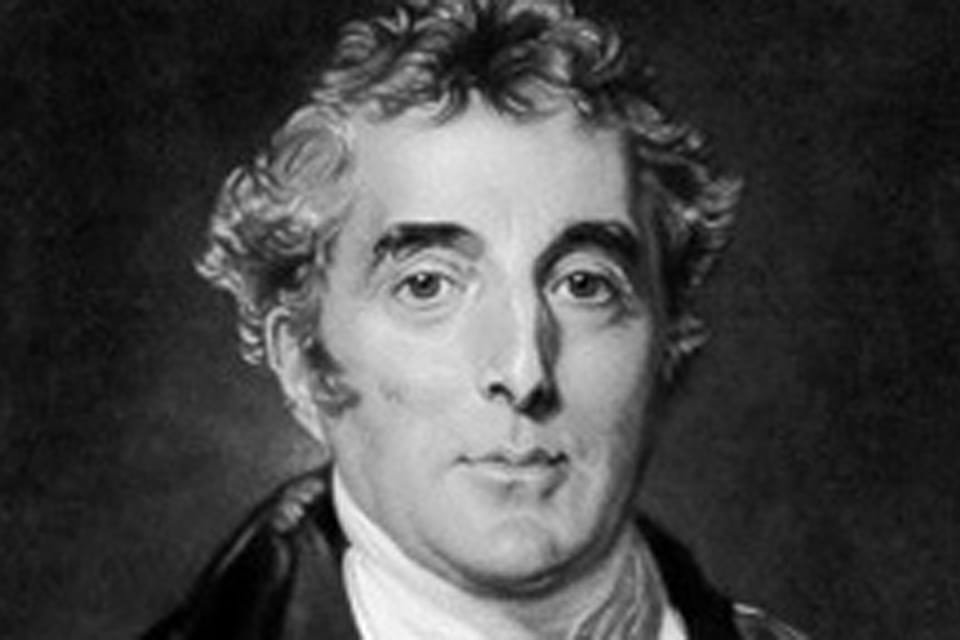
Wellington, the Path to Victory, 1769-1814 by Rory Muir

November 12, 2021 by Barry J. Klazura No Comments

A massive biography which covers the first half of Wellington’s life. Not being the first son, he was relegated to joining the military (under British custom, the first son inherited the title, the second went to the military and the third son entered the Church of England).

As was common at the time, Wellington had an unhappy childhood and like many men of that time, he made his mark and fortune in India. His military victories and diplomatic skill in India allowed him to assume command in the Peninsula during the Napoleonic wars where he reorganized the army of Portugal and created the famous defensive lines which the French under a number of Napoleon’s generals refused to attack. In a series of brilliant maneuvers, he out generaled every force sent against him as he slowly pushed the French out of the entire peninsula. That does not mean that he had an easy time as Napoleon poured men and material into the fight, but his real struggle was with various politicians and powers in London who were jealous of his successes and who kept Wellington’s forces on a strict leash.

Continue reading
Share:
Reading time: 1 min
Book Reviews

The Deluge by Henryk Sienkiewicz

November 5, 2021 by Barry J. Klazura No Comments

Imagine that it is about 1850 in the United States and the British, who have the finest army in the world, invade the U.S. through the East Coast. The citizens of the area who have not been threatened by any enemies since the war of 1812 are more interested in trade and welcome the invaders who promise more states rights and low taxes. Additionally, the great slave holder families of the South provide monetary and physical support to the British invaders. Meanwhile, in the West, the small U.S. army faces an uprising of all the Indian tribes but this time they are united and number two hundred thousand. Additionally, the Mexican army joins the Indians and begin a campaign of pillage and murder across the southwest U.S. Only small groups of soldiers remain faithful to the central government, but they form the basis for a national renewal that eventually drives the British out and pushes back and punishes the Indian and Mexican forces. Large parts of the nation are desolated with farms destroyed and hundreds of towns and villages burned to the ground. Now switch this scenario to the Polish Commonwealth in the mid-eighteenth century.

Instead of the British invading, you have the Swedish army, the finest in Europe and victors during the terrible Thirty Years War. Instead of the Indians, you have the Cossacks, and the Mexicans are really the Tartars who are invited in by the Cossacks. Tens of thousands are killed as Ukrainian peasants join the Cossacks, attack the Poles, and slaughter the Jews who are seen as oppressive minions of the Polish overlords (in fact, until the Holocaust of 1939-45, this time was remembered in Jewish history as the greatest Jewish tragedy since Biblical times). Meanwhile, the Tartars capture a hundred thousand Ukrainian peasants and march them off to the Crimea where they were sold as slaves in the vast slave markets. To make matters worse, the most powerful Lithuanian prince helps the Swedes while the Russians stand on the border, ready to invade when the Poles are finally defeated.

Continue reading
Share:
Reading time: 3 min
Book Reviews

With Fire and Sword by Henryk Sienkiewicz

October 19, 2021 by Barry J. Klazura No Comments

When I was a little boy, my Grandmother will tell me stories of when she was a young woman in Warsaw Poland; how the young girls would flirt with the Russian soldiers who occupied the city, how she hesitated to go out at night as the Cossacks made it a habit to ride down the street, striking anyone with their nagaikas unless they were really drunk in which case they used their swords on anyone in their way, etc.  One thing she especially remembered, was that a chapter of Sienkiewicz’s epic novel, With Fire and Sword was serialized in the Warsaw newspapers and there was always a rush to purchase a copy; it was the Netflix of its day.

Sienkiewicz would win the Nobel Prize for literature in 1905 for his novel which took place in seventeenth century Poland, when Poland was the largest country in Europe. Sweeping across the steppes, it is an adventure story centered on the Cossack revolt which was led by Bohdan Hmyelnitzki (also spelled Khmelnytsky). The Cossacks aligned themselves with the Tartars and Great Khan of the Crimea and the revolt which lasted off and on for several years, was only one of numerous wars fought in what is today the Ukraine, Byelorussia, and what was prior to World War II, eastern Poland. It was the bloodiest of the revolts and was responsible for the largest number of Jewish deaths until the Holocaust. The Cossacks encouraged the native Ukrainian population to join the revolt and Poles and Jews alike were hunted down and killed in their tens of thousands. While the Ukrainians were used as cannon fodder by the Cossacks, who looked down on the Ukrainians, the Tartars were given free rein to capture as many Ukrainians as possible who were then forced to walk to the slave markets in the Crimea and beyond.

Continue reading
Share:
Reading time: 3 min
Book Reviews

Caesar: Life of a Colossus by Adrian Goldsworthy

September 8, 2021 by Barry J. Klazura No Comments

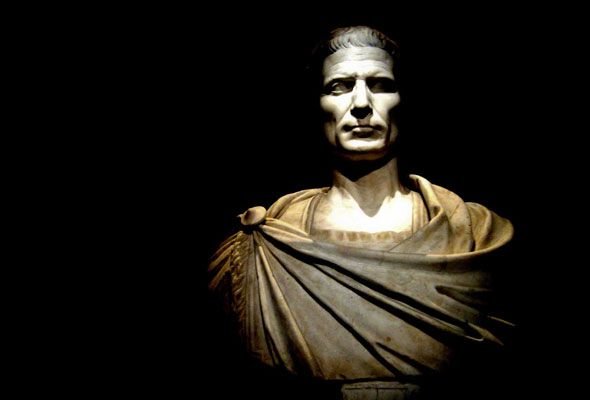
Having previously read Goldsworthy’s biography of Augustus Caesar this biography is in my opinion, much better; perhaps it is because Julius Caesar led a much more active life being involved directly in years of military campaigns, writing massive volumes of poetry, literature and laws as opposed to Augustus Caesar who was not as robust (physically) and had the invaluable help of Marcus Agrippa for decades to share the burdens of rule.

Continue reading
Share:
Reading time: 1 min
Book Reviews

Septimius Severus: the Africian Emperor by Anthony R. Birley

September 1, 2021 by Barry J. Klazura No Comments

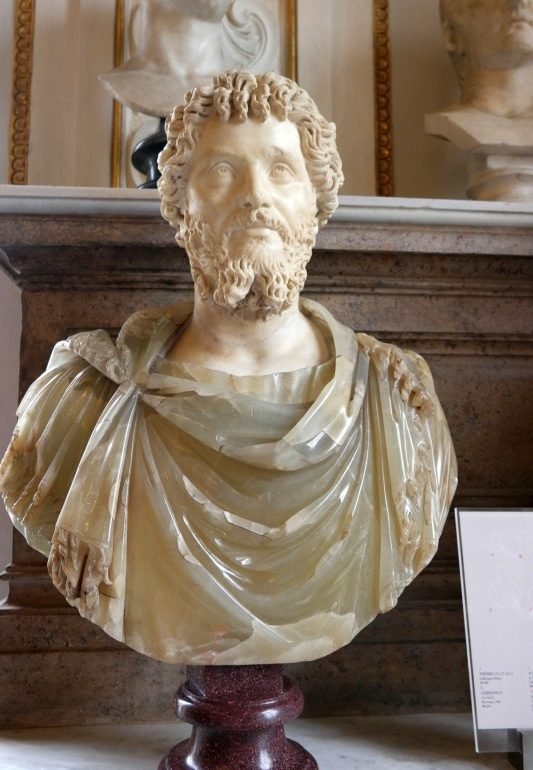
Severus is sometimes called the last of the “Good Emperors” for his ability to bring stability and success to the mid-Roman empire (he was emperor A.D. 193-211).  Born in Tripolitania in North Africa (no, he was not black), he was of that stock from which sprang Carthage and Hannibal.  He has also been called a typical cosmopolitan Roman bureaucrat, the destroyer of the existing social order and (by Gibbon), the principal author of Rome’s decline.  Take your pick.  But he did represent the ability of the empire to pull on its subjects to infuse new blood and energy into its body from time to time and this kept the empire from fading away for an extra hundred years.

A restless man, he traveled across the empire and early on, name one of his sons and trained him to succeed him.  Unfortunately, that son, later know as Caracalla also known by historians as “the enemy of mankind”.  But Severus coming after Commodus and Pertinax brought a period of peace, often by simply scaring the corrupt Senate and the power of his personality.

This book is a bit heavy for the casual reader interested in this period and unless you are familiar with the period, may not be a good read.  Yet there are excellent passages, and the author feels free to criticize other historians, arguing that they have misrepresented or misunderstood various facts.

There are a couple of interesting side notes about Severus.  As he lay on his death bed, his sons asked him what they should do; his words in this book were “Do not disagree between yourselves, give money to the soldiers and despise everyone else”, although other translations quote him in a more “earthy” manner. 

Another tidbit I have often thought that F. Scott Fitzgerald plagiarized when he had his main character in The Great Gatsby say: “I have been everywhere and seen everything, god oh god am I sophisticated”.  Although this author disputes the accuracy of Severus’ quote, I remember reading it when I was in my early 20’s and feeling a bit depressed, for he said, “I have been everywhere and seen everything and it is not really much”.  If a Roman emperor could say that what hope was there for me!  But Birley says the quote (again, disputed) was that “I have been everything and what has it profited me”.

Share:
Reading time: 2 min
Book Reviews

The Decline and Fall of the Ottoman Empire by Alan Palmer

July 27, 2021 by Barry J. Klazura No Comments

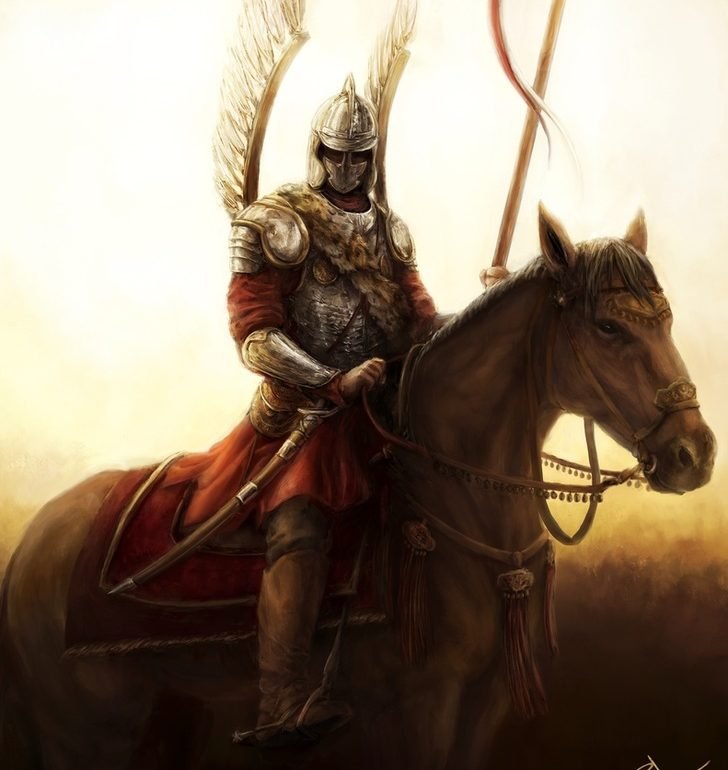
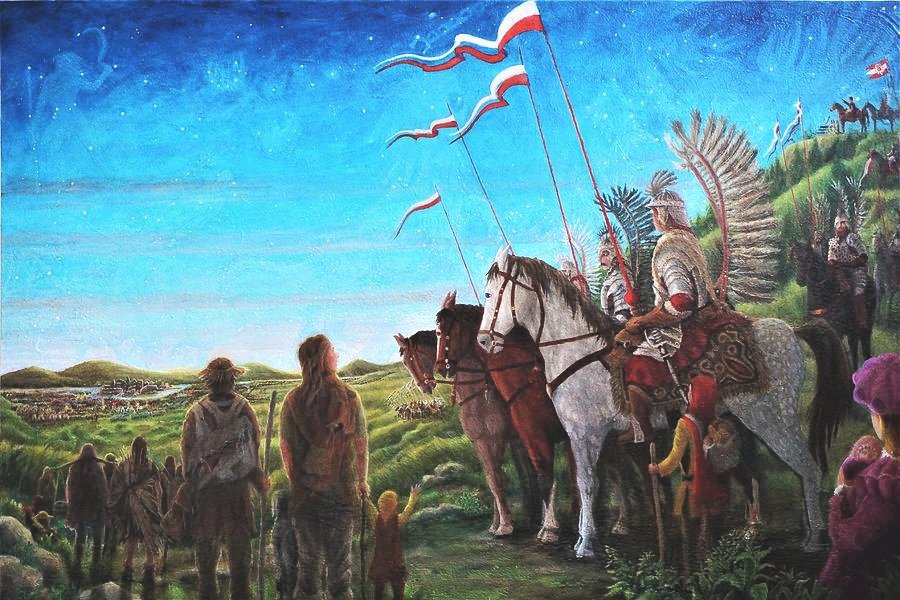
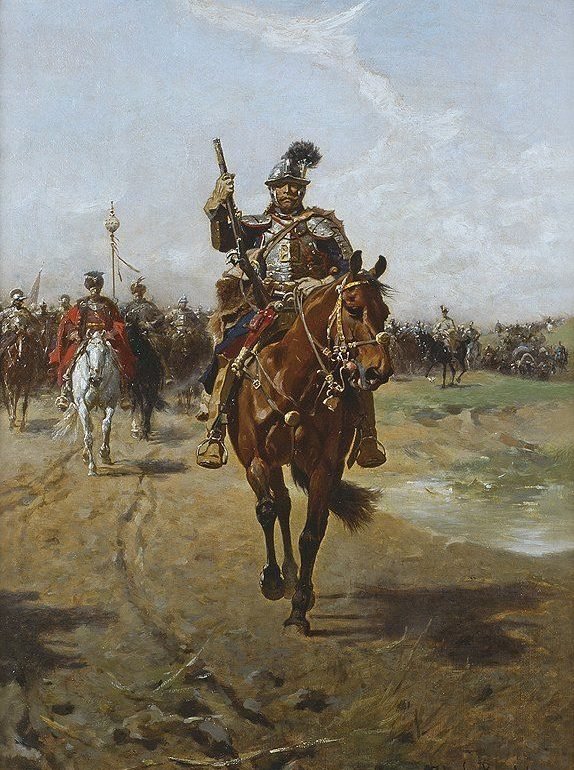
In the year 1683, a vast Ottoman army is laying siege to Vienna, the heart of the Hapsburg Empire. The Ottoman army was subsidized in part by the king of France, who although Catholic, opposes the also Catholic Hapsburg Emperor. Then, from the wooded heights, the famous Polish winged hussars smash into the Ottoman army and from another direction troops from Franconia, northern Italy, Bavaria, and Saxony break the Ottoman flank. Vienna was saved and from that day forward the Ottoman Empire begins to degenerate and weaken until at the end of World War I it finally falls.

Continue reading
Share:
Reading time: 2 min
Page 5 of 9« First...«4567»...Last »

Barry J. Klazura

Barry Klazura sipping grappa

With a Masters Degree in Guerrilla Warfare and Totalitarianism, Mr. Klazura was well prepped for a career in Sales and General Management, consulting on corporate startups and turnarounds as well as lecturing on history and politics.  For the past twenty years he has focused on being a financial advisor and consulting.

Delivered To Your Inbox

Sign up to get an email when a new article is published.

Topics

  • American Civil War
  • Biography
  • Book Reviews
  • Cigar Reviews
  • Coronavirus
  • Current Affairs
  • Education
  • Environment
  • Factoids
  • Government
  • Lifestyle, Cigars & More
  • Liquid Refreshments
  • Musings
  • Quips and Historical Facts
  • Society
  • Travel
  • Uncategorized
  • World War I

Subjects

book Books-Russia/Soviet Union Books 21st Century Books 1919-2000 Books Ancient to 1900 Books Asia Books Biography Books Fiction Books Germany 1919-1945 Books Pre-WWI books Viet Nam books world war I Books WW1 Books WWI Books WWII Cigar Friendly Location Amsterdam Cigar Friendly Locations-London Cigar Friendly Locations-New Orleans Cigar Friendly Locations-New York Civil War Coronavirus Environment Korean War World War I World War One

Recent Articles

At Stalin’s Side by Valentin Berezhkov

July 15, 2026
The Price of Victory by N.A.M. Rodger

The Price of Victory by N.A.M. Rodger

June 26, 2026
Frontsoldaten: The German Soldier in World War II by Stephen G. Fritz

Frontsoldaten: The German Soldier in World War II by Stephen G. Fritz

June 5, 2026
Organizer of Victory, 1943-1945, George C. Marshall by Forrest C. Pogue

Organizer of Victory, 1943-1945, George C. Marshall by Forrest C. Pogue

May 26, 2026
Illegals Released & Our Leaders

Illegals Released & Our Leaders

May 10, 2026

Inquiries and Comments

For general inquiries and comments, email AOTOHcomments@gmail.com.

Facebook
© 2020 And On The Other Hand. All rights reserved.