
On The Other Hand -
Book Reviews
Lifestyle, Cigars & More
Musings
About
On The Other Hand -
  • Book Reviews
  • Lifestyle, Cigars & More
  • Musings
  • About
Uncategorized

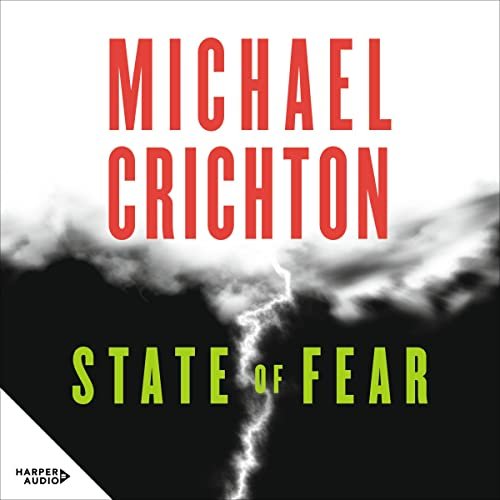
State of Fear by Michael Crichton

December 18, 2023 by Barry J. Klazura 2 Comments

A second read for me (first was in 2006) and even more timely than then. Crichton who wrote numerous excellent novels based on “science” (he was an MD) makes it clear that he was skeptical of the concept of man’s impact on climate change.  It would be nice if those who believe in man’s impact were to read this book, but that is asking far too much of those who embrace that religion, I mean theory (sorry, I do not accept it as fact either).

The novel moves quickly and has numerous charts and graphs showing both sides of the debate which makes for an interesting addition to the story. In the novel, a major environmental group works to create huge disasters to prove their point about the environment. One of the problems, however, is that they plan to cash in on each disaster and use them to increase their capitalization. The leaders of the group of lawyers (hard to believe) are merely using others to feather their own nests, manufacturing events and causes.

In the book, several interesting questions and facts are raised, such as:

  1. Why is it that when a scientist releases a study against man’s impact, and if he is paid by an oil company, etc., his study is bias, but when a counter study is released by a scientist paid by an environmental disaster group is released, it is not viewed in the same way.  Does anyone who is paid ever release a study which goes against the hand that feeds them?
  2. Are the oceans rising? Yes, and they have been for about 10,000 years, so how can it be blamed on humanity?
  3. When the UN formed the Intergovernmental Panel on Climate Change in the late 1980’s, their statement that there was “a discernable human influence” on climate was generate after the scientist went home and was contrary to the document the scientist had signed during the conference.
  4. Scientists and others make silly statements such as Paul Ehrlich’s prediction that 50% of all species would be extinct by the year 2000. Yet no one knows the exact number of species; estimates range to from 3,000,000 to 100,000,000 so how can Ehrlich be given any print space with such a silly statement.
  5. Back in 1998 a court overturned the EPAs findings on second hand smoke as the EPA violated its own guidelines in order to come up with a slanted finding; yet despite that finding which was not disputed by the EPA, laws across the country have been passed and we still hear that 50,000 people a year die from this “problem”.

The book is filled with information that should make most people question the idea that humanity has even a minor impact on global change. As the book points out, “at any moment there are 1500 electrical storms across the planet. Eleven lightning bolts strike the ground each second. A tornado tears across the surface every six hours. And every four days, a giant cyclonic storm, hundreds of miles in diameter spins over the ocean and wreaks havoc on the land.”  And, if we look at the disasters we have achieved (such as how Yellow Stone Park has still not recovered from our management during the first years we decided to “save” the area), we have far to go to understand the world we live in.

There is one other interesting theory in the book which he titles the PLM (political-legal-media) powerhouse which has supplanted Eisenhower’s military-industrial complex. The function of the PLM is to create fear; we live in the richest nation in history, with unlimited food, freedom to travel, options and choices, education, etc. and yet people are afraid for the future. If people have fears, it is an opportunity for those who manage the PLM to profit and gain more control and power. An interesting concept.

Given the recent farcial COP28 orgy of food, drink and private jets, this old book is amazingly timely. There is much in this book to get one thinking and I recommend it as a follow-up to your summer reading.

Share:
Reading time: 3 min
Uncategorized

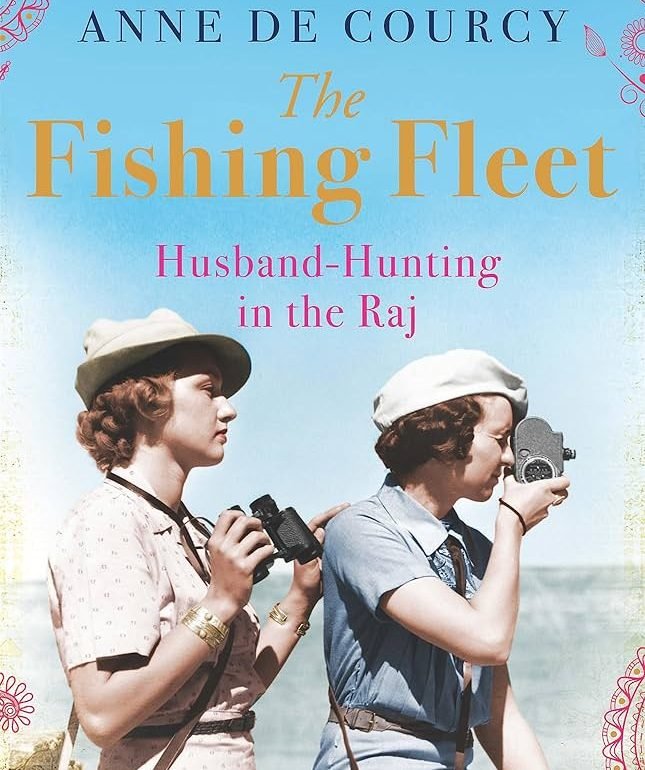
The Fishing Fleet by Anne De Courcy

October 20, 2023 by Barry J. Klazura No Comments

From 1671 until the fall of the Raj and the independence of India, many thousands of English women would make a long and often dangerous journey to the Raj to find a husband. The voyage was known as “The Fishing Fleet” and those women who failed in their quest went back to England on a voyage called “The Empties.”  Most of the women were away from home for the first time and as the running of the Raj was a male endeavor, the women who landed at Madras, Calcutta and Bombay were outnumbered by English males who substituted sports for sex while they paid their dues in an attempt to create a successful career. Thrown into a whirlwind of parties, balls, and sightseeing, they were the center of attraction and could receive numerous proposals after speaking to a man for only a few minutes.

The process started while the English presence in India was the domain of the East India Company who would pay for the passage and a stipend for eligible women to make the long voyage. After the Mutiny, this type of arrangement fell off, but given that there was a surplus of eligible women in the U.K. (approximately 750,000 a year), well, what was a girl to do?

For the males in the Raj, especially those in the Indian Civil Service (ICS), the opportunity for female company became less and less, especially after three decrees which created a color and social barrier between the native Indians and the white population. A young man in the ICS could expect to wait at least ten years before he could obtain a position and income by which he could afford to marry and any thought of having a relationship with a native woman was simply beyond the pale and an excellent way to end ones’ career. The men therefore led almost monastic lives as they travelled across India performing their lists of duties. For the ICS, military, planters and any other Europeans, there were simply not enough white females to go around. Any excess energy was directed towards sports such as hunting, polo, cricket, etc.

De Courcy does a wonderful job of putting one into the society of the time; while all of the balls and parties sound wonderful, she reminds the reader that it was customary to change as many a four times a day, not for fashion reasons, but because clothing would turn black from all of the bugs that the wearer would kill in the normal course of events.  Imaging dancing on a floor which is covered in a white cloth but which during the evening turns black and red from the squashed insects. Then of course you have the diseases (cholera, diphtheria, etc.) and the danger of rabies (even today, there is a death every thirty minutes from rabies in India).

Despite the challenges for both men and women, many marriages were made and then for the new bride, she would follow her husband off into the mountains or jungles where she would lead an insular life, often cut off from the exciting would which had greeter her. The housing could be rudimentary, and her husband might not have a “leave” to go back to a major city for twelve to twenty-four months. In the case of childbirth, she might go to a neighbor’s home if she had time or must make do with whomever was at hand. Whatever comfort she would have from her children would often stop at the age of six as both boys and girls were sent back to England for their education. If the children were lucky, they would stay with an aunt or uncle, but if not, they would live years at the various schools, often alone during the holidays. Women were therefore torn between staying with their husband or leaving to care for their children. After ten years or so, the children would go to India to see a father and mother they hardly knew except through letters.

As usual, De Courcy has provided the reader with a realistic view of the subject matter. The decisions that individuals had to make and the challenges they faced will make most readers realize how fortunate we are in how we live today.

Share:
Reading time: 3 min
Uncategorized

Civil War in France?

July 11, 2023 by Barry J. Klazura No Comments

Less than one month ago (06/19), I posted on my blog, “France at the Crossroads”. It was an article which questioned if France was governable given several internal challenges which have been ignored and glossed over for decades. Although the article was excellent, it ignored what should be viewed as it’s greatest challenge, immigrants who do not or will not assimilate.

This latest article asks the question, “Is France on the brink of a civil war?”  Unfortunately, I do not believe it is hyperbole as it is now acknowledged that there are over seven hundred and fifty “no go zones” which police, fire and emergency medical units met with not only hostility, but street blockages, rioting and fire bombing. As little as three years ago, French government officials denied any such “no go zones” existed. These zones have even begun to filter into the smallest rural communities where local municipal services are minimal and the number of church desecrations and murder of priests has been on the rise.

The recent weeks of rioting which continued although faced with forty-five thousand police poses a deadly challenge to French leadership which for at least three administrations has promised to address but has produced nothing. Other European nations have taken steps to maintain their unique cultures, notable Poland, Hungary, Denmark, Finland, and others. Often the steps taken are hard, such as limiting welfare, stopping family reunification, stopping new immigration, etc. With such a large number of immigrants who so aggressively reject French and Western values, France (like Sweden) faces a time of trials and hardship if they decide to act to save their values. The alternative is the possible destruction of centuries of culture and progress with a march back into the Middle Ages.

https://www.gatestoneinstitute.org/19798/france-chaos

Share:
Reading time: 1 min
Uncategorized

The Missing Numbers in the Child Poverty Rate

October 19, 2022 by Barry J. Klazura No Comments

If you were as sloppy on your federal tax return is as the Federal government is in reporting the child poverty rate, you would be carted off to jail. How is it possible for the census bureau to exclude nearly two trillion dollars in transfer payments (such as food stamps. Children’s Health Insurance, rent subsidies, etc.) which inflates the percent of children living in poverty? Fifty years ago, the average family with children received about $10,000 in subsidies (welfare); today that number stands at over $45,000.

The problem with how the numbers are reported is not only that they are inaccurate but that they create a rationale for increasing taxes to reach an unreachable goal and whose cost falls disproportionately on the shrinking middle class. While Obama Care was created and openly talked about as a wealth transfer program, the under reporting of transfers in a program such as child poverty is more insidious. The only real achievement of this type of misreporting is the creation and maintenance of an ever-growing government bureaucracy which has no vested interest in reporting the accurate numbers.

Click on the link below for the full story.

https://www.wsj.com/articles/child-poverty-data-are-missing-something-refundable-tax-credit-tranfser-payments-census-estimates-household-income-11663689293?page=1

Share:
Reading time: 1 min
Book Reviews, Uncategorized

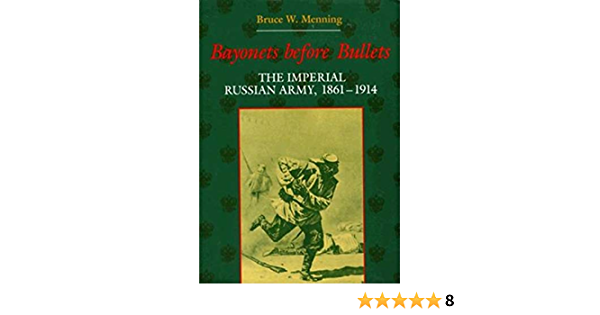
Bayonets before Bullets, the Imperial Russian Army, 1861-1914 by Bruce W. Menning

September 20, 2022 by Barry J. Klazura No Comments

The Russian army has had moments of brilliance, such as the defeat of Napoleon and the logistical miracle of following him from Moscow to Paris. There is no doubt that the army which was responsible for ninety percent of German losses in WWII (thanks in large part to the supplies provided by the U.S. and the U.K. at no charge) played a key part in the defeat of Hitler.

Today however, we see a Russian army that sadly fits the stereotype in many people’s minds; poorly trained, led and equipped. Once again, without total mobilization, the Russian army is simply too small and poorly led for the job of defending its immense country.

Is the stereotype accurate when looking at the Russian army currently in the field? This book helps to put the challenges of that army in an historical context.

With the defeat during the Crimean War, the new Czar realized that his army while large, could not compete with those of other European nations.  Thus began, over the next 50 years, attempts to update the military skills of the officer corp., the weapons, training, etc. of the entire Imperial Army.  But serious questions arose and continued to rise as rapid changes in military technology raised doubts about long held beliefs and new theories of the military art.  Those same questions would worry the military minds of other European powers.  To give a couple of examples:

  • The old theory was that the troops would line up for attack at 250 paces from the enemy, but with smokeless powder (hence a longer range), that distance began to expand to 500 paces, then 1000 and eventually over a kilometer and a half from the enemy forces.  This meant that the killing ground was expanded and what steps could be taken to minimize lives?
  • Along with the infantry, direct fire artillery since the time of Napoleon had played a major part in any attack or defense.  But with the longer range of infantry weapons, the artillerist was more open to withering fire so new tactics such as indirect fire had to be worked out.

Many officers had theories to answer these and other questions, but at the same time there were vested interests which refused to acknowledge these and many other problems.  Top generals, who fought during the Napoleonic wars still believed in the shock value of cavalry, and their influence ate up huge sums of the military budget.

Financial concerns were also a top priority.  Training was often poor, especially further away from St. Petersburg and due to tight budgets, for example, the artillery was limited to only two rounds of certain types of ammunitions per gun per year!  Bullets were expensive so large rattles were used to imitate the sound of machine guns firing. 

And yet, despite the stereotype of the dark plodding masses, gradually the army learned and moved on; allowances for more initiative at the lower levels was encouraged and a Staff school was set up to create a more professional officer class.  A major problem however, was that seniority still ruled and the more professional staff officers were cut off from reaching the highest levels.

The book covers not only the areas above, but a basic description of the war with Turkey (1877-78) and Japan (1904-05) to the eve of WWI.  It does not go into the financial arrangements with France which lead to much of Russia’s fail development prior to the war (all of which was aimed at moving the Russian army faster against Germany), but does give some detail on the under estimation of the Russian army as to the amount of munitions needed for modern war (despite the experience of the war with Japan), but then so did most of the other European nations.

An interesting book for the military historian, but it can be dry and academic.  I would like to see similar books on the German and French armies during the same time.op

iance, such as the defeat of Napoleon including it logistical excellence in its ability to follow him all the way to Paris. There is no doubt that it won the Second World War by inflicting ninety percent of the German casualities (helped in large part by the supplies provided at no cost by the U.S. Yet currently, we see a Russian army that fits the

With the defeat during the Crimean War, the new Czar realized that his army while large, could not compete with those of other European nations.  Thus began, over the next 50 years, attempts to update the military skills of the officer corp., the weapons, training, etc. of the entire Imperial Army.  But serious questions arose and continued to rise as rapid changes in military technology raised doubts about long held beliefs and new theories of the military art.  Those same questions would worry the military minds of other European powers.  To give a couple of examples:

  • The old theory was that the troops would line up for attack at 250 paces from the enemy, but with smokeless powder (hence a longer range), that distance began to expand to 500 paces, then 1000 and eventually over a kilometer and a half from the enemy forces.  This meant that the killing ground was expanded and what steps could be taken to minimize lives?
  • Along with the infantry, direct fire artillery since the time of Napoleon had played a major part in any attack or defense.  But with the longer range of infantry weapons, the artillerist was more open to withering fire so new tactics such as indirect fire had to be worked out.

Many officers had theories to answer these and other questions, but at the same time there were vested interests which refused to acknowledge these and many other problems.  Top generals, who fought during the Napoleonic wars still believed in the shock value of cavalry, and their influence ate up huge sums of the military budget.

Financial concerns were also a top priority.  Training was often poor, especially further away from St. Petersburg and due to tight budgets, for example, the artillery was limited to only two rounds of certain types of ammunitions per gun per year!  Bullets were expensive so large rattles were used to imitate the sound of machine guns firing. 

And yet, despite the stereotype of the dark plodding masses, gradually the army learned and moved on; allowances for more initiative at the lower levels was encouraged and a Staff school was set up to create a more professional officer class.  A major problem however, was that seniority still ruled and the more professional staff officers were cut off from reaching the highest levels.

The book covers not only the areas above, but a basic description of the war with Turkey (1877-78) and Japan (1904-05) to the eve of WWI.  It does not go into the financial arrangements with France which lead to much of Russia’s fail development prior to the war (all of which was aimed at moving the Russian army faster against Germany), but does give some detail on the under estimation of the Russian army as to the amount of munitions needed for modern war (despite the experience of the war with Japan), but then so did most of the other European nations.

An interesting book for the military historian, but it can be dry and academic.  I would like to see similar books on the German and French armies during the same time.

Share:
Reading time: 6 min
Uncategorized

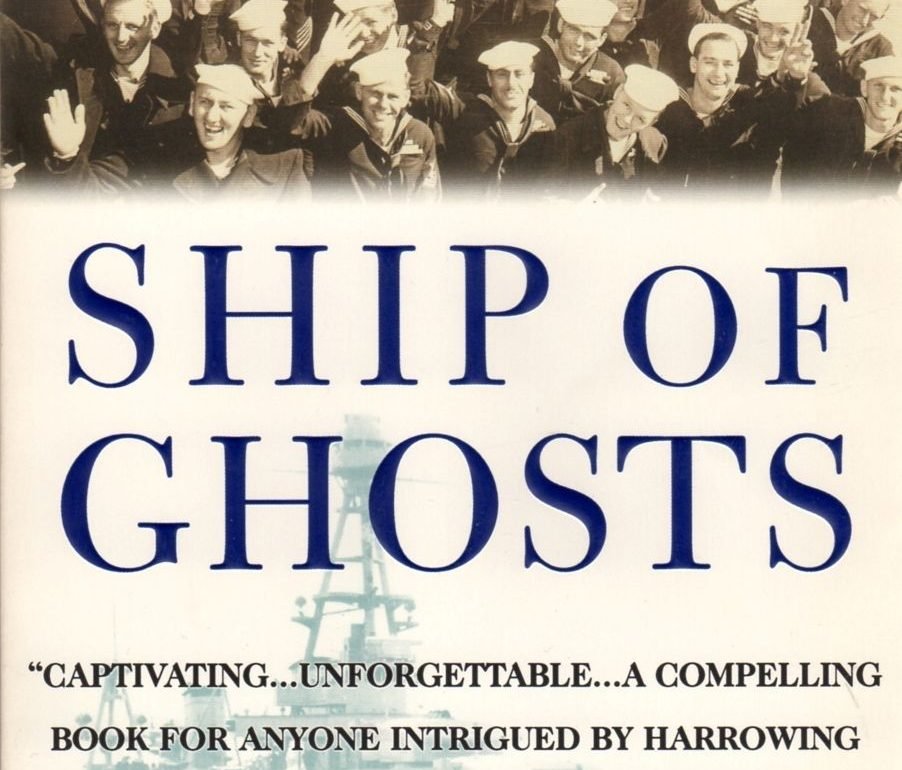
Ship of Ghosts by James D. Hornfischer

August 9, 2022 by Barry J. Klazura No Comments

Following up on his excellent book, The Last Stand of the Tin Can Sailors, the author tells the story of the small, outgunned and out fought U.S. Asiatic Fleet and its near suicidal battles during the early days of the Second World War. The Houston, a proud cruiser which was favored by F.D.R., went into battle handicapped by a lack of air cover, poor co-ordination by its British and Dutch allies and a freak bomb hit which eliminated its main firepower by 33%.

In a series of running battles, the Houston was sunk but the ordeal for the crew (only about three hundred out of 1300 survived the sea battle) was just beginning as they became prisoners of the victorious Japanese. Unchecked by Geneva Convention and used to physical punishment by their superiors, the Japanese and then Korean guards were vicious in their treatment of the survivors. Gradually the survivors were shipped to various parts of the conquered territory by the Japanese; the mines of Japan, the jungles of Indochina and worse of all, for construction along the proposed railroad through Burma. The movie, Bridge over the River Kwai paints an idealized, sanitized vision of the reality the men faced. The concept of building a railroad across hundreds of thick jungles where every rail, every tie, every bit of food had to be manhandled while the Allied prisoners were physically abused by the guards. It is estimated that over 100,000 locals who were forced to work on the construction project died from diseases, snakes, beatings, etc. The Americans which suffering terrible losses took basic precautions to fight back against the diseases; each man dipped his cup in boiling water to sterilize it and if a single fly landed on their meager rations, they threw the precious food away and went hungry rather than chance catching one of the diseases.

The book is well written and pays tribute to men who were presumed lost while their valiant stand and fight was lost in the size and scope of the war in the Pacific.  By keeping their discipline and working together, they survived, and this book pays their brave but forgotten fight an honor that they never really received.

Share:
Reading time: 1 min
Uncategorized

The Folly of Organic Farming and Other Pipe Dreams

May 10, 2022 by Barry J. Klazura No Comments

It appears that most of the cost for going “Green” will be paid by the lower and middle classes; rising electricity costs, food costs, inflation, slow job creation, etc. will be placed squarely on the shoulders of those who can least afford them. We are already seeing this and the type of pretzel logic that is used to jam more people into an unworkable timetable based on the dreams of planners who believe they can ignore the realities of the marketplace.

Consider the real-life situations in the article linked below, by Bjorn Lomborg, hardly an eco-Luddite. The inefficiencies of organic farming have hit hard at the nation of Sri Lanka which had been an example of solid “Green” thinking. With falling crop yields, the nation is facing not only political instability, but food shortages while fuel, medicine, and other necessities in part due to their inability to export for hard currency. The solution again is simply to put more land under cultivation which would mean destroying more forests and increased labor hours for the farmers.

Continue reading
Share:
Reading time: 2 min
Uncategorized

Can You Afford To Be Saved?

January 8, 2022 by Barry J. Klazura No Comments

Slowly, ever so slowly, the world is beginning to learn the cost of going “green” and it is not pretty. A quick study of Americans showed that they would be willing to spend $100 a year to “save the planet” but the actual cost is closer to $5,000 a year; this includes providing India-for example=$1,000,000,000,000 (trillion) as a start to solve their pollution. Obviously, that is not going to happen, and it is foolish to expect the leaders of India, China, and the entire Third World to hold back their nations development while the wealthy nations go on their merry way. While you are expected to separate your garbage into various containers, India and China are building hundreds of new coal powered plants without the latest coal scrubbing technology and Germany is breaking records of emitting CO2.

Politicians who have been hiding the cost of going “green” to pander for votes are running up against the actual cost of their promises and they quake with the thought of raising taxes to meet the costs. What is to be done? The world leaders need to realize that you cannot have it all and that they need to prioritize within realistic budget figures what will provide the most benefit at the best cost.

The link to the article will provide you with more real-world information on the cost and options than all the sensational propaganda spewed out by those who make their living by beating the ”green” drum.

https://www.wsj.com/articles/soaring-energy-prices-only-the-beginning-climate-change-net-zero-renewable-wind-electricity-11641417084?mod=Searchresults_pos1&page=1

Share:
Reading time: 1 min
Uncategorized

The Age of Illusions: How America Squandered Its Cold War Victory

August 17, 2021 by Barry J. Klazura No Comments

Over the past several years, I have wondered how after our victory over the Soviet Union, we have gone from being a super-power (at one time also called a hyper-power) to being a nation torn internally and failing internationally. From backing down from a red line in Syria, to leaving the Kurds to the debacle of our poorly planned and executed exit from Afghanistan, we seem to limp along, befuddled by third rate players who run circles around our “best and the brightest.” 

Continue reading
Share:
Reading time: 2 min
Uncategorized

China and Cryptocurrency

July 28, 2021 by Barry J. Klazura No Comments

China, as outlined in “Unrestricted Warfare” by Col. Qiao Liang and Col. Wang Xiansui , recently translated from the original People’s Liberation Army documents, is willing to commit to warfare by any means; conventional, biological, hacking, etc. Becoming the world’s dominate currency, especially through cryptocurrency provides China with the ability to strangle any economy. The article linked below points out that possibility and what it can mean to the world. China already is beginning to use non-cash transactions to control its population and stands ready to build a wall of immunity to foreign sanctions for human rights abuses and foreign actions. Is the U.S. taking this threat seriously? https://www.gatestoneinstitute.org/17487/china-digital-currency

Share:
Reading time: 1 min
Page 2 of 3«123»

Barry J. Klazura

Barry Klazura sipping grappa

With a Masters Degree in Guerrilla Warfare and Totalitarianism, Mr. Klazura was well prepped for a career in Sales and General Management, consulting on corporate startups and turnarounds as well as lecturing on history and politics.  For the past twenty years he has focused on being a financial advisor and consulting.

Delivered To Your Inbox

Sign up to get an email when a new article is published.

Topics

  • American Civil War
  • Biography
  • Book Reviews
  • Cigar Reviews
  • Coronavirus
  • Current Affairs
  • Education
  • Environment
  • Factoids
  • Government
  • Lifestyle, Cigars & More
  • Liquid Refreshments
  • Musings
  • Quips and Historical Facts
  • Society
  • Travel
  • Uncategorized
  • World War I

Subjects

book Books-Russia/Soviet Union Books 21st Century Books 1919-2000 Books Ancient to 1900 Books Asia Books Biography Books Fiction Books Germany 1919-1945 Books Pre-WWI books Viet Nam books world war I Books WW1 Books WWI Books WWII Cigar Friendly Location Amsterdam Cigar Friendly Locations-London Cigar Friendly Locations-New Orleans Cigar Friendly Locations-New York Civil War Coronavirus Environment Korean War World War I World War One

Recent Articles

At Stalin’s Side by Valentin Berezhkov

July 15, 2026
The Price of Victory by N.A.M. Rodger

The Price of Victory by N.A.M. Rodger

June 26, 2026
Frontsoldaten: The German Soldier in World War II by Stephen G. Fritz

Frontsoldaten: The German Soldier in World War II by Stephen G. Fritz

June 5, 2026
Organizer of Victory, 1943-1945, George C. Marshall by Forrest C. Pogue

Organizer of Victory, 1943-1945, George C. Marshall by Forrest C. Pogue

May 26, 2026
Illegals Released & Our Leaders

Illegals Released & Our Leaders

May 10, 2026

Inquiries and Comments

For general inquiries and comments, email AOTOHcomments@gmail.com.

Facebook
© 2020 And On The Other Hand. All rights reserved.