

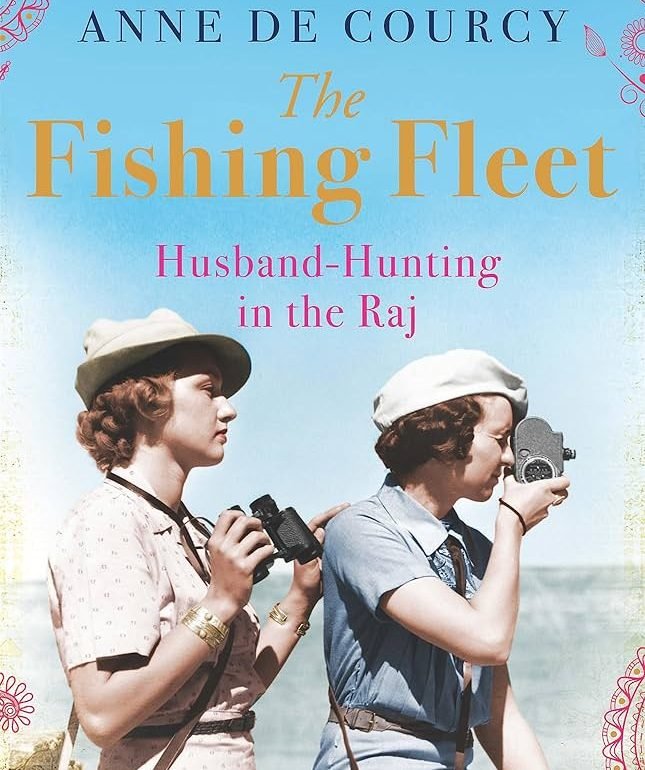
From 1671 until the fall of the Raj and the independence of India, many thousands of English women would make a long and often dangerous journey to the Raj to find a husband. The voyage was known as “The Fishing Fleet” and those women who failed in their quest went back to England on a voyage called “The Empties.” Most of the women were away from home for the first time and as the running of the Raj was a male endeavor, the women who landed at Madras, Calcutta and Bombay were outnumbered by English males who substituted sports for sex while they paid their dues in an attempt to create a successful career. Thrown into a whirlwind of parties, balls, and sightseeing, they were the center of attraction and could receive numerous proposals after speaking to a man for only a few minutes.
The process started while the English presence in India was the domain of the East India Company who would pay for the passage and a stipend for eligible women to make the long voyage. After the Mutiny, this type of arrangement fell off, but given that there was a surplus of eligible women in the U.K. (approximately 750,000 a year), well, what was a girl to do?
For the males in the Raj, especially those in the Indian Civil Service (ICS), the opportunity for female company became less and less, especially after three decrees which created a color and social barrier between the native Indians and the white population. A young man in the ICS could expect to wait at least ten years before he could obtain a position and income by which he could afford to marry and any thought of having a relationship with a native woman was simply beyond the pale and an excellent way to end ones’ career. The men therefore led almost monastic lives as they travelled across India performing their lists of duties. For the ICS, military, planters and any other Europeans, there were simply not enough white females to go around. Any excess energy was directed towards sports such as hunting, polo, cricket, etc.
De Courcy does a wonderful job of putting one into the society of the time; while all of the balls and parties sound wonderful, she reminds the reader that it was customary to change as many a four times a day, not for fashion reasons, but because clothing would turn black from all of the bugs that the wearer would kill in the normal course of events. Imaging dancing on a floor which is covered in a white cloth but which during the evening turns black and red from the squashed insects. Then of course you have the diseases (cholera, diphtheria, etc.) and the danger of rabies (even today, there is a death every thirty minutes from rabies in India).
Despite the challenges for both men and women, many marriages were made and then for the new bride, she would follow her husband off into the mountains or jungles where she would lead an insular life, often cut off from the exciting would which had greeter her. The housing could be rudimentary, and her husband might not have a “leave” to go back to a major city for twelve to twenty-four months. In the case of childbirth, she might go to a neighbor’s home if she had time or must make do with whomever was at hand. Whatever comfort she would have from her children would often stop at the age of six as both boys and girls were sent back to England for their education. If the children were lucky, they would stay with an aunt or uncle, but if not, they would live years at the various schools, often alone during the holidays. Women were therefore torn between staying with their husband or leaving to care for their children. After ten years or so, the children would go to India to see a father and mother they hardly knew except through letters.
As usual, De Courcy has provided the reader with a realistic view of the subject matter. The decisions that individuals had to make and the challenges they faced will make most readers realize how fortunate we are in how we live today.