Living in a year-round vacation land (Southern California), my wife and I enjoy going to colder areas for December as a real change of pace. Eastern Europe (or as the Europeans prefer to say, Central Europe) offers advantages, such as fewer tourists, lower prices, a lower crime rate and world-famous Christmas fairs. Although it takes a bit longer to get there, the effort is well worth the time.
HUNGARY: Unfortunately, our connecting flight out of London was missed (for details, read the section on travel considerations) so we arrived in Budapest late in the evening, thus losing about half a day of our stay. Yet we made the best of it and walked through some of the Christmas fairs that are centered around the high-end shopping district. The weather was just above freezing but dry with no wind, so it was great to purchase a hot drink at any of the stalls which offer all sorts of traditional Hungarian foods and sweets as well as handy crafts, Christmas ornaments, etc. Take your drink, grab a sausage or a Hungarian pizza called a “Langosh,” sit at one of the tables and enjoy the sights and sounds of the holiday. You will not mind the temperature as everyone is smiling and having a wonderful time. The evening was a success, and we looked forward to the next couple of days in a beautiful city along the Danube.
The next day, to help you counter your jet lag, you might want to visit one of the thermal baths that are around Budapest. I suggest you try the Szechenyi bath which was built around 1910. All you need is a swimsuit, a towel and flip-flops and you are set to go. For a small fee you get a cubby hole locking changing room in which you can leave your valuables and you are set to go. As the temperature was about 37 degrees, we covered the distance from the changing room to the water quickly and then immersed ourselves in the wonderfully warm water. The steam coming off the water, the darkness of the day all served to welcome us to a wonderful experience. There were others already in the water including couples, two men seriously discussing either politics or business, families (children must be at least fourteen). Of course, there were those who were taking selfies and others who were just floating, enjoying the warmth as it soaked into every bit of your body. There is also a sauna and indoor pools, plus a pool just for swimming. I suggest you make a reservation as the baths are extremely popular and check to see what services are available (some have single sex days, wave machines, etc.). Do not worry about being gawked at, you will see all kinds of body shapes, but each one is concentrating on enjoying the thermal waters.
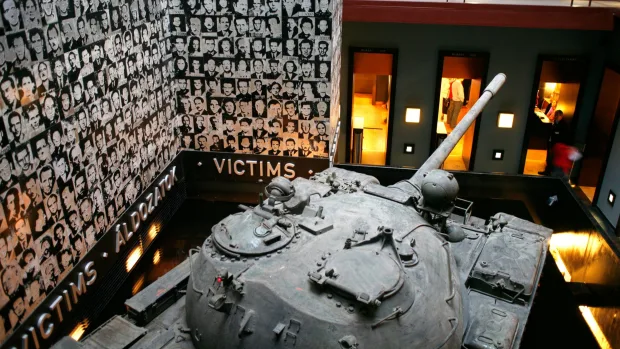
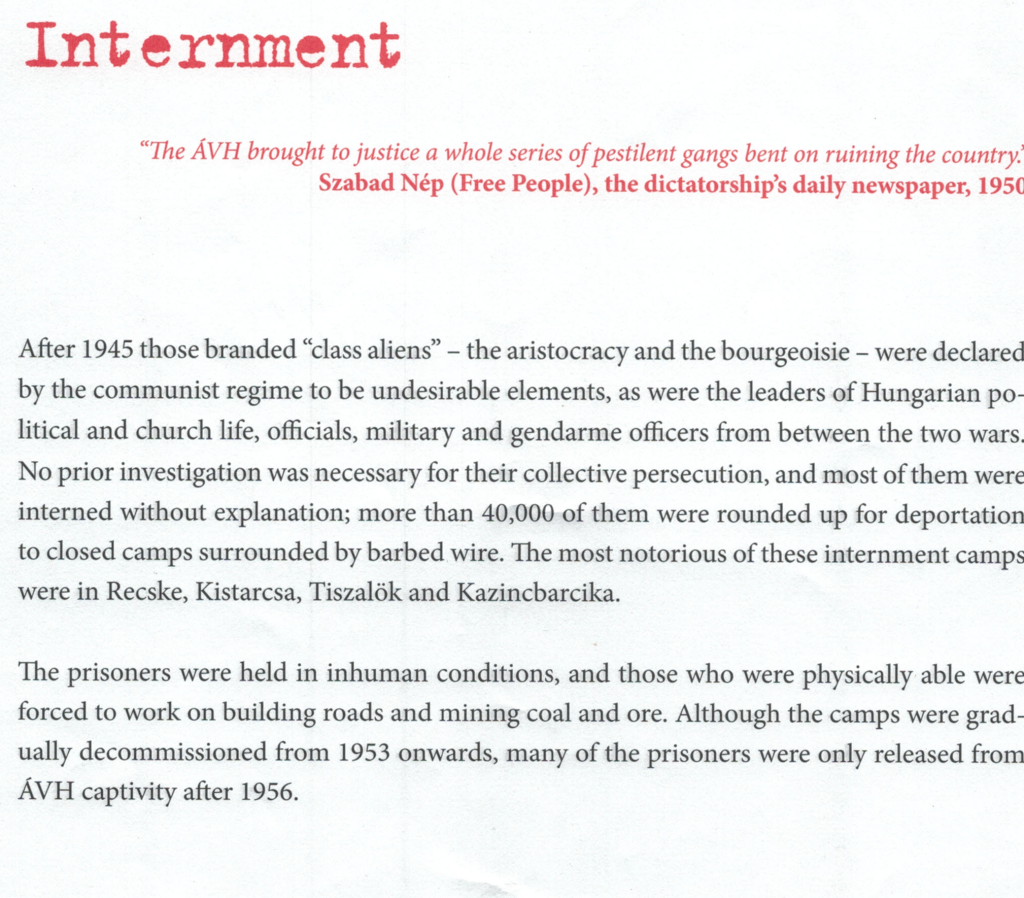
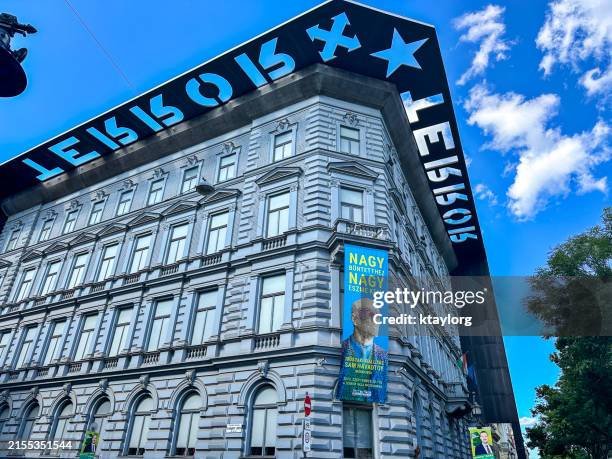
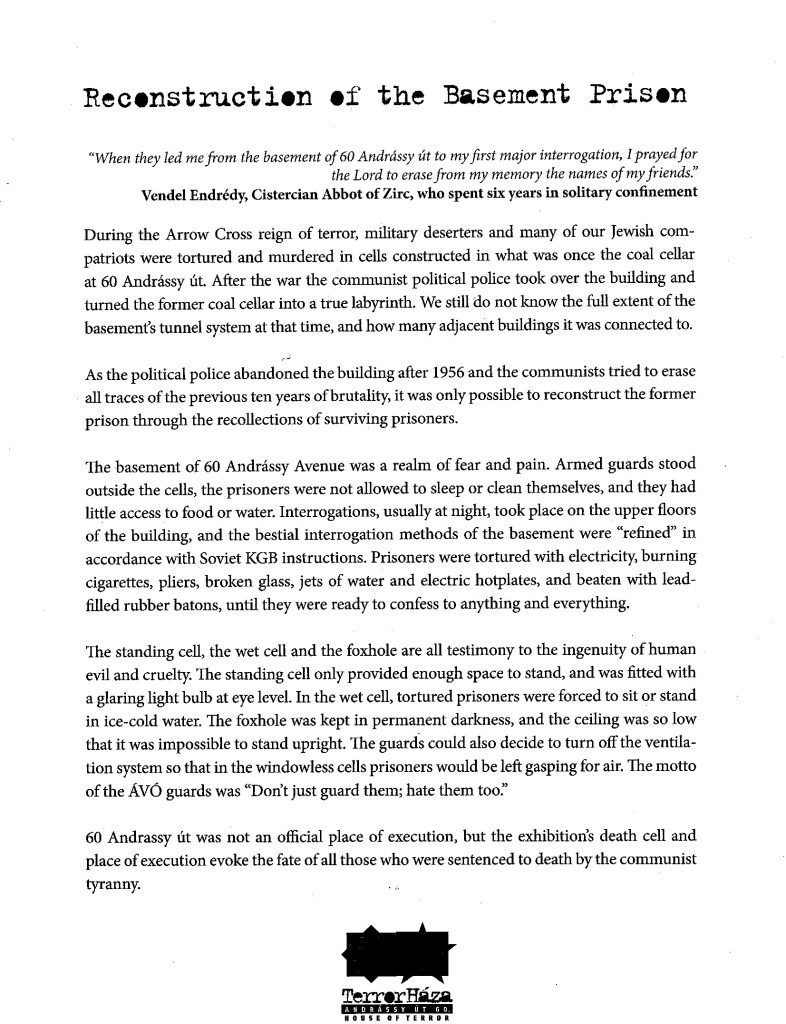
The city has a large number of museums, but we had been to Budapest before and there are sights which are not on most tourists’ radar. One is the House of Terror. No, it is not a Disney sight gone bad, but rather the old center of the Hungarian Soviet secret police. It was originally known as the House of Loyalty when it was the headquarters of the fascist Arrow-Cross party during World War II. After the war, the Soviet imposed government took over the building, execution, and torture cells and all. On display are the actual execution chambers, interrogation rooms and devices, plus the thousands of photos and stories of individuals who ran afoul of the Communist regime through thought, word, or deed. It is good to see young adults in the museum so that the reality of that brave new world can be remembered.
There are two items which are so important to understand the Hungarian psyche; the revolution of 1848 when Hungary tried to gain total independence from the Hapsburgs and the decades of Communist rule when at least 20% of the population was either arrested, tortured, investigated, spied upon or sent to Hungarian political prisons. The Hungarians have lived under Communism, so they are hardly likely to put up with any form of authoritarian rule; they want order but not order at any price, so Budapest is blessed with wonderful statues of Hungarian hero is going back hundreds of years. In fact, one of the first things the Hungarians did after the overthrow of Communism was to remove the imposing and brutal Soviet statues, busts, and plaques and deposit them in the “Memento Park” which is open 365 days a year. It is filled with Communist statues of the “heroic realism” school and well worth a visit to see the mindset of the totalitarians.
Handy Tips
• American Express is not used in Hungary: Master Card and Visa, no problem.
• Hungarians also accept cash (with a relish)! It is common if you hail a cab for the driver to ask you, “Cash or card.” You will find life easier if you say, “Cash.” And forget about getting a receipt for your taxi; writing War and Peace is easier than going through the procedure to secure a receipt.
• Tipping is fine, normally 10% will bring you a smile and a warm “Koszonom” (thank you).
• In the past several years, cigarette smoking has been largely replaced by vaping which can be done only out of doors, just as with tobacco smoking.
• The streets are clean, the people obey the walk/do not walk signs at intersections so pretend you are a native and everything will be great.
• As with most of Europe, making reservations for dinner is strongly encouraged. You do not want to scuttle restaurant to restaurant, hat in hand, trying to find a table.
• Hungarian is not an easy language, especially if you have no ear for languages like mol,
but it is always nice to try to have a couple of phrases while visiting a foreign land. Take the time to look up simple terms or words, (Koszi for “Thanks” or Koszonom for “thank you) even names of foods; English is widely understood and spoke in Budapest but even if you slaughter a word in Hungarian, a local will appreciate your bold attempt. Be the “good American” ambassador.
• If you have a connecting flight through Heathrow, make sure you allow more than 1/1/2 hour to catch your connector. Weather days and a very inefficient security system can make a simple procedure into a major British project.
Budapest has no shortage of good restaurants, from “new age organic” like Tati (From Farm to Table), to Italian, Mercatino (try their black pasta with shrimp). The real fun is the traditional Hungarian restaurants such as Punakorzo or Rez Kaakas. Hungarian food tends to be hardy so order accordingly.
VIENNA: Travel to Vienna from Budapest is easy, with a flight, train, or private car. A private car, while more expensive, is door to door, eliminates security checks and is much easier on the psyche.
What to say about Vienna that is not already known? A wonderful city full of history, excellent restaurants, and very good and proper Viennese service. Here are a couple of highlights which you might consider if you are looking for something different:
• Austrian military museum: Housed in a former military garrison, you are introduced to hundreds of years of military commanders as you enter the building. Their life size marble statues reflect the time when war still had a mystique of honor, rules, and glory. The building itself is one room after another of statues, paintings and exhibits tracing from the time of the Ottoman invasions to the end of World War I (although this was our second visit, the period from 1933-1945 does not seem to be covered for some strange reason). There is also a panzer and naval section which is worth a visit. The price is right (no charge), and you will understand a bit better the beautiful palaces and government buildings that you will see in the city center.
• Museums: There are museums enough and it is wise to plan your visit as not all museums are open on all the same days. The typical guide, available for no charge at your hotel, will not only give you an excellent overview of each museum and how long to budget for each (five hours is not unusual). Do not overextend yourself!
• Public Transportation: Inexpensive and on time (especially the trams and subway). And, easy to use even if you do not know German.
• Tipping: Most restaurants include a 14% service charge (often marked on the menu or on the listed on the bill) but do not be afraid to ask your server if it is included. Cabs appreciate a 10% tip and do not forget a little something for your concierge if they help you with bookings, etc.
• Central Cemetery: Although Vienna has over fifty cemeteries, this is the largest with over 300,000 monuments and over three million burials. Beethoven and Salari are both buried here as well as from all occupations and religion. The Jewish section is interesting for it is well preserved but I was not able to find out if it was destroyed during the war, rebuilt or what as most of the monuments are beautiful and look new. It was a cold, overcast day and the stillness of the grounds with the black crows perched on some monuments introduced many interesting thoughts.
No visit to Vienna is complete without a visit to Schonbrun which was the residence of the Hapsburg Emperor’s. Unlike Versailles, which was built by the French King’s to overawe the French nobles, Schonbrun was an actual residence for the emperors. Yes, there were balls and meetings at the palace, but they were based on invitations from the emperors themselves.
A treat is a dinner at Schonbrun followed by a Mozart concert in one of the beautiful rooms. They have a number of options (based on where you will be seated) from about 107-170 Euros per person, dinner included. I would recommend only signing up for the concert (about 1/1/2 hours long with a break) as only one entrée is provided and you might want to have a wider selection for your meal. The selection of pieces, both musical and vocal, are excellent and you are sitting close enough to really enjoy watching and matching the sounds to the various instruments. Enjoy!
Another meal treat is lunch or dinner at Figlmuller, for the best wiener schnitzel in Vienna. I have been there several times over a period of thirty years and the quality of service and food is always top notch! It is a real treasure to the locals, and they have two locations, yet I strongly recommend reservations. Do not make them at your own peril!
Finally, if you are looking for a good steak at a reasonable price, try Steak Point. We met a couple from Riverside during the Schonbrun concert, and they wanted to tell us about this place, but we already knew about it. Nice steaks, good sides and very reasonable.
Warsaw: A flight of just over one hour brings you to one of the fastest growing economies in Europe. A people who has long viewed themselves as the Christian bulwark against the Mongols, Turks, and Communists, they like other Eastern European nations (such as the Baltic nations, Hungary, etc.) can be a stubborn in the EU, but they know too well the price of collectivism.
We managed a one-bedroom suite at the beautiful Hotel Bristol, the hotel where Madam Curie accepted her Nobel Prize. It is next to the Presidential palace and a few steps from the Old Town city center. It is in that center where one of my grandfathers drove a taxi (horse and buggy in those days). If he were late coming home, his wife would worry that that he was caught up in one of the usual Cossack raids where people could be cut down in the streets (Warsaw at that time was under Imperial Russian control). It was because of that fear and the danger of being drafted into the Russian army that they left for the new world. A very personal thank you from me to them!
Although 90% of Warsaw was totally destroyed in WWII, especially after the Warsaw uprising, rather than leaving the ruins as an example of what war can do, the stubborn Poles dug out the old drawings, maps, etc. of the old town area and rebuilt it as it was in 1939. The Christmas market there is very special with stalls, lights and the wonderful warm windows of the restaurants which surround the central plaza. Then they did the same for much of the rest of Warsaw so the wonderful baroque buildings you see were all built after the war. I have not been in Warsaw for about ten years so to see so many beautiful high-rises around the “gift from Stalin” is really amazing. It is an example of the strength of the nation.
We had dinner at Fukier, a classical Polish restaurant which certainly has not changed since I was first there about twenty years ago. It looks out onto the square and is just as you would expect an old-world” restaurant to be decorated. In fact, the interior looks like an old country inn (only cleaner, with better art, etc.). Another excellent but newer restaurant is Elixer where each course offers one or two suggested vodkas to soothe your palate! I suggest asking for the cold vodka for as the Poles say, “it only hurts once.” Not all meals need to be grand events and there are plenty of pierogi shops throughout the city. Pierogis are like ravioli’s, filled with meat and onions, cheese, fruit, etc. The fun part is to order nine or so and sample different fillings. You will be set for the day and be able to brave the colder weather! The Poles love their pierogi’s; they are Poland’s hamburgers or hot dogs.
Food as in Hungary is relatively inexpensive. A dinner with two glasses of wine, three shots of vodka, a service of pierogi and two main courses, including service is about $100.00. You better be prepared to walk off those hearty meals! Around the Belvedere palace is a huge, beautiful park (Lazienki Park) which also contains several palaces. Although it is winter, the park is still beautiful and the rich furnishings and paintings of the palaces along with the flock of peacocks create a nice contrast to the bare trees.
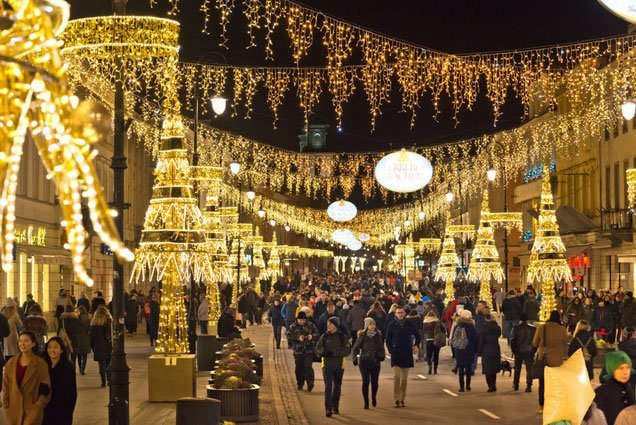
The winter fair in Warsaw is quite special. Darkness arrives about 3:30 PM and on this Saturday there were already thousands of people in the old city square, and. along the wide walkway in front of the Royal Palace. The children look in awe at the display of lights, the tall Christmas trees and it is a treat to see how they light up and laugh at the festive mood. Unlike Vienna where there are a number of festivals, the one around the old town in Warsaw is the one that you will want to see. And, during this season, the churches (all of them rebuilt) join in the festive feel and are beautifully lit. It is an amazing sight to see thousands of people, most of which are families with young children, walking in the cold, laughing, enjoying food from vendors, hot toddy drinks, shopping for those special “somethings” and enjoying the Christmas spirit. I tried to think of where we could experience that joy and experience in the U.S. but just came up short.
Although cabs are plentiful and inexpensive, we did a lot of walking (almost ten miles one day). It really is the best way to see the city and experience its special feel. There are wide boulevards lined with trees, shopping areas which are clean and devoid of graffiti, even during the winter when the temperature hovers about 32 degrees, it is a pleasure to bundle up and breathe in the fresh air.
Like all great cities, Warsaw has its share of museums. Yes, Warsaw, like Budapest and Vienna has its classical museums, but it also has unique attractions (like Budapest’s House of Terror). For example, the Katyn Museum features the murder of 20,000 Polish officers by the Soviet Union during World War II. The murder, denied for decades by the Soviet Union, was finally admitted during the reign of Gorbachev. Yet the sad episode did not end there are a special Polish delegation on its way to a special service hosted by the Russians was killed when their aircraft crashed outside of Smolensk, including the President of the Polish republic. Permanent plaques outside of the Presidential Palace commemorate the tragedy. Those plaques are part of the Polish conscious as there are plaques can be found around the city commemorating the hanging or execution of Poles during the German occupation. It helps the Poles to remember what they have suffered and why they will not go backwards.
Other excellent museums include the Polish military museum, the award-winning museum on the Warsaw uprising and the Polish museum of the history of Polish Jews.
There were numerous memorable times and sights during the trip, including the outdoor thermal bath in Hungary experienced before dawn, the concern at the Kaiser’s house, the Christmas fair in the old town of Warsaw. While we allowed four or five days in each city, it showed that one really needs more time to explore those cities as there is so much to experience. Considering we have been to each city one or more times in the past, you must simply admit that you will not “see it all” and that you will only be getting a sample of the treasures in each location. Just relax and enjoy it all!