On The Other Hand -
Book Reviews
Lifestyle, Cigars & More
Musings
About
On The Other Hand -
  • Book Reviews
  • Lifestyle, Cigars & More
  • Musings
  • About
Current Affairs, Government

DOGE is alive and well

April 8, 2026 by Barry J. Klazura No Comments

DOGE is not dead; it is still active and uncovering billions of dollars of fraud. It is doing it quietly, but it is strongly opposed by the legacy media, such as the New York Times and the real hidden state, the Federal bureaucracy.

The article attached to the link below discusses some of the fraud, inefficiency and push back that any group or individual faces when trying to look into the way your tax dollars are spent. Let’s face it: there are those in the employ of the Federal government who have a vested interest in not rooting out inefficiency, in not caring if there is fraud and who will resist any attempt at proper management.

We need to remember, however, that the type of waste that DOGE is finding exists in every government, be it at the state or local level as well as at the international level.  Keep this article in mind the next time a bond issue comes up for a vote and the government tries to convince you that taking more of your money will make life better for you.

What the Hell Happened to DOGE? – The American Mind

Share:
Reading time: 1 min
Factoids

Factoid #10

April 6, 2026 by Barry J. Klazura No Comments

Even though we are surrounded by scores of information sources, the sheer number is enough to make one go numb. Factoids will be posted periodically to bring you bits of news which may or may not catch your fancy. Most of the Factoids will be posted to bring you counter-intuitive information which may not be covered by traditional news sources; Question: why aren’t they covered? They may go against the grain of political or cultural “acceptable” thought. Or perhaps because they cannot fit into the thirty-second sound bites without raising more questions than they answer. Hopefully, you will find them of interest!

Not a Place to Visit

Communist China has just passed a new law which requires all visitors/residents and those just transiting through the airport to hand over passwords or access to their personal devices. To refuse is a criminal offense. This means that you might have to surrender all personal, banking, business, etc. correspondence and records to the Communist Chinese. Sounds like a wonderful place to visit, hey? When you are out of your room, who knows who is on your electronic device. (California Post, 4/4/2026 pp 15)

Pay for your Neighbors’ Car

The (thankfully) cripples Federal mandate for “green” cars costs the U.S. auto makers over $100,000,000,000 (that is billion) in extra costs. But some folks in government just never learn and in California (where else), a state program has been rolled out where EV owners who need battery or fuel-cell repairs, can receive up to $7,500 for those costs or $10,000 for a new EV if the damage is unrepairable. Of course it is run by the California Air Resources Board, an unelected group of “enlightened” bureaucrats and others of that ilk who cannot understand that it is your money they are spending and maybe, just maybe, you have a better use for your tax dollars. (CA Post, 4/4/2026, pp24)

Ah, There is Hope

When President Biden left office, his administration had managed to increase the 2024 Federal Register to 106,461 pages. Now I know that your life was so much better thanks to the new rules and regs so you will be disappointed that after one year in office, the Trump administration has cut the Register to “only” 61,461 pages. I will make a bet that not one member of Congress can tell us how our lives were made easier, more productive, or safer by the pages last in Trumps’ first year. (CA Post, 01/10/2026)

Forgive me for using points of interest from the California Post, but in its short existence in California, it has caused quite a bit of disturbance, reporting and noting on points that the traditional legacy media has ignored. Such fun!

Share:
Reading time: 2 min
Book Reviews

Circles of Hell; the War in Italy, 1943-45 by Eric Morris

April 1, 2026 by Barry J. Klazura No Comments

Winston Churchill thought that Italy was the “soft underbelly” of Hitler’s Europe and saw a campaign in Italy as not only an opportunity to knock Italy out of the war, but to use Italy as a springboard into the Balkans where he hoped he could insert forces in front of the advancing Soviet army.  To the Allied generals however, they saw Italy as an area unsuited for the type of fast, mobile armored that the Germans could not successfully halt.  Instead, if Italy was to be invaded, the only real advantage according to the military was a new area for Allied bombers to hit Germany from a different direction.

Then the politicians and the Generals egos stepped onto the stage.  How could Italy be invaded, and Rome and the Vatican not liberated?  How could any of the Generals be satisfied with limited objectives when on the other fronts Allied armies were surging forward?  Who wanted to be stuck in a combat theater where the opportunity for promotion was limited?  And so, step by step, the original limited set of objectives were expanded as invasions of Salerno and Anzio were thought up as opportunities to by-pass the German defenders, so Italy could be conquered via a series of leap frog maneuvers.  But no one bothered to consult the Germans who poured troops into Italy and forced the Allies to fight battles that they did not want.

Reputations were made and broken as Field Marshal Montgomery quickly exited the theater to politically capture the overall command of the invasion of France.  Generals such as Clark had tarnished their reputation as they proved to be hesitant despite a glowing academic background at West Point.  In the end, it was the common soldier who had to pay the price at botched battles, river crossings, head on assaults on mountains honeycombed with defensive positions and forgotten as glory was won elsewhere.

The Italian campaign is widely forgotten, not as much as the campaign in Burma, but one must wonder if the losses in Italy were worth the effort and diversion of effort from the main theaters.  But then, there have to enough commands for all those Generals who want to be known as the victor of this town or that city.  An interesting book, especially in the last quarter where more individual stories are provided.

Share:
Reading time: 2 min
Current Affairs, Government

As Alice would say: “Yes Toto, DOGE is alive and well.”

March 23, 2026 by Barry J. Klazura No Comments

The attached link takes you to an interview with Sam Corcos, former DOGE employee, and current Chief Information Officer for the Treasury Department. I bet you did not know that DOGE is still alive and well, fighting the good fight against the bureaucratic deep state and often, poor management throughout the Federal government, 

That there is a huge amount of fraud in the largess handed out by the Federal government is no secret. Estimates put as much as twenty percent of Medicare is fraudulent, and fraud can be found in every section of the government. The real question is “how is it allowed to happen”? Is there a lack of checks and balances? Does anyone care in bureaucracy about fraud? Do not forget, if there are serious successes in catching fraud, the government may not need so many bureaucrats. What tools are available to eliminate fraud (you know, like common sense)?

With the fraud uncovered in Minnesota, California, and other states, it may seem that the only people not involved in fraudulent activity are the U.S. taxpayers. Regardless of your political leanings, we all have a personal stake in making sure that funds are available for real problems and are not syphoned off by criminals. After all, it is your money about which we are talking.

https://americanmind.org/salvo/what-the-hell-happened-to-doge/?_hsenc=p2ANqtz-9B4kFn1fTBZHUgDEIynU0QgyQKe9pP19nzrNiRTSfFNNe9qQYpE1qxjAdYE-8m9Ndd-6_mKJO06XD8RgiJVy0SSAC-dA&_hsmi=409858060

Share:
Reading time: 1 min
Book Reviews

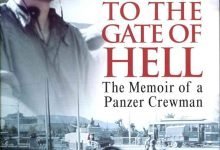
To the Gate of Hell by Armin Bottger

March 19, 2026 by Barry J. Klazura 2 Comments

I don’t believe that the author set out to create a Wehrmacht version of Catch-22, but it has come as close as any modern history of the German army to that vision of military life.  The author points out that like all militaries, the German army of WWII was full of silly rules, scams and scammers, and unfortunately, like the author, individuals who would do their best to stay out of harm’s way if someone else could pay the price. 

From the beginning, the author admits that he volunteered for the Wehrmacht so that he could achieve his Abitur without having to sit for it.  From there, he admits to becoming a radio operator in a tank as it was less work than being a driver, and lying about his health so that he could avoid being posted back to the front.

Most histories written by combat veterans stress their loyalty to their comrades, the men they served with, even their personal guilt that they survived while their friends were killed in combat while they survived.  Bottger does not come at any point close to feeling a kinship with the men in his units and that is what makes this history of interest.  No noble deeds, no comradeship, no sacrifice: nothing but his focus on himself.  In that sense he can be viewed as very contemporary, but fortunately he was not at the front enough to cost his comrades because of his focus on the self. When I finished the book I was a bit disgusted with the author and he was definately put on the list of people I would not like to have over for dinner.

Share:
Reading time: 1 min
Current Affairs, Education, Government, Musings

A Fascinating Interview

March 12, 2026 by Barry J. Klazura No Comments

Catherine Austin Fitts has had an exceptional career. From being the Assistant Secretary of Housing and Urban Development under George H. Bush, to starting up her own investment brokerage firm and managing a five-hundred-billion-dollar investment portfolio, she is an internationally recognized investment banker.

After years of research, she has raised significant questions about the government’s handling of money, claiming that over twenty-one trillion dollars is unaccounted for and has been siphoned off by various agencies to fund international operations, both military and non-military “off the books.”  She claims these actions are detrimental to the well-being of the public.

The interview with Fitts by Tucker Carlson is amazing in the breath of topics covered and the information provided to the general public. One key area is her concern about the push by governments towards the elimination of a cash economy. Such a move will all but eliminate the mobility and freedom we have today as it will be easy for any government to simply freeze anyone out of the economy. Think back to the action by the Canadian government during the truckers strikes during Covid. By the “flip of a switch,” the Canadian government made sure the protesting truckers lost access to their funds in banks, use of credit cards: they could not get gas, purchase food, etc. That is the end result of the elimination of a cash economy.

In this case, Mr. Carlson wisely allows Fitts to do the overwhelming majority of the talking as he is clearly dealing with an individual who is his superior intellectually.

Be sure to visit www.Solari.com, Fitt’s foundation/website for weekly news that very well may change your perspective on the world.

https://tuckercarlson.com/tucker-show-catherine-fitts

Share:
Reading time: 1 min
Book Reviews

Ivan’s War, Life and Death in the Red Army, 1939-1945 by Catherine Merridale

March 10, 2026 by Barry J. Klazura No Comments

There is a popular vision of the war on the “Eastern Front” (so termed by Western historians as opposed to the “Great Patriotic War as the battle field is called by Soviet historians), that especially after the battle of Kursk, the German army was driven back by a better equipped resurgent Red Army.  The sufferings of the average Soviet soldier, especially during the first weeks after the invasion are remembered briefly but another popular image of a bedraggled German army from late 1943 through the end of the war persists.

Merridale, in this excellent book, does much to dispel the first myth (a better equipped Red Army), especially in the area of the life of the ordinary Soviet infantryman.  While it is true that once Soviet war production was brought fully on line, their ability to concentrate on one front (as opposed to the Germans who had to face battle in Western Europe, Italy, the Balkans, etc.) gave them a huge material advantage vs. the Wehrmacht.  At the sharp end of the bayonet, food shortages, worn out boots, poor medical care, an almost total lack of rotation and home leave as well as poor Generalship (charge across an undefended mine field, the losses would be the same as if there were no mine field but the Germans had protected it with machine guns) led to decreasing morale, insubordination and even a hope that once the Germans were driven off Soviet soil (as opposed to driving onto Berlin) that everyone could go home.  There was an increasing belief and hope that the sacrifices of the troops would lead to a better, easier life after the war as the people would have proven themselves capable of a better life.

She covers the subject of the general behavior of the Soviet troops, especially after leaving Soviet soil.  Wide spread rape, looting and sheer destruction, all justified as revenge for the acts of the Wehrmacht was seen even at the time as damaging to the image of the Soviet Union.  Yet, after three or more years of life at the front and the vicious propaganda  (officially approved) by writers such as Ilya Ehrenburg, the soldiers felt it was their right to degrade the Germans (and almost anyone else who fell in their clutches) with the worse punishments. Any Soviet citizens who were found in concentration camps (as prisoners) were also brutally treated as they were regarded as potential traitors (regardless of how they were captured and what they had endured).

The book also covers, to a lesser extent, the problems faced by couples who were separated for years, often within weeks after a hasty marriage. The average Soviet citizen also had a terrible war, even if they were not in German occupied territory.  Food rationing, strict security measures and the rule that any unaccounted Soviet soldier (due to death, capture, etc.) would be treated as a deserter and his family cut off from government assistance (including food coupons) left literally millions of mothers, wives and children on the verge of starvation. The readjustment to civilian life was difficult as any what we call PTSD was viewed as un-Soviet weakness and officially discounted.  That, plus the general poverty after the war, the cost of rebuilding thousands of destroyed villages and cities and a return to pre-war tight security and policing lead to the burying of bitterness and disillusionment.

Perhaps nothing puts the plight of the average Soviet soldier in perspective better than the fact that during the war, the Soviets executed over 150,000 of their own troops for desertion, cowardice, insubordination, etc.  This during a war when the U.S. executed one soldier for desertion.  There was after the war, for nearly two decades, little official recognition of the sacrifices by Soviet troops in their own land.  For decades, their sacrifices and those of their families were ignored and as the last of that generation dies out, for all their sins and foibles, they deserve a place of honor.

Share:
Reading time: 3 min
Education, Lifestyle, Cigars & More, Liquid Refreshments

White Port

March 4, 2026 by Barry J. Klazura 2 Comments

My favorite wife recently returned from a business trip to Barcelona and brought me a nice bottle of white port. I knew of the existence of white port but had never sipped any, relying on the traditional ruby port at the appropriate time.

White port comes, unsurprisingly, unlike ruby port, from white grapes and is lighter in taste with a nice golden color. While ruby port has a strong taste in grapes, the white taste if more floral with hints of citrus. This makes white port more of a dessert wine or as a fortified aperitif and is excellent if served cold.

The bottle she brought was from the Ferreira concern which was founded in 1751. What made the gift even better was that it was under the Dona Antonia label and had been aged for ten years. Like red port, armagnac and calvados, a ten-year span helps to ensure that a product is going to provide a very enjoyable treat. I have tasted one- and three-year-old bottles of calvados, and it was a good lesson in tasting a cooking product from a product designed to please.

White port may be a bit more difficult to find, but it is worth the effort and I do not believe you will be disappointed. Enjoy!

Share:
Reading time: 1 min
Musings

The Introduction

February 26, 2026 by Barry J. Klazura No Comments

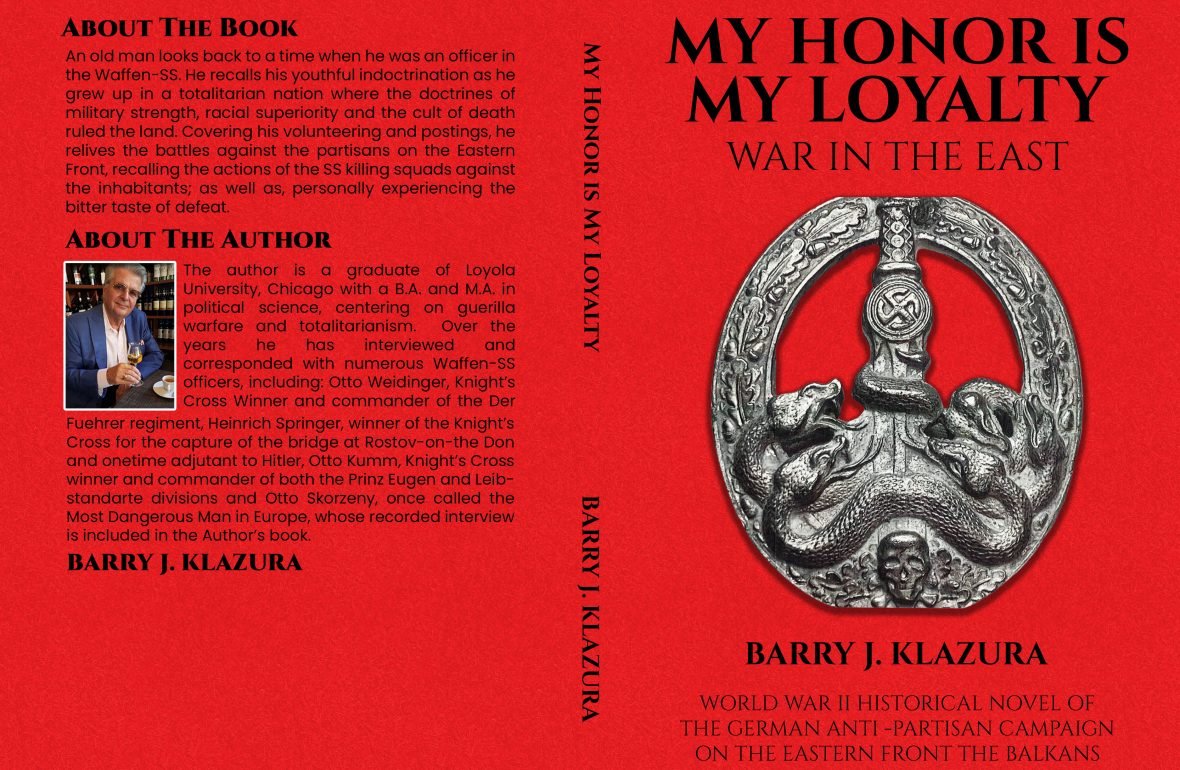
I mentioned a week or so ago that my historical novel, My Honor is my Loyalty: War in the East has been released. Being a novel about war, I realize it is not everyone’s “cup of tea”, but I thought some of the readers of this blog might find it of interest.

This is the introduction to the book, I hope some of you find it of interest.


I am an old man now, but I was once young. Young and strong, sure of myself, and I believed I knew all the answers. Like the youth of all ages, I was filled with vitality and idealism, and like youth throughout the ages, I followed older men who were strong. Those older men were filled with their own ideals, some of which were good and some of which were bad. I was not political, and like all youth of a similar age, I did not fully understand everything that was said, and I could not always put it in its proper context, but I loved my country and wanted to defend it. The strong man I followed was our Fuehrer.

It has been many years since the events I wrote about, and I think of the many comrades who are gone. One by one, they have fallen in the long years since the end of the war. Some died peacefully, some died terrible deaths caused by disease. Some learned something in those years, some learned nothing. I sat with them, listened to their arguments about history and the world and have, for the most part, kept my own counsel. I held my tongue and did not criticize or argue with others about morality, or politics, or just about any subject. To do so is foolish, for in the end, we are all only small cogs in a great machine that neither recognizes nor cares for us.I am a veteran of that war that is known by different names in different countries: World War II, The Great Patriotic War, The Great Crusade, and other names. But they all stand for the long, terrible six years when, if there is such a thing as the physical presence of evil, it was alive and well and walking our planet like a great bloody beast. It was a time when the world went mad, when men and women of too many nations thought what they perceived to be an easy way to gain all that they sought. They did not seek their betterment by hard work or sacrifice, but rather by stealing the goods and lives and wealth of their neighbors. They looked for and found someone who was smaller, weaker, and less brutal and believed that because of their strength, they had a right to their neighbor’s wealth.
This philosophy did not come upon the world suddenly but was born of defeat and frustration and anger and, most of all, weakness. Weakness in those who should have been strong, who should have stood for goodness and progress and human dignity. Those who should have been a bulwark for strength were weak, and that allowed others to become strong. Those new strong men seized upon the idealism of youth and turned that into destruction. The brightest, best educated generation in the history of the world committed terrible deeds of slaughter and have left their mark on the world. The youth of Germany and Italy, Russia and China and Japan marched off to cause the deaths of almost a hundred million and the destruction of the old world. All for naught.
Yet perhaps it was not for naught. Whoever says that war settles nothing has never been on a battlefield, in a camp or even in a war. War settles much; it settles who will live and who will die, who will be whole and who will be maimed, who will be wealthy and who will be poor. Stand on any battlefield and tell me that war settles nothing. It may notsettle some great questions in the Universe, but for millions and millions, it is the final arbitrator.
The great pity is that we have learned nothing, for it still goes on today as if the past had never happened. With the best of intentions, those who should know better and who have access to all knowledge choose to ignore the lessons of the past and strive not for unity but divisiveness and flexibility.
It is a strange paradox, and it is easy to see that there is a fine line between right and wrong, between personal freedom and personal irresponsibility, and between using strength for good and the abuse of that strength. It takes fine minds and common sense to make sound judgments, and somehow, we just do not have an abundance of those qualities in the world today.
Perhaps I ramble too much, but I do love to philosophize, if only to myself! So, let me get back to the beginning, or at least to a point where you may be able to make some sense of all of this. You see, when I was young, I was a warrior. I was strong and sure and deadly. I was very good at what I did, and I extracted a terrible price from my enemies. I had many enemies. When I was growing up in Germany after the seizure of power in 1933 by Hitler, we were told that there were enemies all around. We only had to look at the map, to look at the breadlines and millions of unemployed to know that we were surrounded by enemies. But Hitler had the answers, and we believed.
In 1933, I was nine years old, and like all young people, I was sure that I was immortal. The concept of death was totally alien to me as I had no experience with life or reality. With that childish belief of my immortality, suddenly came a leader who gave us a vision of the future, where we would create a new world based on strength and vitality and community, the Volksgemeinschaft. In our community, in our new Germany, everyone would work and be rewarded if each agreed to be part of the whole. We were all to sacrifice a little so that we could all gain a lot. The humiliating stain of 1918 would be erased, and in its place, the Germany of Goethe, Frederick the Great and Bismarck would be resurrected. The past glories of Germany, who had given the world music and art and great literature, would once again shine like a beacon for the world to follow and marvel at from their puny lands. All that we asked was that the world recognize the genius of the German people and allow us to achieve our natural place in the Sun. If it would not be given, we would take it.
For all our past glories to come back to us, we all had to believe. Like most youth, at the very time that I began to question the validity of religion, I was offered the chance to have faith in an earthly presence: our beloved Fuehrer. Oh, what a relief to have a clear and shining light in our lives! Our Fuehrer, a man of common origins, a man who had served in the trenches in the First War, was able to show us the way to greatness. He had all the answers: who our friends and enemies were, what our roles were to build a Greater Germany, and more. Who could doubt him, for everything that he foresaw came through, time and time again? He revitalized our economy, put us to work, brought back to us the Saar, and built up our armed forces. In a time of worldwide depression, Germany had become the shining light of progress and prosperity. Leaders from France, England, the United States, and other nations flocked to our happy land to witness the miracle firsthand. We knew that our Fuehrer was right, but to hear such words of praise from the likes of industrialists, Kings and Prime Ministers only strengthened our belief that we were on the right course.
At home, my father, who had been unemployed for so long, was sure that Germany was back on the right track. He was able to go out with his comrades from the war and relive the glories and see the shining future. My mother, being a good German housewife, was glad to see her husband working and her son applying himself with conviction to the local work of the Party and the Hitler Youth. Yes, there was purpose and belief again! We knew that some of the troublemakers had been arrested. But that was only for their own good as well as that of Germany. We knew things were not so bad, for when the arrested men came back, they were willing and able to resume a productive place in the community.
We heard the Jews were having a difficult time, but so what? We didn’t really know many, and the ones we did know were not like those shown in Der Sturmer or other papers. If our Jews had been like those, we would have wanted to get rid of them. Some of those Jews did not even speak German after living in Germany for hundreds of years! When our Jews were taken away, well, it was part of what had to be done to create a better life for everyone.
Six years later, when the war started, our Fuehrer had been proven right many, many times. For six years, we had been one community, with one will and one vision. We were happy to do our duty, eager to sacrifice for our beloved Fuehrer. No price was too great, no burden too heavy, for we were young and strong and immortal! We were happy to go on the great crusade against our traditional enemies, the French and English. We were anxious to march to the East, to destroy the cancer of Communism. And woe to any who stood in our way!
I did not think it at the time, but my youth had been sacrificed, and my blood, which was given so freely, was wasted. Wasted in a cause unworthy of my loyalty and effort. And the things that I did in the name of that cause can never be undone. The sorrow and pain, the lost opportunities can never be corrected.
But that was then, and this is now. Now, I sit in the basement of what was once a beautiful building in what was once a beautiful city. I sit and hear the shells crash nearby, listen to the single shots of snipers, listen to the groans of the wounded, and think back to that time. This city, Sarajevo, used to be a wonderfully cosmopolitan city. I came to live here several years ago, after I was released from my service in the French Foreign Legion, after I received my French citizenship, and changed my name. As you will see from my story, I was familiar with the area, and I loved the mountains and the fresh, crisp air. I could not go home to my native Bavaria, and I could not stay in France. In Germany, I might be questioned, and in France, well, in France, I would have been reminded of France’s former glories and how they had never reconciled the fact that it was all gone. I was tired of their arrogance based on those lost and tarnished glories. But by changing my name and moving somewhere else, I could start a new life.
I would have thought that the world had learned some of what I had learned in the forty years since the end of the war, but as with so many other things, I was wrong. Somehow, mankind does not learn from the past, or if we do, we only pick up the worst of the past. Somehow, no one ever stands and says, “No, we cannot do this, because if we do, this will happen. We know this because it has happened before.” Instead, we always seem to think that we will avoid the foolish mistakes of the past and be smarter, but we never are, so we blunder along as a species, making others pay the price for our collective stupidity. It is so sad to see.
Even now, Western Europeans fool themselves; they feel so superior as they have not had a war for many decades, and they have built beautiful societies that care for the old, the poor, and the dispossessed. But they only fool themselves, for they have had no great war and have built those societies because a stronger national power has stood over them and protected them. They have not become enlightened; they have only stopped killing each other for the first time in a thousand years because of that stronger power which, even combined, they could not challenge.
The proof of their impotence is what I am experiencing currently. This beautiful city in this beautiful land is being ripped apart by small fools who dream of a “greater” land when they should be happy to hold onto the peace and prosperity that had been forced upon them. They think that they are creating a better land, believing without any evidence that they are better than others. Mankind never learns.
What follows is part of my story. It is a story that I wrote when the events happened or shortly thereafter, when I could find scraps of paper on which to scribble. I think it captures how I felt then; it certainly tells a terrible story of death and destruction. I am not the same person any longer. I am not sure why. Perhaps it is because I have learned more from life and my interactions with people around the world. Perhaps it is because I am so much older and have lost the fire that consumed me in my youth. I know that I was a believer for a long time, and during that time, I did what was expected and demanded of me. Somewhere along the path of life, I changed. It was not a conscious change, and it was not a willful change, but it was change. I like to think that the change is for the better, that I am a better man, that I have done some good. Yet, sometimes, late at night, when I sit by the window and stare out at the dark street, I remember the actions of my youth, and I feel the dark beast within me stirring. That beast is my soul, and I tremble before it, for I know that not only am I capable of terrible actions but that I have committed them. I did things that most men could never do, and I did them with a clear conscious because I believed they were necessary. At those times, my soul was laid bare for the world to see and many who saw it drew back in terror. At those times, in the middle of the night, I wonder if my conversion to the kind old man that my neighbors know is true, or if it is merely the result of old age and the inability to be what I once was. Does a man’s soul ever change? I guess I shall wonder till my dying day.

Share:
Reading time: 12 min
Book Reviews

The Pursuit of Power, Europe 1815-1914 by Richard Evans

February 19, 2026 by Barry J. Klazura No Comments

Penguin Books has introduced a history of Europe from Troy through the present; a massive nine volume history with each period written by a different author.  The historians aside from Evans include Ian Kershaw, Tim Banning and others of worthy note.  This volume reflects the usual attention to detail by Evans (his 3 volume history of the Third Reich is, in my opinion the definitive history of the Third Reich); it is rich in detail and almost overwhelming in providing information that makes the reader stagger under its weight.

Unlike other histories of this period, Evans spends little time rehashing the wars, but rather, creates a political, social, economic and moral history of the various forces unleashed by the wars of Napoleon.  It was Napoleon who brought to Europe the ideals of the French Revolution (although at a terrible price with over 1,000,000 French troops being killed not to mention the slaughter of Germans, Russians, Poles, Italians, etc.).  The victors attempted to create a new order in Europe which would allow them to keep a firm handle on the changes they feared and it continued through the revolutions of 1848 until the rise of nationalism.

If you ever want to learn about the impact of railroads on Europe, or the abolition of Serfdom, the Carlist Wars, the Religious divisions, the rise of Imperialism or the first genocides in Europe (naturally in the Balkans), this is the go to book.  But beyond the major movements, we find who invented words such as “socialism”, “feminism”, “communism” (no it was not Marx or Engels), or the diet of the average Englishman vs. the slave in the United States (the slave in the U.S. was inches taller than the average Englishman reflecting a superior diet!), the practical use of the bustle and countless other bits of trivia, etc. this volume will quench your thirst for the trivia.  Yet, Evans manages to pull it all together so that you have a real feeling of the times and context of Europe during that time.

At the same time, when dealing with the major events (the Carlist Wars, Unification of Germany or Italy, the problems from the revolution of 1848 for the Hapsburg Empire, etc.), you came away with a wonder of how any politicians were able to weather the political storms and demands of the time.  It helps us today as it puts our great problems into an historical context and in its own perverse way, can give the reader optimism for the future; what other leaders did with poorer communication and information were able to accomplish, should make us believe in our own ability to move into the future.

Finally, I have to say that this book is almost a curse.  How?  Because given the quality of the historians for the other volumes, I see myself tied to each volume (this one took me two weeks to read, an inordinately long time) and finding at the end, other releases on the subject will offer little that is new and certainly will not be as entertaining.

This is one of those books that if anyone ever asks, “what books would you recommend on this subject”, you could point to this one volume as the beginning and end of the quest.  Beware if you start down this path, for it shall capture you and hold you close till the end.

Share:
Reading time: 2 min
Page 2 of 70«1234»102030...Last »

Barry J. Klazura

Barry Klazura sipping grappa

With a Masters Degree in Guerrilla Warfare and Totalitarianism, Mr. Klazura was well prepped for a career in Sales and General Management, consulting on corporate startups and turnarounds as well as lecturing on history and politics.  For the past twenty years he has focused on being a financial advisor and consulting.

Delivered To Your Inbox

Sign up to get an email when a new article is published.

Topics

  • American Civil War
  • Biography
  • Book Reviews
  • Cigar Reviews
  • Coronavirus
  • Current Affairs
  • Education
  • Environment
  • Factoids
  • Government
  • Lifestyle, Cigars & More
  • Liquid Refreshments
  • Musings
  • Quips and Historical Facts
  • Society
  • Travel
  • Uncategorized
  • World War I

Subjects

book Books-Russia/Soviet Union Books 21st Century Books 1919-2000 Books Ancient to 1900 Books Asia Books Biography Books Fiction Books Germany 1919-1945 Books Pre-WWI books Viet Nam books world war I Books WW1 Books WWI Books WWII Cigar Friendly Location Amsterdam Cigar Friendly Locations-London Cigar Friendly Locations-New Orleans Cigar Friendly Locations-New York Civil War Coronavirus Environment Korean War World War I World War One

Recent Articles

At Stalin’s Side by Valentin Berezhkov

July 15, 2026
The Price of Victory by N.A.M. Rodger

The Price of Victory by N.A.M. Rodger

June 26, 2026
Frontsoldaten: The German Soldier in World War II by Stephen G. Fritz

Frontsoldaten: The German Soldier in World War II by Stephen G. Fritz

June 5, 2026
Organizer of Victory, 1943-1945, George C. Marshall by Forrest C. Pogue

Organizer of Victory, 1943-1945, George C. Marshall by Forrest C. Pogue

May 26, 2026
Illegals Released & Our Leaders

Illegals Released & Our Leaders

May 10, 2026

Inquiries and Comments

For general inquiries and comments, email AOTOHcomments@gmail.com.

Facebook
© 2020 And On The Other Hand. All rights reserved.