

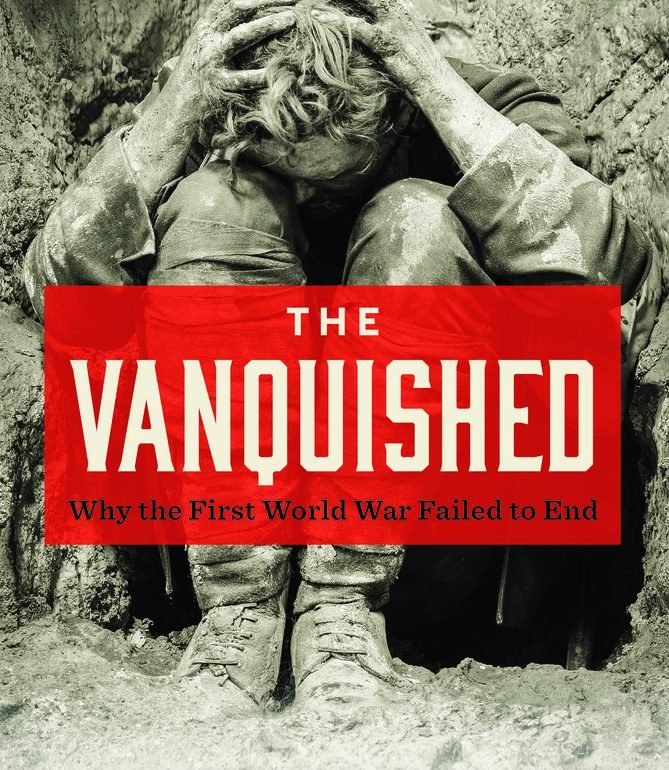
It has often been said that the Versailles Treaty imposed by the victors in 1919 ensured that there would be a Second World War. Normally, this phrase is used to describe the harsh terms imposed on Germany who was partially occupied, saddled with a huge war indemnity, and assigned sole responsibility for the war. This book, while not breaking any major new ground, does bring to one place, the other factors which lead to two decades of revolution, riots, murders and bloody political struggles in the lands formerly ruled by the Russian, German, Ottoman and Austrian empires as well as the unsatisfied demands of Italy.
Those lands were, according to Woodrow Wilson, to be allowed to have self-determination in order to allow them to progress peacefully into a new golden age. Unfortunately, when the maps were drawn by the victorious powers, they managed to strand as minorities in a hostile land, millions of Germans, Romanians, Hungarians, Greeks, etc. who were left to the less than tender mercies of the majorities in those areas. Many of those who had suffered under the attempts at Russification or Magyarism, decided that it was their turn to force others to accept an alien culture and language on the new minorities. The end result is still going on today as we see the artificial states in the Middle East being torn apart by Muslim on Muslim wars.
Much of this book centers on the problems in German and with its immediate neighbors, and it is clear that Gerwath is most comfortable with this area. He falls short in some areas by not putting some historical context around the histories of peoples and how they came to be in those areas (Jews in Poland, the Ottoman domination of the Balkans, etc.). He starts his book with the Turkish destruction of Smyrna in 1922 where thousands of Greeks were slaughtered while an Allied fleet lay in the harbor which did nothing to save any of the people. Unfortunately, he does not put that slaughter into the context of the Greek actions in the preceding war. And, the areas of Bulgaria, the conflict between the Hungarians and Romanians, etc. is glossed over far too quickly.
I would recommend this book to an individual who is looking for a solid introduction to the problems caused by the Versailles Treaty and how it did help to lead the way to the Second World War. Unfortunately, the men who created the treaty were never brought to task for their failures and unwillingness to see beyond their own immediate interests. A discussion of this would have added to this history.






Leave a Comment