

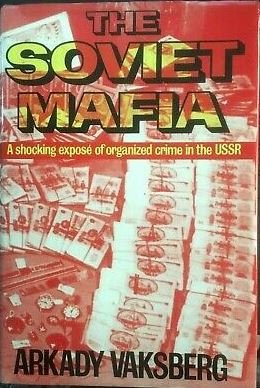
Imagine there is a famine in part of your country; you are the Minister who control the rail system which can move food where needed when needed. You are told that in the entire rail system there are too few cars to carry the good; being a diligent Minister, you find a car here, one there, four there and get them to the correct siding where the much-needed food is needed. Finally, the train with its precious cargo is loaded and on its way; you wait by your telephone, calling and check on the progress of the train. It must travel over a thousand miles, but you are determined that it arrives safely even though it must travel over a dangerous route and deal with a massive snow storm. Finally, past the snowstorm you let yourself to relax only to receive a call that it was all mistaken, there was no train and no, the extra cars you found cannot now be found. Welcome to the Soviet Union.
In reality, the mafia in Georgia (USSR, not the US), wanted to move their crop of oranges and lemons to key distribution points so they could present them to various Soviet officials as bribes and tribute and protection. The entire train was literally unloaded, then loaded with the goods the mafia lords wanted and it was routed on the Soviet rail system without the knowledge of the Minister responsible for the rail system. In the end, the Minister did find some old cars and created another train, but it was only possible because the local mafia had already achieved their goals. Well, why not report the issue to the KGB or MGB? Because no one except the mafia chieftains really knew how far up the food chain the corruption reached.
Stalin was not interested in money; he was interested in power. To stay in his good graces, one had to help him maintain his power and thus your reward was power. Money? You did not need it as to get money outside of what was given to you was a sure way to head to a camp. When Stalin died, there was a liberalization of the system and with that the emphasis shifted from power to wealth. Suddenly, every bureaucrat was out to feather his own nest and to do that, you needed something of value. Since the system did not really provide much of value (even Soviet Generals had a difficult time getting tires for their cars), those who could control those few items became very powerful and wealthy.
How could powerful men be bought? If they are supplied with caviar, oranges, lemons, brandy, whiskey, women, watches, construction materials, etc., all taken from the State, then they could live the good life that they so richly deserved from performing their difficult tasks in the name of Communism and Lenin. The higher the personage, the bigger the price. When the head of the government in Sochi protects local mafia leaders, and when he goes to visit Brezhnev taking with him a rail car filled with rare items, including liquors, fur coats, jewelry, foods from the West, etc., and is not arrested but is greeted with open arms, how do you fight the local mafia chief? This book shows the greed and corruption of a closed system where meritocracy is not the most value asset. It should serve as a warning as to the dangers of a professional political class and their arrogance.
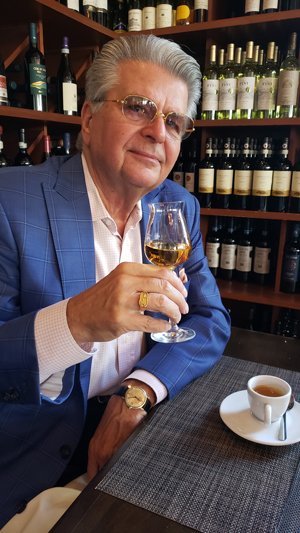
Vaksberg was a Soviet and Russian writer, newspaper man and playwright. His knowledge of the Soviet mafia won him many enemies and he escaped death a number of times, while his biography of Andrei Vyshinsky is a classic.


Leave a Comment