On The Other Hand -
Book Reviews
Lifestyle, Cigars & More
Musings
About
On The Other Hand -
  • Book Reviews
  • Lifestyle, Cigars & More
  • Musings
  • About
Uncategorized

To the Gate of Hell: the Memoir of a Panzer Crewman by Armin Bottger

March 25, 2024 by Barry J. Klazura No Comments

This is a most unusual little book, for it goes against the grain in terms of how a veteran explains and remembers his time in the military. Unlike other memoirs, where the good and bad of military service is balanced, Bottger makes it clear from the first that he not only hated military service, he was willing to take almost any step to survive the war including lying and physical subterfuge to remain as much as possible safety behind the front lines. 

All armies seek to make the average person into an individual that will obey orders without a second’s hesitation. The tools are as old as armies themselves, and include rote exercises and drills, demands of physical dexterity, irritations that have no point and even individual humiliation. Bottger paints an excellent picture of his introduction into the military and like millions of others, he hated most of the acts and demands inflicted on him. Additionally, he completely ignores any feelings of duty, comradeship, or pride in his “contribution” to the war effort. He makes no claim to being anti-Nazi, does not rale against the injustice of the war; in fact, he is totally detached from any motivation in life other than total self-centered survival.

Bottger managed to spend a remarkable small amount of time in actual combat but did commit an act of self-sacrifice on one occasion in attempting to rescue a tanker from a burning tank. Despite his dislike of the military, he was proud when he was awarded for that bravery and seems to have attended reunions of his division after the war. At the same time, he does not seem to have given any thought to the individual who went to serve in his stead as he managed to stay in a “safe” space by lying about his injuries.

There are few soldiers who hunger for battle and most accept the role that forces them to be in a position where one kills an enemy. Bottger rejected that role and while some may say that it could even be deemed noble, if placed in a war setting, I for one would not want a man to the left or right of me with the mindset of the author.

Share:
Reading time: 1 min
Current Affairs, Education, Government, Society

The Two Edged Sword of Intellectuals

March 15, 2024 by Barry J. Klazura No Comments

I have always been conflicted about intellectuals. On the one hand, it must be a wonderful thing to be recognized as an expert in one’s particular field of intellectual excellence. On the other hand, I recognized that many intellectuals have an overwhelming sense of superiority not only about their field, but a strange sense of self-righteousness about areas far removed from their particular discipline. Many have a belief that they understand so much more than the average person and that the world would be so much better if only they were allowed to direct the fortunes of humanity. All too often, when they have exercised power or influence outside of their specific field, the results have been disastrous. Seldom have they ever admitted their failures (the one exception I can think of is Robert McNamara’s written regrets of his decisions in the Viet Nam war) and in fact, their opinions are still sought and carry weight.

The attached link is an interview with Thomas Sowell, himself an intellectual, as he discusses the rise of intellectuals and their influence in our Republic. They can shape public opinion and policy but as he says, they never have to pay a price for their actions. Mr. Sowell is the type of intellectual who exemplifies what is the best of that title. I hope you enjoy the interview.

You may have to copy the link and put it in your search bar.

Thomas Sowell on the second edition of Intellectuals and Society (youtube.com)

Share:
Reading time: 1 min
Book Reviews

The Civilization of Europe in the Renaissance by John Hale

March 14, 2024 by Barry J. Klazura No Comments

Covering the period between 1450-1620, Hale brings into play all the forces around which everyday life evolved in Europe.  He traces the slow development of the roads, art, economics, religion, how the old warrior class took on new leadership roles and the slow gradual realization of national identities.  The concept of national identities could not have been achieved without the constant warfare of the age so while the time was often bloody for a small percentage of the overall population, the development of industries necessary for the wars themselves create economic opportunities and the build up of wider areas of cross trade.

Aside from the usual topics one would expect in a book like this, he also spends time looking at the daily lives of ordinary people and how they lived.   How did they dress, where did they shop, how were rules of civility created and enforced? What and how did a common language develop in any geographical area and how did that common language unite the people in becoming what we know as France or Germany, etc.  How were the average people able to live during the upheavals in Christianity which were driven not only by religious differences, but also by the various local rulers who saw the time as an opportunity to enrich themselves by pillaging monasteries, churches, etc. 

The book is not an especially easy read; not because it is not well written, for it is, but the amount of information available is extraordinary.  This is due not only to the usual method of using a wide brush, but also because he delves into the ordinary and discusses how movements, ideas, etc. could impact the people of Europe down to the poorest peasant.  It falls into the category of books that if one were ever asked to read one book on a subject, would the one recommended. 

Share:
Reading time: 1 min
Current Affairs, Education, Government, Musings, Society

The Treason of Intellectuals

March 8, 2024 by Barry J. Klazura No Comments

Niall Ferguson is a noted historian and social commentator. In this interview, he discusses and compares the modern-day university with the German universities of the late Weimar Republic and how German universities acted as a recruiting ground for Hitler and the Nazis. He points out that just as the German universities of that time stifled free speech and drove out those who dared to question the direction of the universities, so too today many universities have become merely reflecting pools for those who espouse antisemitism and strict adherence to DEI which is the exact opposite of individual freedom and opportunity.

In the university world today, Jews who were once at the top of the academic food-chain in Germany are now, along with whites and Asians, at the bottom and viewed as the oppressors in much of the West. Antisemitism has a long history of being used by the Left such as when the Soviet Union used it to win over various Arab states.

In the end, unlike many talking heads, Ferguson offers solutions to undo the damage done by the Left at universities; these include but are not limited to excluding government participation in the administration, funding, rules for scholarship and the mountain of reports demanded by the government in return for funding. Money always comes with strings and there is no indication that those strings have done anything except hinder independent thought at the university level.

It is a pleasure to hear such clarity of thought on the subject and a welcome change from the bloviating that we hear every day on the various “news” outlets.

“The Treason of the Intellectuals,” with Niall Ferguson | Uncommon Knowledge (youtube.com)

Share:
Reading time: 1 min
Book Reviews

Considerations on the Causes of the Greatness of the Romans and their Decline by Montesquieu

March 4, 2024 by Barry J. Klazura No Comments

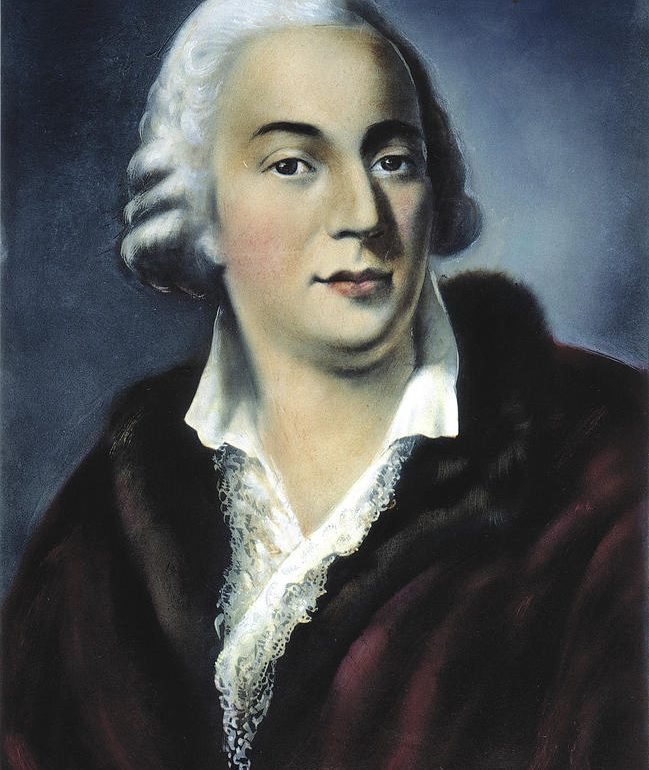
Charles Louis de Secondat, Baron de La Brede et de Montesquieu was from the middle of the 18th century through the founding of the United States, widely considered to be the preeminent political thinker of his time. His categorization of what constitutes a tyranny, an empire and a republic influenced our Founding Fathers in their debates and in the writing of the Federalist Papers. He was the principal architect of the theory of separation of powers and his main work, The Spirit of Law (1748) was well received throughout Europe and the thirteen colonies.

This work is considered a minor work, but I would like to suggest that no politician be allowed to take office until they have read and passed a test based on what he writes in this gem of a book.

Rome, like any organism or organization, had a period of growth followed by a decline. What were the causes of its growth? That is often asked as is, what caused its decline? Historians and others will argue those points for as long as Rome is remembered and everyone who attempts to answer those questions will be both correct and wrong. There were numerous causes but that in the end, as with other empires, the entire system simply imploded from lack of will, moral degeneracy and outside pressures that were simply more than could be managed given the resources available. Over time, the ideals and energy which helped the successful growth were lost and there were not enough good and strong men and women to hold the center together.

 Rome started as a small community, cut off from the sea, surrounded by numerous enemies, many of them larger. It had little natural wealth, barely any art and the citizens realized that the only way to enrich themselves was through pillage. Montesquieu believed that Rome’s power came from several factors, among them a constant drive for war, an unwillingness to accept defeat, an equal sharing of the plunder and a government which only allowed recognition and advancement through military success. Because Rome was always at war and because they adopted the best military practices of their individual neighbors, they simply excelled at war. They easily adopted the best skills of their military foes, such as cavalry, the Spanish short sword, etc. and use each in a way that helped to insure their victories. They developed a mindset which directed all activities of the State to be in the successful furtherance of war. Defeat was simply unacceptable and as was demonstrated during the war against Hannibal, no matter how often Roe’s field armies were defeated, they simply kept going after their nemesis until they achieved final victory. Such a mindset is not possible today as the technology of war simply makes war too expensive both in treasure and lives. So, what can we learn from the Romans? We can learn from them the reasons for their decline.

Continue reading
Share:
Reading time: 4 min
Current Affairs, Government, Musings

Was This the Reason for the Raid on Trump’s Home?

March 2, 2024 by Barry J. Klazura No Comments

I post this as I have seen very little coverage on this story, and it could be political dynamite. 

Although “Public” is a pay to read site, it is worth it to check on it’s home page from time to time as a check on other sources. And no, I do not receive any renumeration from “Public.” 

U.S. Government Is Hiding Documents That Incriminate Intelligence Community For Illegal Spying And Election Interference, Say Sources (substack.com)

Share:
Reading time: 1 min
Book Reviews

Stalin: Breaker of Nations by Robert Conquest

February 27, 2024 by Barry J. Klazura No Comments

There is certainly no shortages of histories and biographies of Stalin, one of the greatest mass murderers in history. His crimes, his murders were taken unlike his contemporary, Hitler, against for the most part, his own people. He did not have a policy of racial superiority or any underlying moral rationale for his crimes; his sole purpose was to achieve and maintain his power and in this, he is unique among the “big three” of mass murderers: Mao, Hitler, and Stalin.

Robert Conquest, perhaps the top historian of the Soviet Union has in this short book (just over three hundred pages), an excellent overview of Stalin’s drive, achievement, and maintenance of power. Although not as detailed as his other excellent histories which go deeper into the Stalin regime (The Harvest of Sorrow, The Great Terror: A Reassessment, Inside Stalin’s Secret Police: NKVD Politics 1936-39, etc.), Conquest along with Robert C. Tucker and Orlando Figes has provided a comprehensive analysis of the man and his times.

Conquest as always, manages to provide a certain analytical approach that can bring the reader up short: in this case, it is his comparison of the followers of Nazism and Communism. He quotes Hugh Seton-Watson’s comments that:

“Hitler’s Nazis were ‘fanatics with an ersatz religion,’ who rejected not only Christianity but also traditional morality as such. Nazism’s central feature was ‘moral nihilism’…. (it) is not only the central feature of National Socialism, but also the common factor between it and Bolshevism.” 

This statement is backed up by a review of leading Nazis, including Hitler, Goebbels, Mussolini, the dreaded Gauleiter of the Ukraine, Koch, and others who all started out as Socialist and ended up as either Fascists or Nazis. And it was not unusual after the war for die hard Nazi’s to reverse their coat and be taken into the Soviet camp. On one hand, the Nazis use race, the Communist used social origin as the determining factor for life or death; both were (are) based on “moral nihilism.”

Conquest is an outstanding historian, but for the amateur historian, his writing may be a bit too intellectual. He has a firm grounding in the Russian mindset and his analysis of Stalin’s legacy on modern day Russians is excellent. His works not only encompass history, as he has had published a collection of poetry, verse translation, fiction, and criticism so to read Conquest is to be exposed to a man of great intellect. A faster read but no less excellent Soviet historian is Orlando Figes brings a more human touch to his histories.

As one learns Conquest’s style, one is drawn increasingly to it and like a favorite composer, one eagerly looks forward to the next work of his that one shall read.

Share:
Reading time: 2 min
Book Reviews

Swords Around A Throne by John R. Elting

February 26, 2024 by Barry J. Klazura No Comments

Elting, a noted historian and lecturer at West Point has put it all together in this 700+ page book.  He starts with a discussion of the decline of the French Army after King Louis XV and its destruction during the French Revolution.  He then proceeds to discuss every aspect of the Army, from the equipment, feeding, transportation, etc. of each branch of the Army, from the infantry to artillery, etc. 

An outstanding one volume history which ends with the new regime of King Louis XVIII, his mistrust of the Imperial army, his lack of skilled advisors, etc., and of course, the Hundred Days of Napoleon.  I would recommend that if you are going to read this book, that you keep handy “Napoleon’s Marshals” which was edited by David Chandler. This book discusses (each Marshal is covered by a different historian) the records of all of Napoleon’s Marshals (25 French, one Polish) including their skills, greed, loyalty (or lack thereof), etc. 

Another wonderful reference book to settle or at least provide fodder for any discussion of the subject (Napoleon’s campaigns, his personal skills, etc.).  The two books total about 1200 pages so don’t think you will finish them in a sitting, but they are well worth the effort.  If nothing else, as with so much of history, you learn a great deal about human nature and management.

Share:
Reading time: 1 min
Current Affairs, Education, Musings, Society

Still Dealing with the Fallout

February 21, 2024 by Barry J. Klazura No Comments

It is reported that Mae West once said, “the difference between free love and paid sex is that free love is more expensive.”  A wise woman.

In the attached video, Jordan Peterson speaks extemporaneously about what he calls, “the unbelievable technological triumph of birth control.”  We are still trying to make some sense of fallout of that triumph with some of the most conservative options being offered by the radical left.

As he speaks, you realize that the adage, “what is the next question” is again proven to be of value, but he follows his thoughts to their logical ends.

I hope you enjoy this timely and timeless video.

Share:
Reading time: 1 min
Book Reviews

The Civilization of Europe in the Renaissance by John Hale

February 20, 2024 by Barry J. Klazura No Comments

Covering the period between 1450-1620, Hale brings into play all the forces around which everyday life evolved in Europe.  He traces the slow development of the roads, art, economics, religion, how the old warrior class took on new leadership roles and the slow gradual realization of national identities.  The concept of national identities could not have been achieved without the constant warfare of the age so while the time was often bloody for a small percentage of the overall population, the development of industries necessary for the wars themselves create economic opportunities and the build up of wider areas of cross trade.

Aside from the usual topics one would expect in a book like this, he also spends time looking at the daily lives of ordinary people and how they lived.   How did they dress, where did they shop, how were rules of civility created and enforced? What and how did a common language develop in any geographical area and how did that common language unite the people in becoming what we know as France or Germany, etc.  How were the average people able to live during the upheavals in Christianity which were driven not only by religious differences, but also by the various local rulers who saw the time as an opportunity to enrich themselves by pillaging monasteries, churches, etc. 

The book is not an especially easy read; not because it is not well written, for it is, but the amount of information available is extraordinary.  This is due not only to the usual method of using a wide brush, but also because he delves into the ordinary and discusses how movements, ideas, etc. could impact the people of Europe down to the poorest peasant.  It falls into the category of books that if one were ever asked to read one book on a subject, would the one recommended. 

Share:
Reading time: 1 min
Page 16 of 70« First...10«15161718»203040...Last »

Barry J. Klazura

Barry Klazura sipping grappa

With a Masters Degree in Guerrilla Warfare and Totalitarianism, Mr. Klazura was well prepped for a career in Sales and General Management, consulting on corporate startups and turnarounds as well as lecturing on history and politics.  For the past twenty years he has focused on being a financial advisor and consulting.

Delivered To Your Inbox

Sign up to get an email when a new article is published.

Topics

  • American Civil War
  • Biography
  • Book Reviews
  • Cigar Reviews
  • Coronavirus
  • Current Affairs
  • Education
  • Environment
  • Factoids
  • Government
  • Lifestyle, Cigars & More
  • Liquid Refreshments
  • Musings
  • Quips and Historical Facts
  • Society
  • Travel
  • Uncategorized
  • World War I

Subjects

book Books-Russia/Soviet Union Books 21st Century Books 1919-2000 Books Ancient to 1900 Books Asia Books Biography Books Fiction Books Germany 1919-1945 Books Pre-WWI books Viet Nam books world war I Books WW1 Books WWI Books WWII Cigar Friendly Location Amsterdam Cigar Friendly Locations-London Cigar Friendly Locations-New Orleans Cigar Friendly Locations-New York Civil War Coronavirus Environment Korean War World War I World War One

Recent Articles

At Stalin’s Side by Valentin Berezhkov

July 15, 2026
The Price of Victory by N.A.M. Rodger

The Price of Victory by N.A.M. Rodger

June 26, 2026
Frontsoldaten: The German Soldier in World War II by Stephen G. Fritz

Frontsoldaten: The German Soldier in World War II by Stephen G. Fritz

June 5, 2026
Organizer of Victory, 1943-1945, George C. Marshall by Forrest C. Pogue

Organizer of Victory, 1943-1945, George C. Marshall by Forrest C. Pogue

May 26, 2026
Illegals Released & Our Leaders

Illegals Released & Our Leaders

May 10, 2026

Inquiries and Comments

For general inquiries and comments, email AOTOHcomments@gmail.com.

Facebook
© 2020 And On The Other Hand. All rights reserved.