On The Other Hand -
Book Reviews
Lifestyle, Cigars & More
Musings
About
On The Other Hand -
  • Book Reviews
  • Lifestyle, Cigars & More
  • Musings
  • About
Book Reviews, Current Affairs

The Eurasian Century: Hot Wars, Cold Wars, and the Making of the Modern World by Hal Brands

March 17, 2025 by Barry J. Klazura No Comments


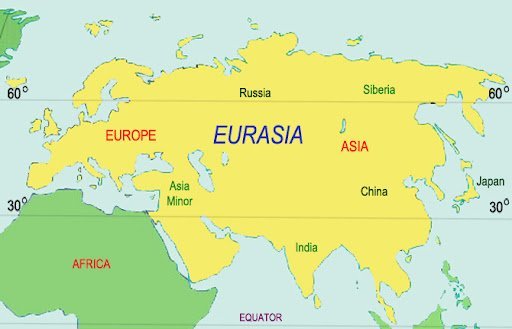
A friend of mine recently lent this book to me and it brought to mind various debates I had during graduate school many moons ago regarding the premise of the book; whomever controls the Eurasian continent controls the world.


This theory was originally formulated in 1904 by Halford MacKinder, a British geographer. It shortly followed the work by Captain Alfred Thayer Mahan’s extremely influential book, The Influence of Sea Power upon History, 1660-1783. In that book Mahan put forth the theory that as the oceans are the fastest routes for trade, control of the oceans will decide which powers will succeed and which will die. MacKinder put forth the idea because of the population, central position, and mineral wealth of the Eurasian land mass, that it will determine which nations live and die. Going further, Karl Haushofer, a German geopolitician continued MacKinder’s theory and he was influential to the Nazi view of the world as MacKinder was influential with Kaiser Wilhelm prior to the first World War.


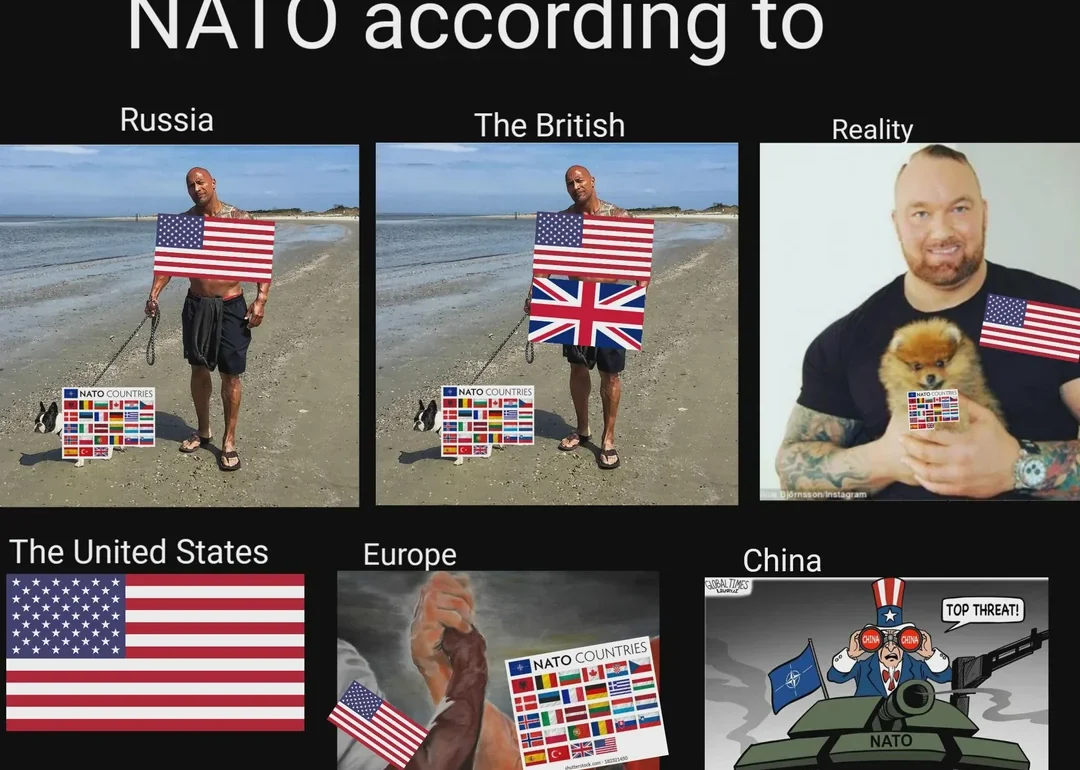
Britain and the United States are both sea faring nations, outside of the Eurasian sphere, yet both have played vital parrs in controlling and shaping the Eurasian sphere. Brands goes through several examples of how the United States has dealt with the area, including World Wars I and II, the creation of NATO, our actions in the Middle East and so forth. In one way, this is a weakness in the book as the involvement of the U.S. was not due to an acceptance of MacKinder’s theory, but rather at least until the Cold War, a natural case of self-defense. The U.S. actions in the Middle East, plus Afghanistan are more suspect in that they went far beyond actions that were previously acceptable to the average American.


The last part of his book looks at the current players who seek to control if not all, at least sizable chunks of the Eurasian land mass, namely China. China with it ever increasing military power and sizable economic power, is the greatest player. It pushes until seriously pushed back as the nations such as Viet Nam, the Philippines, and others are finding out today. Their Belt and Road programs has reached even into Europe and has been successful in spreading China’s influence through most of Africa. Can China, with help from Russia, seize control of the Eurasian area thus locking out England and the United States out of such a vital area.? Can anyone accomplish that goal?


That has always been the key question to me, for the land mass is so great, the populations so diverse and in so many levels of development that how could any power do anything but bleed to death attempting to gain a level of control that would be worth such a great effort. In the early twentieth century, thinkers like MacKinder and Haushofer might have believed it was possible, even though there were already small struggles for independence in India and parts of Asia and Africa. Today, we must add in the religious extremism of the Middle East (and parts of Indonesia) and the task would become even harder. Finally, we have seen failures in the Belt and Road project which show the Chinese model may have feet of clay.


I would recommend this book as it is objective (I only found a couple of examples of personal political bias) and provides an excellent overview of various nations causes for action. If one or more nations cannot control the Eurasian area, is it possible to be done by a group of nations? It is doubtful, for if we think of the problems in Europe which has tried to tamper down the differences between the various members of the E.U., we find that despite hundreds of years of cross border trade and wars, the differences in languages, customs, views of history, even food make for a challenge on so many fronts.
The Eurasian area is huge and the hundreds of millions of people who live there share little in common beyond a desire to live, have enough food and at best, provide for a better life for their children. Help yes, control and direction, no.

Share:
Reading time: 3 min
Current Affairs, Government, Musings, Society

The Changing of the Guard

March 11, 2025 by Barry J. Klazura No Comments

Last week I posted (But Will Europe Listen) about the threat to Europe, not from the U.S., but from the leaders of Europe who have allowed their nations to sink into an unrealistic sea of complacency. For decades, living under the U.S. umbrella of protection, the leaders of the E.U. have acted like teenagers, believing that tomorrow will never come regarding their own defense and their survival.


Tomorrow has arrived with the second Trump administration and the demise of the enfeebled Biden presidency. Suddenly the leaders of the Western European democracies face a dark and threatening future with troubling questions. Will Trump leave NATO? If he decides to stay, how much will the U.S. contribute to the defense of Europe given the other challenges to the U.S.? Given the hideous bureaucracy of the EU, how can the nations of NATO co-ordinate their growth of military spending so that waste and inefficiency are minimized? How are the massive amounts of money needed to rebuild NATOs military going to found? If the money is raised, does Europe have enough energy at reasonable costs to manufacture what it needs? Given the level of technology in Europe vs. the U.S., does Europe have the ability to produce the technology for current and future weapons systems. The list can go on and on.
The attached article outlines key problems and provides practical solutions to a few of these questions.

We are living in interesting times, and it remains to be seen if Europe, so long living in a dream world can summon the leadership and be able to face its greatest challenges in over eighty years.

Joint EU debt for European defence investment is a questionable idea – Brussels Report

Share:
Reading time: 1 min
Current Affairs, Government, Musings, Society, Uncategorized

But Will Europe Listen?

March 8, 2025 by Barry J. Klazura No Comments

Europe is going through a challenging time. For decades it has lived in a never-never land of social welfare programs designed to provide its’ citizens with ever immagionable comfort: free schools for as long as you wish to remain an adolexcent, free health care, job protection, and so much more. Of course, those “perks” of life are not really free, they are paid for by high taxes. But it was a compact between the government and the people. This promise could be fulfilled as long as the United States provided for the protection of Europe thus freeing billions of Euros annually and the demographic balance could be maintained.


Unfortunately, that compact was broken; the governments upset the balance by allowing seemingly unlimited migration of people who do not have a tradition of Western liberal democracy values, who want the “goodies” of the west without having to produce anything has disrupted the compact. Somehow the leaders of the EU managed to convince themselves that individuals from societies morally grounded in the fourteen century would provide the technocrats, doctors, engineers, and other skilled professions needed to maintain their standard of living.


Additionally, the umbrella of U.S. protection begain to be pulled back. With a new major economic and military threat growing in Asia, the U.S. began to question, why should the U.S. spend its precious wealth protecting someone else who had no desire to protect themselves?


Finally, while the leaders of the E.U. claim that President Trump is a threat to democracy, it is the Europeans themselves who are passing laws aimed at limiting speech and even thought.
The quiet secret that no one has mentioned for decades suddenly has come into the light; most of Western Europe has been suffering from societal atrophy. Europe has lost their economic edge; they have contributed little to recent technologies, their militaries were often decades behind the times, their industry is moribund, their tax system and bureaucracy stifle those who are innovative and reduce their capital for new ventures.


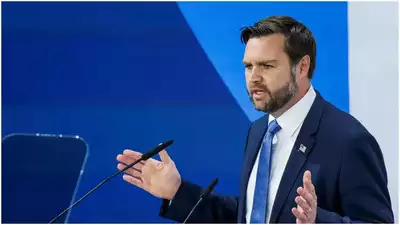
The attached lightly edited speech by Vice President J.D. Vance points out a number of threats to the E.U., all of them internal and all of them created by the governments of the E.U. The E.U. cannot regain its’ strength by fining American tech companies because Europe does not have the ability to compete, nor can the E.U. claim to stand for the dignity of man when they warn people not to pray in their own homes if they are within a “buffer zone” around an abortion clinic. If a politician can use the law against a citizen because the politicians “dignity” or “feelings” have been hurt, then it is time for those politicians to realize they are there to serve and not to act as if they wear the purple. Crimes by those immigrants who cannot and will not assimilate have been covered up for years and arresting those who expose them only go to undercut the trust between the governed and the governments.


It was said that no one had ever spoken to European leaders like Vice President Vance and that is too bad. Continuing to follow a failed path is the mark of stupidity and we all want to believe that there are still rational, strong leaders in Europe who can reverse the course of failure.

Europe Must Listen to Its People – The American Mind

Share:
Reading time: 2 min
Current Affairs, Government, Musings, Society

An Opportunity for a Freer Europe

February 5, 2025 by Barry J. Klazura No Comments

The politicians and bureaucrats of the EU are incredibly nervous about President Trump. They fear that the party is over and the days of using the U.S. as a financial milk cow via lawsuits, unfair tariffs, billions of dollars of fines and a refusal to adequately support their own militaries during the march of dictators and religious fanatics.


Western Europe in particular is nervous as France, Germany, Belgium and although not in the EU, the U.K. are led by weak political leaders who often are at the mercy of their own shaky coalition governments. Behind the scenes, the faceless bureaucrats who are the real power continue to insist on the failing policies which they promised would deliver a better life but have failed by every standard.


The attached article shows that the real problem with Europe is in fact the EU. The EU bureaucracy is Europe’s “deep state.” Unelected the committees and departments follow their own ideology and pay no price for their remarkable number of failures. From an idea to provide easier trade, the EU has grown into an uncontrollable behemoth which seeks power over those who it believes should serve it.


Perhaps Trump will provide the cover for European politicians to begin to gain a degree of control over their nation’s future as his desire to “balance the books” between Europe and the U.S. is enunciated.

What Is Really Destroying Europe? The EU. :: Gatestone Institute

Share:
Reading time: 1 min
Current Affairs, Government, Musings, Society

Quo Vadis Europa?

January 23, 2025 by Barry J. Klazura No Comments

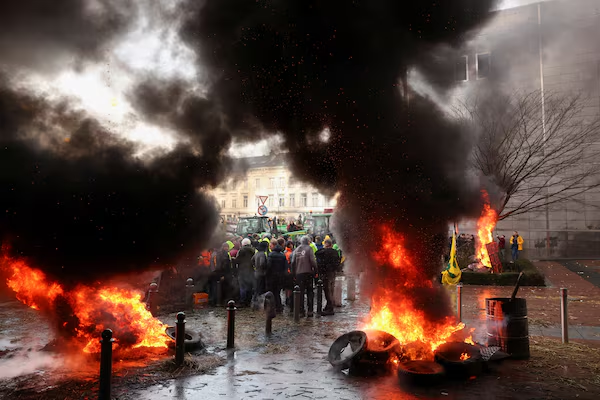
Western Europe seems to be on a death ride of their own making, especially Germany and France, followed by Belgium and other Western European members of the EU, along with the U.K. An unbending belief in “green” energy which has driven employers from Europe and has led to high energy costs plus the first German lay-offs in their bread-and-butter auto industry, while unmanaged immigration has led to thousands of no-go zones, increased violent crime and the burning of hundreds of churches as well as absolutely horrid stories of sexual grooming gangs. Meanwhile the electorate is moving to the hard right. Europe’s political center has all but disappeared with no willingness on the part of the traditional political leaders to learn that repeating failing policies is not the way to address their problems.


The article linked below gives us an overview of failed European leadership. Years ago, Europeans viewed U.S. organizations like the Tea Party and Donald Trump as movements which could ever happen in Europe. Today we see movements springing up on the conservative side of the political spectrum. They are seriously challenging the confused and clueless traditional parties who have held power for decades when times were good; today’s challenges seem to have sapped the center and left of realistic solutions to problems their policies have created.


Is there a movement or leadership with the will and courage to face so many challenges? Or will their societies continue to decay until life becomes intolerable for most Europeans and they turn to a leader on a white horse? We have seen it done before in Europe.

Brussels: Is the Capital of Europe Crumbling Before Our Eyes? :: Gatestone Institute

Share:
Reading time: 1 min
Current Affairs, Government, Musings

Good Luck, Mr. President

January 17, 2025 by Barry J. Klazura No Comments

President Reagan once said, “Freedom is never more than one generation away from extinction.” Millions of individuals have placed great hopes on the new Trump administration as they believed that in four short years, our fundamental freedoms were in danger of disappearing. Those who welcome the second term of President Trump believe he will restore the DOJ, FBI and other federal law agencies to political neutrality while returning the military to its primary functions and purge itself of DEI which has weakened its ability to meet the anticipated challenges from China and others. The list goes on and on, the economy, the budget, EV mandates, the Ukraine war, the Middle East, Russia, and so on. They believe that his second term will be even more successful than his first. That is a tall order.
When he began his first term, he faced challenges that seemed large at that time; President Obama left a feeble economy, unchallenged advances in the Crimea and the Middle-East, a fast growing and aggressive China as well as various domestic issues stemming from a ballooning federal bureaucracy that was drowning small business in an ocean of new regulations. The challenges this time are much greater as he faces:
• An inflation rate that is being fed by:
• A federal national debt that grows by nearly one-trillion dollars every one-hundred days
• New federal rules and regulations which cost the American citizens about $15,000 and have a total cost of about $1.37 trillion over the past four years.
• Repairing our standing in the Middle East after the Biden administration managed to all but kill the Abraham Accords while trying to second guess our best ally in the region,
• Continue to force the European nations to increase their defense spending in the face of little or no growth in their economies.
• Proving realistic military spending after four years of budgets which did not keep up with inflation let alone provide for adequate growth.
• A national deficit and budgets which drive inflation restrict borrowing for new growth.
• The list goes on and on.
Will he and his team be able to successfully attack that list of problems and others which cover every aspect of our daily lives? Let us hope so, for we need a renaissance to free us from the trials and tribulations of the past four years and the “hope and change” of the Obama administration. The next few years shall be trying, but we all need to recognize that fundamental changes, within the limits of the Constitution, need to be made. There can be no more of the Executive ignoring the Supreme Court, no more of a back-room cabal of unknown players making national decisions and no more of a federal bureaucracy that sees the American people as an ATM machine to foot the bill for their ever expanding quest for more power of our everyday lives.
Let us, as we always should, wish our new President strength and wisdom and may an honest and fearless team surround him.

Share:
Reading time: 2 min
Current Affairs, Government

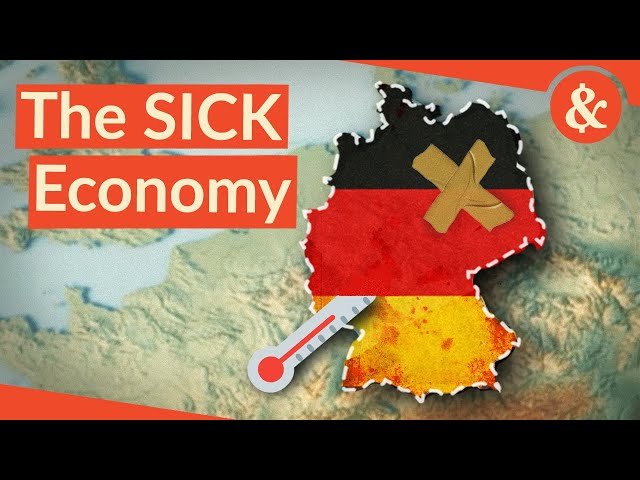
The Sick Man of Europe, Part III

January 2, 2025 by Barry J. Klazura No Comments

It is not often that you can watch a nation crumble in real time, but this is what is happening to Germany. On February 14 and April 12 of this past year, this blog posted “The New Sick Man of Europe”, parts I and II. Here is part III, the story of how a government is following an ideology no matter what the costs. In fact, the German fanatical adherence to going “Green” has increased the pollution which is the very item that their program is designed to defeat!


It has gotten to the point where the politicians who lead Germany are actually a danger to the average German. After spending billions and billions of Euros and seeing increases in pollution, jobs lost, a high rate of business bankruptcies, lay offs in the auto industry for the first time in the history of that industry and skyrocketing energy costs, the “leaders” of Germany are unable to keep hobbled together a government which can address the problems created in the past several years. And we must not forget the problems caused by an immigration system which, instead of bringing in skilled workers, does in effect, do the exact opposite (not the mention the wholesale rejection of Western values by those same immigrants).


Now is really the time to ask, Quo Vadis, Germany? And, if Germany continues on its current path, why?

https://www.gatestoneinstitute.org/21244/europe-germany-renewable-energy

Share:
Reading time: 1 min
Current Affairs, Education, Government, Society

The House of Terror, Part II

December 30, 2024 by Barry J. Klazura No Comments

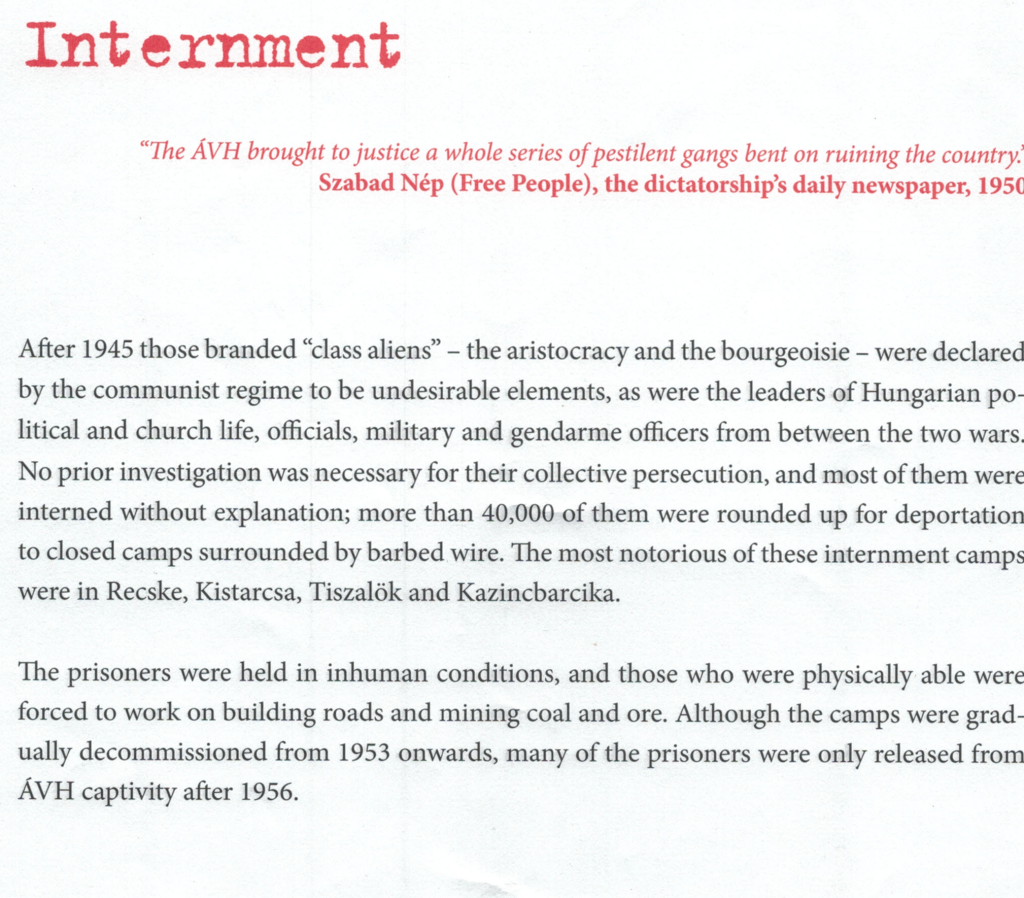
By 1945, the Communist had developed the restructuring of a nation to a fine art. Why not? They had broken the peoples of the Ukraine, the Baltic nations, the Poles, and others who lived as far away as the Pacific Ocean. The formula is easy; denounce and arrest the leaders of any society. Priests and nuns? Of course, as they preach adherence to a power other than the State. Teachers? Definitely as who knows what anti-Communist thoughts they would offer to students. Former politicians, civic leaders, police officials and university professors? Why not as who will stop the new government?


But what to do with them? After nearly thirty years of practical experience, plus having watched the policies of the Nazis for a decade and a half, the answer was simple; degrade them, push them down, down, down and break their spirits. They could never be resurrected as a new, Soviet man, but they could be a living example of what happens to those who oppose the power of the new Communist regime.

Share:
Reading time: 1 min
Current Affairs, Education, Government, Society

The House of Terror, Part I

December 23, 2024 by Barry J. Klazura No Comments

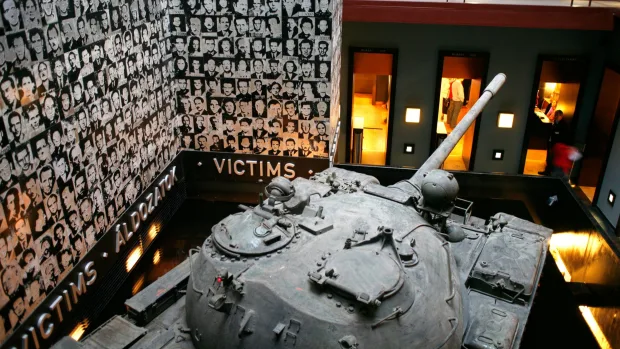
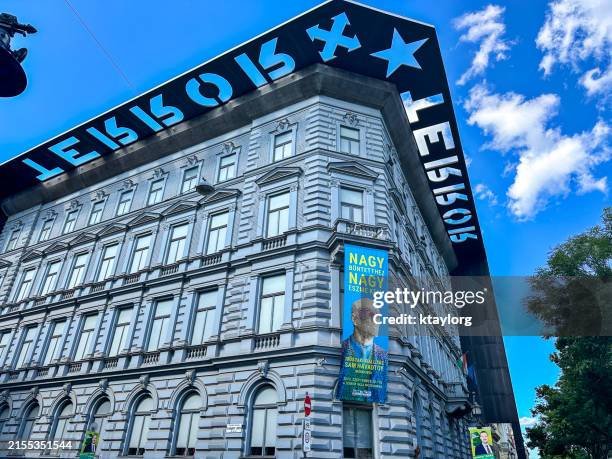
During a recent trip which included Budapest, Hungary, I visited the House of Terror which was originally called the House of Loyalty by the fascist Arrow Cross party until the end of the Second World War, and then the House of Terror when it was taken over by the newly installed Communist regime. This was not the first visit to the building, but it is so stark that it merits multiple visits to begin to understand the horrors that Communism has foisted on individuals around the world.
Many years ago, my first Political Science professor was a Hungarian immigrant. He had a “life”; he was in the Hungarian army during World War II, was critical of the Germans, was arrested and thrown into a camp. When the Soviets “liberated” Hungary, they put him into the new communist government since the Nazis had arrested him. He survived the purge of Laszlo Rajk and was designated to be the Minister of the Interior by during the Hungarian revolution in 1956. When the revolution failed, he fled Hungary and ended up in Detroit in the Hungarian neighborhood. Given his background, he had an honored place in the community, but as he said, “I would be a big fish in a little pond”. He learned English, went to university in the U.S. and moved into the big pond (all of the U.S.) where he became a professor and real estate developer: a real capitalist!
He brought his real-world experiences to the class and was instrumental in making his students realize that those who believe in Socialism or Communism are not open to rational thought. Because of their religious like belief in their dogmas, compromise is not an option,
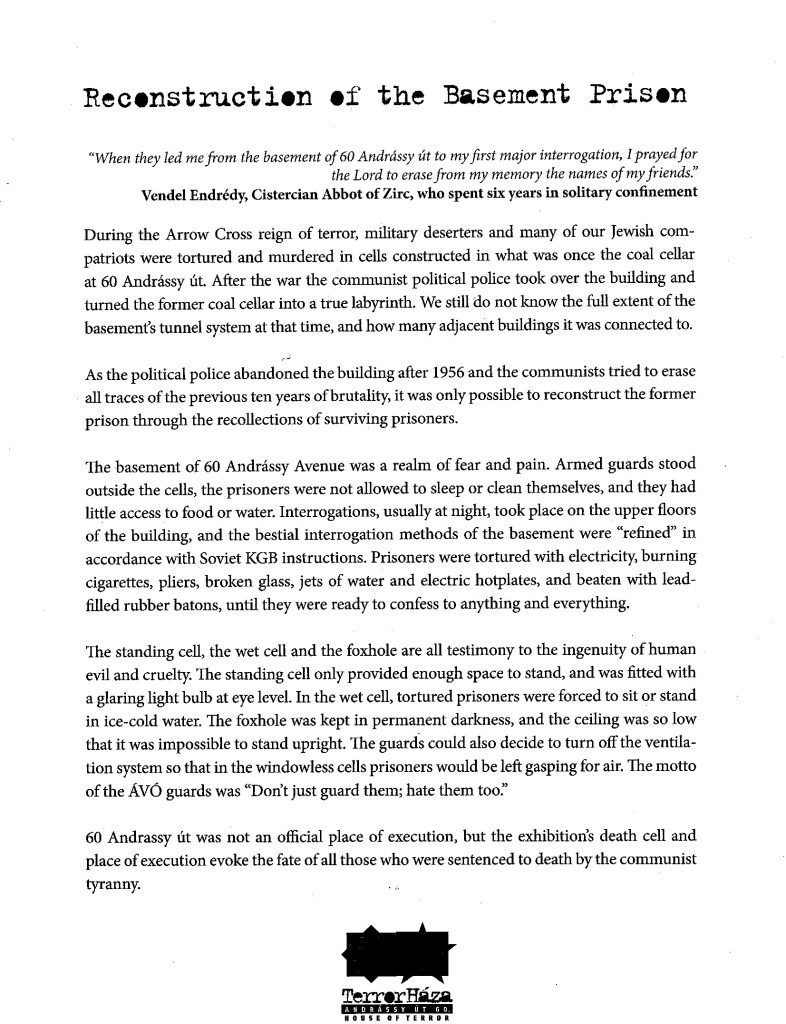
At various points in the House of Terror are excellent handouts explaining various sections and actions of the prison. I shall forward one each week so that you may better understand what the reality of life under a Communist system offers.

Share:
Reading time: 1 min
Current Affairs, Lifestyle, Cigars & More, Travel

The Christmas Fairs and More in Budapest, Vienna and Warsaw!

December 18, 2024 by Barry J. Klazura No Comments


Living in a year-round vacation land (Southern California), my wife and I enjoy going to colder areas for December as a real change of pace. Eastern Europe (or as the Europeans prefer to say, Central Europe) offers advantages, such as fewer tourists, lower prices, a lower crime rate and world-famous Christmas fairs. Although it takes a bit longer to get there, the effort is well worth the time.


HUNGARY: Unfortunately, our connecting flight out of London was missed (for details, read the section on travel considerations) so we arrived in Budapest late in the evening, thus losing about half a day of our stay. Yet we made the best of it and walked through some of the Christmas fairs that are centered around the high-end shopping district. The weather was just above freezing but dry with no wind, so it was great to purchase a hot drink at any of the stalls which offer all sorts of traditional Hungarian foods and sweets as well as handy crafts, Christmas ornaments, etc. Take your drink, grab a sausage or a Hungarian pizza called a “Langosh,” sit at one of the tables and enjoy the sights and sounds of the holiday. You will not mind the temperature as everyone is smiling and having a wonderful time. The evening was a success, and we looked forward to the next couple of days in a beautiful city along the Danube.


The next day, to help you counter your jet lag, you might want to visit one of the thermal baths that are around Budapest. I suggest you try the Szechenyi bath which was built around 1910. All you need is a swimsuit, a towel and flip-flops and you are set to go. For a small fee you get a cubby hole locking changing room in which you can leave your valuables and you are set to go. As the temperature was about 37 degrees, we covered the distance from the changing room to the water quickly and then immersed ourselves in the wonderfully warm water. The steam coming off the water, the darkness of the day all served to welcome us to a wonderful experience. There were others already in the water including couples, two men seriously discussing either politics or business, families (children must be at least fourteen). Of course, there were those who were taking selfies and others who were just floating, enjoying the warmth as it soaked into every bit of your body. There is also a sauna and indoor pools, plus a pool just for swimming. I suggest you make a reservation as the baths are extremely popular and check to see what services are available (some have single sex days, wave machines, etc.). Do not worry about being gawked at, you will see all kinds of body shapes, but each one is concentrating on enjoying the thermal waters.


The city has a large number of museums, but we had been to Budapest before and there are sights which are not on most tourists’ radar. One is the House of Terror. No, it is not a Disney sight gone bad, but rather the old center of the Hungarian Soviet secret police. It was originally known as the House of Loyalty when it was the headquarters of the fascist Arrow-Cross party during World War II. After the war, the Soviet imposed government took over the building, execution, and torture cells and all. On display are the actual execution chambers, interrogation rooms and devices, plus the thousands of photos and stories of individuals who ran afoul of the Communist regime through thought, word, or deed. It is good to see young adults in the museum so that the reality of that brave new world can be remembered.
There are two items which are so important to understand the Hungarian psyche; the revolution of 1848 when Hungary tried to gain total independence from the Hapsburgs and the decades of Communist rule when at least 20% of the population was either arrested, tortured, investigated, spied upon or sent to Hungarian political prisons. The Hungarians have lived under Communism, so they are hardly likely to put up with any form of authoritarian rule; they want order but not order at any price, so Budapest is blessed with wonderful statues of Hungarian hero is going back hundreds of years. In fact, one of the first things the Hungarians did after the overthrow of Communism was to remove the imposing and brutal Soviet statues, busts, and plaques and deposit them in the “Memento Park” which is open 365 days a year. It is filled with Communist statues of the “heroic realism” school and well worth a visit to see the mindset of the totalitarians.


Handy Tips
• American Express is not used in Hungary: Master Card and Visa, no problem.
• Hungarians also accept cash (with a relish)! It is common if you hail a cab for the driver to ask you, “Cash or card.” You will find life easier if you say, “Cash.” And forget about getting a receipt for your taxi; writing War and Peace is easier than going through the procedure to secure a receipt.
• Tipping is fine, normally 10% will bring you a smile and a warm “Koszonom” (thank you).
• In the past several years, cigarette smoking has been largely replaced by vaping which can be done only out of doors, just as with tobacco smoking.
• The streets are clean, the people obey the walk/do not walk signs at intersections so pretend you are a native and everything will be great.
• As with most of Europe, making reservations for dinner is strongly encouraged. You do not want to scuttle restaurant to restaurant, hat in hand, trying to find a table.
• Hungarian is not an easy language, especially if you have no ear for languages like mol,
but it is always nice to try to have a couple of phrases while visiting a foreign land. Take the time to look up simple terms or words, (Koszi for “Thanks” or Koszonom for “thank you) even names of foods; English is widely understood and spoke in Budapest but even if you slaughter a word in Hungarian, a local will appreciate your bold attempt. Be the “good American” ambassador.
• If you have a connecting flight through Heathrow, make sure you allow more than 1/1/2 hour to catch your connector. Weather days and a very inefficient security system can make a simple procedure into a major British project.


Budapest has no shortage of good restaurants, from “new age organic” like Tati (From Farm to Table), to Italian, Mercatino (try their black pasta with shrimp). The real fun is the traditional Hungarian restaurants such as Punakorzo or Rez Kaakas. Hungarian food tends to be hardy so order accordingly.


VIENNA: Travel to Vienna from Budapest is easy, with a flight, train, or private car. A private car, while more expensive, is door to door, eliminates security checks and is much easier on the psyche.
What to say about Vienna that is not already known? A wonderful city full of history, excellent restaurants, and very good and proper Viennese service. Here are a couple of highlights which you might consider if you are looking for something different:
• Austrian military museum: Housed in a former military garrison, you are introduced to hundreds of years of military commanders as you enter the building. Their life size marble statues reflect the time when war still had a mystique of honor, rules, and glory. The building itself is one room after another of statues, paintings and exhibits tracing from the time of the Ottoman invasions to the end of World War I (although this was our second visit, the period from 1933-1945 does not seem to be covered for some strange reason). There is also a panzer and naval section which is worth a visit. The price is right (no charge), and you will understand a bit better the beautiful palaces and government buildings that you will see in the city center.
• Museums: There are museums enough and it is wise to plan your visit as not all museums are open on all the same days. The typical guide, available for no charge at your hotel, will not only give you an excellent overview of each museum and how long to budget for each (five hours is not unusual). Do not overextend yourself!
• Public Transportation: Inexpensive and on time (especially the trams and subway). And, easy to use even if you do not know German.
• Tipping: Most restaurants include a 14% service charge (often marked on the menu or on the listed on the bill) but do not be afraid to ask your server if it is included. Cabs appreciate a 10% tip and do not forget a little something for your concierge if they help you with bookings, etc.
• Central Cemetery: Although Vienna has over fifty cemeteries, this is the largest with over 300,000 monuments and over three million burials. Beethoven and Salari are both buried here as well as from all occupations and religion. The Jewish section is interesting for it is well preserved but I was not able to find out if it was destroyed during the war, rebuilt or what as most of the monuments are beautiful and look new. It was a cold, overcast day and the stillness of the grounds with the black crows perched on some monuments introduced many interesting thoughts.


No visit to Vienna is complete without a visit to Schonbrun which was the residence of the Hapsburg Emperor’s. Unlike Versailles, which was built by the French King’s to overawe the French nobles, Schonbrun was an actual residence for the emperors. Yes, there were balls and meetings at the palace, but they were based on invitations from the emperors themselves.
A treat is a dinner at Schonbrun followed by a Mozart concert in one of the beautiful rooms. They have a number of options (based on where you will be seated) from about 107-170 Euros per person, dinner included. I would recommend only signing up for the concert (about 1/1/2 hours long with a break) as only one entrée is provided and you might want to have a wider selection for your meal. The selection of pieces, both musical and vocal, are excellent and you are sitting close enough to really enjoy watching and matching the sounds to the various instruments. Enjoy!
Another meal treat is lunch or dinner at Figlmuller, for the best wiener schnitzel in Vienna. I have been there several times over a period of thirty years and the quality of service and food is always top notch! It is a real treasure to the locals, and they have two locations, yet I strongly recommend reservations. Do not make them at your own peril!
Finally, if you are looking for a good steak at a reasonable price, try Steak Point. We met a couple from Riverside during the Schonbrun concert, and they wanted to tell us about this place, but we already knew about it. Nice steaks, good sides and very reasonable.


Warsaw: A flight of just over one hour brings you to one of the fastest growing economies in Europe. A people who has long viewed themselves as the Christian bulwark against the Mongols, Turks, and Communists, they like other Eastern European nations (such as the Baltic nations, Hungary, etc.) can be a stubborn in the EU, but they know too well the price of collectivism.
We managed a one-bedroom suite at the beautiful Hotel Bristol, the hotel where Madam Curie accepted her Nobel Prize. It is next to the Presidential palace and a few steps from the Old Town city center. It is in that center where one of my grandfathers drove a taxi (horse and buggy in those days). If he were late coming home, his wife would worry that that he was caught up in one of the usual Cossack raids where people could be cut down in the streets (Warsaw at that time was under Imperial Russian control). It was because of that fear and the danger of being drafted into the Russian army that they left for the new world. A very personal thank you from me to them!


Although 90% of Warsaw was totally destroyed in WWII, especially after the Warsaw uprising, rather than leaving the ruins as an example of what war can do, the stubborn Poles dug out the old drawings, maps, etc. of the old town area and rebuilt it as it was in 1939. The Christmas market there is very special with stalls, lights and the wonderful warm windows of the restaurants which surround the central plaza. Then they did the same for much of the rest of Warsaw so the wonderful baroque buildings you see were all built after the war. I have not been in Warsaw for about ten years so to see so many beautiful high-rises around the “gift from Stalin” is really amazing. It is an example of the strength of the nation.
We had dinner at Fukier, a classical Polish restaurant which certainly has not changed since I was first there about twenty years ago. It looks out onto the square and is just as you would expect an old-world” restaurant to be decorated. In fact, the interior looks like an old country inn (only cleaner, with better art, etc.). Another excellent but newer restaurant is Elixer where each course offers one or two suggested vodkas to soothe your palate! I suggest asking for the cold vodka for as the Poles say, “it only hurts once.” Not all meals need to be grand events and there are plenty of pierogi shops throughout the city. Pierogis are like ravioli’s, filled with meat and onions, cheese, fruit, etc. The fun part is to order nine or so and sample different fillings. You will be set for the day and be able to brave the colder weather! The Poles love their pierogi’s; they are Poland’s hamburgers or hot dogs.
Food as in Hungary is relatively inexpensive. A dinner with two glasses of wine, three shots of vodka, a service of pierogi and two main courses, including service is about $100.00. You better be prepared to walk off those hearty meals! Around the Belvedere palace is a huge, beautiful park (Lazienki Park) which also contains several palaces. Although it is winter, the park is still beautiful and the rich furnishings and paintings of the palaces along with the flock of peacocks create a nice contrast to the bare trees.

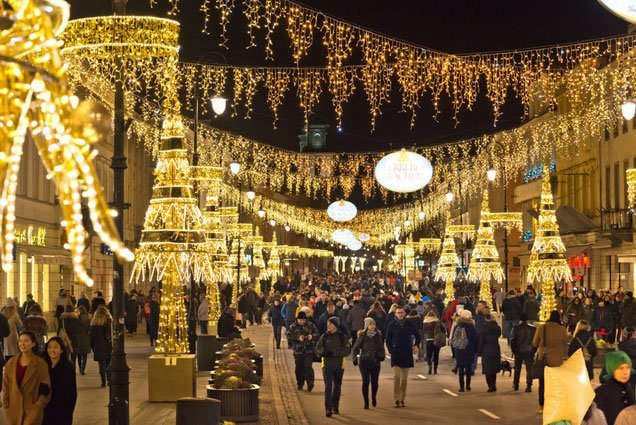
The winter fair in Warsaw is quite special. Darkness arrives about 3:30 PM and on this Saturday there were already thousands of people in the old city square, and. along the wide walkway in front of the Royal Palace. The children look in awe at the display of lights, the tall Christmas trees and it is a treat to see how they light up and laugh at the festive mood. Unlike Vienna where there are a number of festivals, the one around the old town in Warsaw is the one that you will want to see. And, during this season, the churches (all of them rebuilt) join in the festive feel and are beautifully lit. It is an amazing sight to see thousands of people, most of which are families with young children, walking in the cold, laughing, enjoying food from vendors, hot toddy drinks, shopping for those special “somethings” and enjoying the Christmas spirit. I tried to think of where we could experience that joy and experience in the U.S. but just came up short.
Although cabs are plentiful and inexpensive, we did a lot of walking (almost ten miles one day). It really is the best way to see the city and experience its special feel. There are wide boulevards lined with trees, shopping areas which are clean and devoid of graffiti, even during the winter when the temperature hovers about 32 degrees, it is a pleasure to bundle up and breathe in the fresh air.


Like all great cities, Warsaw has its share of museums. Yes, Warsaw, like Budapest and Vienna has its classical museums, but it also has unique attractions (like Budapest’s House of Terror). For example, the Katyn Museum features the murder of 20,000 Polish officers by the Soviet Union during World War II. The murder, denied for decades by the Soviet Union, was finally admitted during the reign of Gorbachev. Yet the sad episode did not end there are a special Polish delegation on its way to a special service hosted by the Russians was killed when their aircraft crashed outside of Smolensk, including the President of the Polish republic. Permanent plaques outside of the Presidential Palace commemorate the tragedy. Those plaques are part of the Polish conscious as there are plaques can be found around the city commemorating the hanging or execution of Poles during the German occupation. It helps the Poles to remember what they have suffered and why they will not go backwards.
Other excellent museums include the Polish military museum, the award-winning museum on the Warsaw uprising and the Polish museum of the history of Polish Jews.


There were numerous memorable times and sights during the trip, including the outdoor thermal bath in Hungary experienced before dawn, the concern at the Kaiser’s house, the Christmas fair in the old town of Warsaw. While we allowed four or five days in each city, it showed that one really needs more time to explore those cities as there is so much to experience. Considering we have been to each city one or more times in the past, you must simply admit that you will not “see it all” and that you will only be getting a sample of the treasures in each location. Just relax and enjoy it all!


Share:
Reading time: 14 min
Page 3 of 7« First...«2345»...Last »

Barry J. Klazura

Barry Klazura sipping grappa

With a Masters Degree in Guerrilla Warfare and Totalitarianism, Mr. Klazura was well prepped for a career in Sales and General Management, consulting on corporate startups and turnarounds as well as lecturing on history and politics.  For the past twenty years he has focused on being a financial advisor and consulting.

Delivered To Your Inbox

Sign up to get an email when a new article is published.

Topics

  • American Civil War
  • Biography
  • Book Reviews
  • Cigar Reviews
  • Coronavirus
  • Current Affairs
  • Education
  • Environment
  • Factoids
  • Government
  • Lifestyle, Cigars & More
  • Liquid Refreshments
  • Musings
  • Quips and Historical Facts
  • Society
  • Travel
  • Uncategorized
  • World War I

Subjects

book Books-Russia/Soviet Union Books 21st Century Books 1919-2000 Books Ancient to 1900 Books Asia Books Biography Books Fiction Books Germany 1919-1945 Books Pre-WWI books Viet Nam books world war I Books WW1 Books WWI Books WWII Cigar Friendly Location Amsterdam Cigar Friendly Locations-London Cigar Friendly Locations-New Orleans Cigar Friendly Locations-New York Civil War Coronavirus Environment Korean War World War I World War One

Recent Articles

The Party: the Secret World of China’s Communist Rulers by Richard McGregor

The Party: the Secret World of China’s Communist Rulers by Richard McGregor

August 20, 2026
Europe’s Military Failure

Europe’s Military Failure

Breaking History by Jared Kushner

Breaking History by Jared Kushner

August 10, 2026
As Alice would say: “Yes Toto, DOGE is alive and well.”

As Alice would say: “Yes Toto, DOGE is alive and well.”

March 23, 2026
To the Gate of Hell by Armin Bottger

To the Gate of Hell by Armin Bottger

March 19, 2026

Inquiries and Comments

For general inquiries and comments, email AOTOHcomments@gmail.com.

Facebook
© 2020 And On The Other Hand. All rights reserved.