

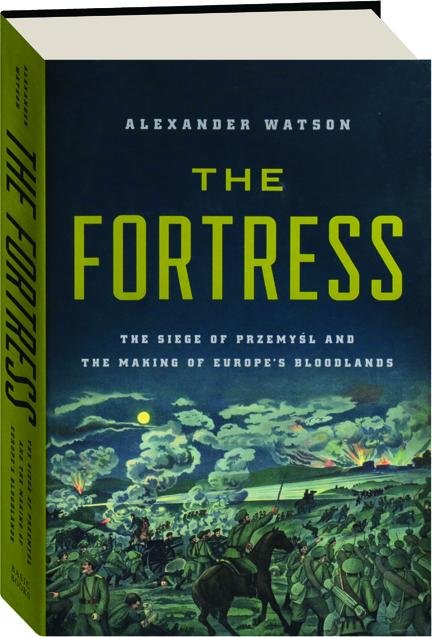
This is one of those rare books which gives excellent descriptive detail of a battle that is little known, but which had a major impact on World War I. There were actually two sieges of the fortress city of Przemysl; the first unsuccessful while the second did much to break both the physical and morale back of the Hapsburg army. Largely forgotten today, these sieges helped to bring to a head the nationalistic feelings of the mixed communities in the area and was a precursor to the killing fields by the Nazi and Soviet regimes.
What made the siege so interesting, was the composition of the Hapsburg forces holding the fortress which was largely outdated and ill-equipped for a siege. The defending forces consisted mostly of reservists; older men who had families and whose heart was not in the fight. They were also a mixed lot with Hungarians, Poles, Croats, Serbs, even some Italians serving an empire that many wished would be destroyed. Compounding the ethnic problem was that the official language of each regiment was German and the native language of the troops. This made command exceedingly difficult as communication from one group to the next was impossible except in German which most of the troops only had a basic understanding (mostly military commands).
While the military situation was difficult, civilians were caught in a situation where there was little if any upside. The Russian forces started large scale pogroms against the Jewish population and within the fortress, the Jews were viewed as potential spies and profiteers. The mixed population during the siege depended on their local leaders who had little co-ordination with the military.
In the end, the fortress surrendered and over 117,000 troops marched off into Russian captivity; one in five would not return from the prison camps. The actual Russian occupation of Przemysl was short as the combined German-Hapsburg offensive pushed the Russian forces out of the area so the large cost in men and material used in the siege produced nothing except a complete break down of civil authority in the area. Ethnic disagreements led to strike and counter strike even within communities which had co-existed for generations and made the average person the one to carry the price of the conflicts.
The book includes some good personal experiences taken from letters of some of the troops. They great desire was to simply return home to their loved ones and lead a quiet life. It was not to be.



Leave a Comment