

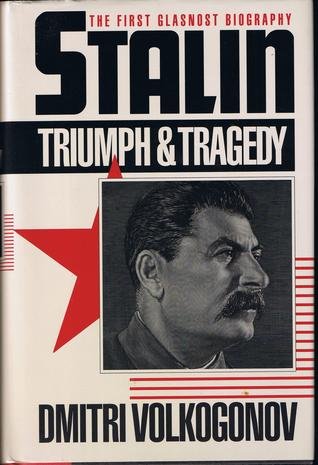
This was the first Glasnost biography to come out of the then Soviet Union using many new resources and archives. The author, the son of an agrarian specialist who was purged in 1937, went on, despite his questionable background, to become a Colonel General of the Soviet Army. Dedicated to his profession, he was shocked by the 1956 denunciation of Stalin by Khrushchev and began to gather material for this book at this time. In addition to early access to archives, the author also was able to speak to many individuals who were associated with Stalin; although Stalin did not have any close relationships after the suicide of his second wife, these individuals were able to provide tidbits of information about Stalin’s habits, techniques, etc.
Although it may seem that there is not a lot of new information in this book, a careful reading will offer rewards in some sections, such as the ongoing duel between Stalin and Trotsky. He offers a clear and concise explanation of how Stalin was able to overcome the popularity of Trotsky and push him not only from the Party, but also from the Soviet Union. Yet, Trotsky remained a personal problem for Stalin and he (Stalin), regretted allowing Trotsky to leave the country. In the end, even more than a decade after the assassination of Trotsky, his name was still used during the last purges before Stalin’s death.
The section on World War II is also of interest in that it shows Stalin’s utter distain for the cost of the war. The Soviet Army was still reeling from the purges of the late 1930’s and the level of professionalism in the officer corps was low. This led to unimaginative mass attacks on the invading Germans but despite huge losses, until the winter of 1941, little could be done to stop the enemy. Stalin never cared how many men were lost, he only wanted results and unlike the population of his country which had be cowed by the secret police, the German’s were not impressed by his fury. In time, Stalin began to trust his more competent Generals and became if not professional, at least willing to listen to their advice at times.
The question always is raised about the cost of the war and the author puts the cost at between 26-27,000,000. This figure includes about 10,000,000 from the military who were either killed or died as prisoners of war. Most of the dead were civilians including the Jewish population, but he does not include those other minorities who were later transported from their native lands due to some who worked with the Germans.
This book is not an easy read, there are no dynamic passages, but there is a solid bit of history told by a man who in a sense, shares the mentality of his fellow citizens who lived through that time. They are survivors and like many survivors, there is almost a numbness to their expressions and writing. Worth a read for a serious reader.


Leave a Comment