

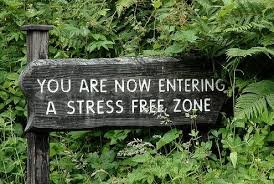
I hope you will indulge me as I have put together a rather lengthy recap of our latest vacation. Why? Well, hopefully you will pick up a few tips, ideas, etc to help you have a great vacation. Why learn the hardway? So feel free to read as much as you care (or can bear) and I hope you pick up a tip or two!
ABOUT COVIDMany people have asked me about how the threat of Covid was handled during a long trip. Here is how it was handled aside from the normal airline requirements:
1) The cruise line would only allow passengers who had two regular vaccinations plus a booster. 2) Proof of #1 was required before boarding, as was proof of no covid within the previous 24 hours.3) All crew members had a covid test at least 3 times a week4) Free covid tests were provided by the cruise line to any passenger5) When leaving the ship, some ports required proof of vaccinations but not all6) When leaving the ship at the final port, all passengers had to be tested (free, on board) for covid. 7) If anyone had a positive covid test during the cruise, they were quarantined in a separate section of the ship and their former room was thoroughly disinfected by a crew in hazed suits8) Each country had its own requirements, re wearing a mask indoors, etc. Italy still requires masks indoors until May 1st.
We were on a ship for over three weeks with over 2,000 staff and guests, visited 13 ports in several countries, visited a very crowded Venice for six days and suffered no problems. That is all I say.
With the easing of regulations regarding Covid, Carolyn and I decided to take a twenty-six-day cruise from Miami to Trieste, Italy and then to spend five nights in Venice. This trip would be different as we would be crossing the Atlantic on the Oceania cruise ship, Marina as opposed to a true ocean liner like the Queen Mary II which we enjoyed in December. The Marina is still a large ship at over 70,000 tons, but the crew to guest ratio is about 1.5 to 1 which is excellent in terms of service and care. We had sailed with Oceania several times before and found their food to be excellent, well above the norm, and the staff and ships to be outstanding. The ships are smaller and cater to an older clientele (not a cruise if you have children, pets or expect a lively nightlife). It is a great cruise line if you want to get away from the cares and woes of an outrageous fortune.
The cruise industry has been closed for two years but with the re-opening, so many of the staff which hails from about seventeen countries was eager to return to work. The staff on Oceania is always a cut above, but you could feel and hear how happy they were to return to work. Yes, of course they are happy to find steady work, but they are also happy in the way they are treated by the cruise line. Talking to crew members, especially those who have worked on other lines, they comment on how well they are treated by management regarding pay, work breaks, and time off. Even though the crew had to wear masks (they were not mandatory for guests), their voices and eyes were smiling, providing a real welcoming to the passengers.
Taking any vacation, be it a week or a month should be taken seriously. Sloppy or last-minute planning can ruin your precious time so as a rule, I try to plan our vacations at least twelve months in advance (if you are thinking of a cruise, serious travelers plan our 18-24 months in advance). This process has several advantages, including:
1) * Locking yourself into a definite time and location. This is a key mindset as it provides a pleasurable target to work toward.
2) * Less chance of something coming up which will interfere or negate your vacation. You are committed and as you work towards your vacation, the idea that something might disrupt your plans becomes more unbearable.
3) * By planning, prices are lower. Finding a flight at the last minute is a sure way to pay top dollar; the same is true with hotels, car rentals, etc.
4) You have a better opportunity to maximize your vacation as you can plan your literary.
On the other hand, any vacation can be disruptive, especially one that can last longer than two weeks. Longer vacation requires one to be more organized, especially regarding anticipating costs, the arrival of credit card statements, utility bills, and so forth. Realizing your credit card and billing cycle means setting in advance the payments so that you do not have to oversee the payment of bills while on vacation. Who wants to spend hours online, making payments, transferring funds, etc. instead of enjoying your vacation time?
Handy Tips on Cruising
For the novice, taking a cruise can be a bit confusing, especially when looking at the types of rooms, costs, packages, and destinations. Let’s look at basic areas which may help you determine the best cruise for you.
1) Family Friendly or Not? As a rule, the higher end cruise lines are less family friendly (Cunard, Oceania, Regency,). Pricing is an initial indicator as is a careful review of the cruise lines website. Some are obviously more family friendly (Disney). Of course, “family friendly” lines have more services (nurseries, trained staff, etc.) which will allow parents to have a bit of time to themselves but remember that all services have a cost.
2) Dog Friendly: Although I shutter to bring this up, there are those who cannot bear to be away from their pets; if you fall into this category, be advised that a line such as Cunard does offer kennel services, but you need to make a reservation at least six months in advance as kennel space is limited. Fortunately (from my perspective), pets are not allowed to mix with humans due to safety and health reasons.
3) Pricing: This is simple; take cost for the room and divide it by the number of nights and wow, you have the price per night. Of course, that will depend on your deck (the higher the more expensive), size and location (rooms closer to the bow (front) are less expensive that those midship (bow cabins feel the waves more than midships).
a. Comparison Pricing: When comparing lines, check on the size of the rooms as the longer the cruise, the more important those extra square feet of your room. The number of ports visited, distance covered, and so on, all impact pricing.
b. Internet Charges: Be sure to compare services; a major profit center is the charge for internet which can fun $.50 to $1.00/minute. You would be surprised at how quickly a package of two hundred minutes can be used up, especially if you need to do work while sailing or want to read a book via Kindle. Our most recent cruise included unlimited internet, but then the cost per room (Oceania) was higher than other lines. Nothing is free.
c. Liquor Packages: Most lines offer liquor packages in the range of $50-80/person/day (they do not allow only one passenger of a couple to purchase a drink package. As most cocktails run between $9-12, figure out your capacity or thirst and then live with your decision.
d. Tipping: Once on board, all you need is your cruise provided ID; any additional expenses (liquor, on board purchases from shops) will be automatically added to your bill. The tips to your local house keeping staff, waiter and so forth are all included in a daily charge, normally $14-19/day/person/room. This can be a surprise charge as even $30/day adds up for a couple and more for a family. But it does balance out when compared to what you would normally pay at a step-up restaurant for each meal.
e. Side Trips: At each stop, cruise lines offer a variety of tours. A guided tour of Rome, or a local historical sight, a visit to the countryside with a local meal, or a tour of a vineyard are examples. These can be quite pricy and if you are visiting a location for the first time, you may want to go off on your own to get a fingertip feel of the location. An option is to do your research and target what you would like to visit, then talk to a local taxi driver to create a package. They know the market, prices, and can often throw in something not seen on a cruise arranged tour. If you are visiting a larger city, most have a hop on, hop off bus route which allows you to hit multiple sights with a minimum of cost. These services are normally advertised off ship but in the dock area.
f. Cruise Insurance: Should you get it? Yes! Will you need it? Hopefully not, but it is always nice to have it available in case of a problem. If you purchase the insurance offered by the cruise line and if you need to make a claim, it should be easier to resolve than by getting insurance from a third-party.
g. Misc:
i. Be sure to check regarding laundry service; for example, our current cruise with Oceania provides, depending on your room category, free laundry for up to thirty items, plus they have free laundry facilities on several decks. Other cruise lines do not, so checking on this ahead of time may help you pack more efficiently. Most lines do provide 24–48-hour dry cleaning services.
ii. Better cruise lines allow you to bring upon your initial boarding, a set amount of liquor but it can only be consumed in your room. Other lines allow you to bring personal wine to dinner but charge a corkage fee. Others allow you to bring on board wine purchased after a port visit but again, it must be consumed in your stateroom. Remember, liquor is a profit center on a voyage for the line so know the rules before-hand.
iii. When was your ship last refurbished? Cruise ships are in constant service and while the maintenance crews are constantly on the job, a ship can get to look a bit worn. This is especially true with ships that are more roughly handled, meaning those who cater to families, or are known as party boats.
Hopefully, those points will help you create a better cruise package for you to enjoy.
Funchal (Maderia) Portugal
After missing two ports, everyone on the ship was looking forward to our first landfall which was the island of Maderia. Known for its prime export, Maderia wine, the port city of Funchal is sparklingly clean. The locals take great care of their city where even the highways tunnels are swept clean every day after midnight. What immediately struck me was the substantial number of small shops owned and operated by private individuals. Unlike too many commercial areas in U.S. cities, all the small shops managed to survive the lockdowns created by Covid. There were no “for rent” signs and the island had weathered the Covid storm in good condition; it was refreshing to say the least.
The old town is a short, pleasant walk from the pier and although tourism is important to the local economy, you do not get the typical tourism vibe that you receive in many locations such as Amalfi. Passing by a local school, the teens are all well dressed, laughing and polite, while the shop owners are very pleasant.
We had very tasty lunch at Café Funchal with two entrees including a local dish of shrimp in a type of grits, a bit like in New Orleans, a bottle of local wine, espressos all for about $60. We then purchased two bottles of local wine plus a bottle of ten-year-old Maderia (as the helpful sales gal said, “the five-year-old is good for cooking”) for about $30. A Loja Do Viho on Avenida Amiga offers an excellent inventory of Maderia.
Fortunately, Oceania allows one to bring up to six bottles of wine on board if they are only drunk in your room, so the Maderia made a fine pre-dinner treat).
I believe that the island of Maderia would be one of those locations you would go to escape the cares of the world but would still wish to enjoy the comforts of life. It is worth further investigation.
Malaga Spain
I have not been to Malaga in decades years, and it was great to return to the town with its beautiful promenade along the shore. The stately palms, clean streets and well-dressed citizens under a warm and friendly sky was a treat. I especially enjoyed the Cathedral whose soaring massive pillars reminded me of St. Peters in Rome, while the beautiful smaller chapels reflected the religious faith of the local families. Like most Cathedrals in Europe, its construction took over two hundred years and required the skills of generations. An example was the ornately carved seats along the side walls opposite the alter where the high churchmen and nobles sad during mass. The seats, over twenty-five on each side looked to be carved from one gigantic piece of wood and was the lifelong work of a master craftsman who upon his death, left the project to his son to complete during his lifetime. This either reflected a hugely high threshold for boredom or a complete dedication to their faith and craft; given the perfection and beauty, it had to be the latter.
Of course, the city has grown and has made the quaint fishing villages along the shore disappear as they have been swallowed by high rises and beautiful individual homes, but there is still the opportunity for tranquility which is so attractive to so many. The prices are reasonable (an excellent fresh fish lunch for two including a bottle of very good local wine and espresso) is around sixty dollars.
Monte Carlo
Monte Carlo is a wonderfully honest stop in that it really does not care if you decide to visit it or not; in fact, it will prefer if you did not sully its streets with your plebian shoes. Geared toward the well to do, the snobs and those to whom all is owed, it is clean and expensive. I once gazed upon the menu at the main hotel and found that the turtle soup was offered at a paltry $100. Still, you might wish to go up the hill to the palace area and watch the changing of the guard or pay $100 to gain entry to the casino. But, other than those two pleasures, I would hesitate to get off the ship.
Rome
If you only have a brief time to visit Rome and have never been there before, the train which is about a ten-minute walk from the pier. For about five dollars, you can arrive in Rome in about an hour. From the central station, you can catch a Big Bus Hop-on which in one hour will do a circuit of the key sites in Rome (cost about $25). Or you can catch a cab ($12) to the Spanish Steps and tour the key shopping area including the Plazza del Popolo where you will find a great Borsalino shop to purchase your very own Panama hat. Feel free to wonder the area for a lunch, this time we stopped at Santovino where we were introduced to deep fried artichoke which was excellent.
I always like Rome, aside from the wonderful history, it is fun to watch the locals as they bustle through their day, always taking time about 11AM for a coffee and sweet. Unfortunately, there seems to be a slippage in how the Romans dress as it was more difficult to tell them from the tourists who all wear the standard uniform of the day, black top, black slacks, and gym shoes. Boring.
There is so much to see in Rome that a day trip will only either rekindle your love of the city or if your first visit, light your desire to return.
Amalfi, Italy
The Amalfi coast of Italy is indeed beautiful as the town itself seems to cling to the steep cliffs which overshadow the town, although living in the town itself must be a challenge. As an example, my wife and I decided to follow the foot path up into the residential sections. Hundreds of steps later and all we could see a further continuation of the foot path ever upward, ever steep. We passed a woman who had been doing food shopping and she was huffing and puffing as she carried a small bag of groceries which would be enough for a single person for a day; we could not imagine the same journey to feed a family! Plus, the tangle of narrow walkways had no house numbers or street names! Pity the poor delivery person! Pity the poor woman who must shop every day!
The main town of Amalfi lives on the tourist trade but the shop owners, unlike other typical tourist towns, are all smiles and welcoming. The best-known product of the town is the lemon cello (additional fruit flavors have been added), followed by beautiful ceramics.
Everywhere one looks, one sees huge lemons and oranges which provide the life blood of the town, and each wave of tourists purchase the delicious lemon drink which I am sure disappears long before the long trip home. We stopped at a local shop for two bottles of local red wine and were greeted by the owner who was helpful and advised that he ships his quality product across the world. If you are interested, visit the website at www.labottagadellmone.it.
Valletta Malta
Valletta is a UNESCO World Heritage site; small (about ½ sq mile) but with a long (7,000 years) history, best known as the home of the Knights of Malta and its outstanding survival against both German and Italian bombing during World War II. Very tourist friendly and easy to walk in, we visited the National Military Museum in historic Ft. Elmo, the site of a major siege by the Ottoman Empire. The museum is well done and worth a visit. Also, be sure to visit St. John’s Co-Cathedral. Plan on spending 3-4 hours between the two.
Fortunately, the streets of Valletta are laid out on a simple grid which makes walking the city quite easy. There are bistros (European for bars), restaurants, etc. galore and each one seems to claim that their pizza is the best in the world. Our ship left at 9PM so we did not sample the night life, but I am sure from the way things were by 1PM that it must be lively.
Malta is well known as a tax haven for all sorts of money, but you will not see that kind of money in Valletta; those folks have some beautiful homes outside of the city on the island. There also many pleasant hotels outside of Valletta which would allow one to feel totally detached from the world.
Syracuse, Sicily
As there was a storm over Messina, we were diverted to Syracuse, the ancient city which saw the power of Athens broken in a long siege. This diversion was most fortunate, as I am not overly impressed with what I had seen previously in Sicily. Syracuse is more prosperous, and infinitely cleaner than Messina. Walking around the old city, one senses a feeling of civic pride and a higher standard of living.
At a local jeweler, we asked for a recommendation for lunch, and he directed us to Ristorante Pora Marina Marina, so when it opened at 12:30, we were at the door, ready for an excellent meal. We were certainly not disappointed; we had an excellent lunch with an appetizer of octopus’ tentacles stuffed with salmon and ricotta, awarding winning (a region prize of the city) pasta with saffron over local shrimp, tomatoes and walnuts in a light white sauce, cod, and potatoes, baked in a breaded coating, an excellent bottle of Sicilian red wine, dessert and not one, but two different grappa’s all for about $120. We skipped dinner!
We also visited the cathedral which was unique in its use of rough-hewn local stone and several “Saints” relics. The rich use of many-colored marbles throughout the church, on the floors, monuments, tombs, etc. was a testimony to the skills of the workmanship over centuries.
Syracuse was an unexpected treat and if you visit Sicily, I strongly recommend you include it to see the best of the area.
Katakolon Greece
A small island known primarily as the site of the first Olympics in 776 BC. The small village adjacent to the dock has a main street about three blocks long with jewelry and clothing (mostly light cotton and linen quasi-beach wear), plus some typical restaurants looking out on the water. The EU spent $4,000,000 on a small railway which will take you for about $12 on a round trip to the location of the Olympics but this early in the season it is not working and represents one of those EU attempts to create something but ends up in displacing the local taxi drivers. I would suggest that instead of booking a tour on the ship, you simply take a taxi from the waterfront as the original site is about thirty kilometers from the pier.
As usual, it does little good to get off the ship before 10 AM as most shops will not be open so take your time, walk the main street, and enjoy the slow pace of the locals who are very friendly and eager to talk. Just before 11 AM we stopped at Jimmys 2016, a small restaurant and were greeted by canaries which created a wonderful atmosphere. Unknowing to us, it is a favorite place of the ships crew as the Buffet Director came and sat at the next table to have a couple of beers and a great looking gyro (cost: less than $3). We opted for the traditional plate of local favorites, and it was excellent, followed by Greek (not Turkish) coffees plus one each of Ouzo and Raki. It was a real feast for about $45 and carried us through the rest of the day.
The stop is quiet, unpretentious and a beautiful place to slow down.
Corfu
The last time we were in Corfu was during the Greek financial meltdown when the city was living under a cloud of doom; shops closing, personal bankruptcies, poor municipal services, etc. Thus, it was great to see a revitalized Corfu; clean, well maintained, lively, the locals positive and well dressed. Plus, the cruise ships have just started to return so the locals were all smiles.
Corfu was an important historical trading port and has two impressive fortresses: the old one and the “new” Venetian fortress. For anyone interested in military history, the location and size of the two structures will provide an interesting study in how you would lay siege to either one. Very impressive!
The city itself certainly caters to the tourist trade but it is easy to find the local hangouts, and both mingle easily. Part of the charm of the town is the street layout which is chaotic. “Straight streets? We don’t need no stinkin straight streets.” All the streets in the old town are narrow, paved with cobblestones, most too narrow to accommodate the smallest European cars.
If you are hungry, the most highly recommended restaurant is Rex facing the esplanade, but there are numerous attractive smaller venues; although lunch is not served until noon, we were caught in a serious shower at 11:30 and were invited in and served at Efi’s Alley, which provided us with some very tasty local dishes. Hey, a potential customer is in need, grab them!
Outside of Corfu there are hidden beaches, woody mountains and peaceful countryside that operates at a slower pace. Corfu is back and worth a short visit.
Dubrovnik, Croatia
The old city of Dubrovnik is a gem; high city walls (a treat to walk all two km of them) protect the city, and the people take immense pride in its history, both ancient and recent. Heavily shelled by Serbia in the 1990’s (anyone who lectures Putin that he is operating like a 19th century ruler, so out of touch seems to have forgotten the breakup of Yugoslavia), the city has come back but still pays tribute to those who died defending it. Like the rest of the Balkans, the citizens have a long memory.
Set on a beautiful coastline, it was used during the making the Throne of Swords but has been recognized for generations for its beauty. The city has excellent museums and churches, while sitting at a café watching the world go by is a treat you should not miss. A World Heritage site since 1979, it proudly shows its past (going back to the 13th century) as well as the scars of the terrible war of the 90s. Carefully preserved and maintained, it offers the intrepid numerous side residential streets (narrow walkways) that seem to climb straight up the hillside before suddenly opening to some small area with a hidden restaurant known only to the locals.
The entire coast offers numerous new tourist developments but so far, they are of the highest quality and honor the beauty of the land. It would be interesting to use this area as a basis for visits into the hinterland.
This old town is new to the cruise trade, so one can still feel it’s native flavor. One antique shop (which also could be a secondhand shop for locals), and a regional museum (excellent quality and well done) are two of the highlights of this small city, along with the Cathedral of St. Nazarius. Outside of the town, the Postojina Caves are popular with Europeans and the Predjama Castle was carved out of a limestone cliff.
Trieste, Italy
Located just two hours by train from Venice and nearly surrounded by Slovenia, Trieste has an interesting history. At one time the largest naval base for the Austro-Hungarian Empire, the native dialect is a mixture of Italian, Austro-German, Croat, and Greek. It was voted one of the twenty-five best small towns of the world for quality of life, has an extremely low crime rate, and has one of the highest standards of living in Italy.
The city center has wonderful examples of excellent late period late Hapsburg architecture with a beautiful center square including an impressive fountain. In the streets radiating off the square, you will find recognizable shops. I would recommend wandering a bit to find a family run restaurant if you are looking for examples of excellent local dishes.
Venice
An hour by train or two by bus brings you to Venice and Venice is, well, Venice. After a lengthy shut down, Venice is coming back to life, mostly with Europeans. The hordes of Chinese visitors are gone but Venice is still a busy city. I recommend getting an early start to see some of the sights as by ten AM, the crowds are large, especially near St. Mark’s square (there were 120,000 people in the square on Easter: a complete pedestrian traffic jam) with the palace of the Doge having lines as long as two hours or more for entry. If you need a break walk along the water in the direction of the Arsenale water taxi stop and keep going. You will find areas where the locals live and beautiful parks, unknown to the tourists.
If you should land at Marco Polo airport, you can take a waterbus to the city for about $25, but it is an exhausting 1 ½ hour ride. A water taxi is about $140-160 for up to six people and you can often find others to share the ride and cost. Most drop off at St. Marks square and from there you can try to find your way to your hotel. Another option is to take an auto taxi to the main train station, then either catch the local water bus or grab a personal water taxi. It takes about an hour but save your nerves and money.
This time we stayed at the Hotel Daniele, which is an old palace, full of great arches, nooks, and sculptures. We went to the old Europa which is now the Ritz Carlton, and the famous red marble bar is still available but the immediate area just off the bar where I use to be able to go off for a solitary cigar is now much more popular (could it be others are there hoping I shall show up?). Being a civilized city, which appreciates the good life, cigar smoking is still approved. The view, service and atmosphere make a visit worth your while.
Restaurants: Ah, admit it, that is one of the main reasons you want to visit. The first night, we went to scope out our favorite restaurants to see if they survived and fortunately, they have. For lunch, we went to La Feluca which specializes in great fresh fish dishes. Amazingly, Brunello recognized Carolyn and me as we approached (it has been four years since our last visit), and it was like coming home. Highly recommended! Based on a recommendation of an artist friend of ours is the Ristorante Do Forni; high end with a wait staff that is at your every beck and call, plus the food is inventive and excellent. Unfortunately, we missed going to Fiore so we shall just have to go back to Venice!
Unfortunately, Venice seems to be poorly run, at least according to the shop keepers. High taxes, excessive regulations, yes, the mafia, and high rents are the bane of the independent business. The traditional small shops with local treasures have all but disappeared as the artisans are simply priced out of the market. Rents are high, the Chinese have flooded the market with knock offs (beware of the Chinese glass that claims to be authentic Morano work). Finally, the city administration seems to be doing little to revitalize most of the city which is plagued by abandoned buildings. The one thing the city is doing well is cleaning the buildings surrounding St. Marks; they shine in the sun and make you realize the glory that was Venice in its time.
If you have any interest in what the locals during this trip think of the leadership of the U.S. at this time, the war in the Ukraine, and so on, ring me up and we can discuss.
With that, we headed home. It was a long trip and next year will be a land trip, most likely in the Balkans. Would we do it again? Yes, the ship was beautiful, and you felt detached from the craziness of the world. The advantage of visiting so many ports is that you know which ones are worth a second visit to explore further and which ones you write off.
I hope I have not bored you so thank you for your time and patience!






Leave a Comment