

Years ago, when China was beginning to come out of its Maoist straight jacket, and inviting in foreign capital and expertise, I was discussing the process with some Japanese engineers who had been to China as part of the investments by Japan. I asked them how it was to deal with the Chinese, and they said with a very straight face, “they are very difficult to understand”. I thought that if the Japanese could not understand the Chinese, woe to our business and government leaders who were making the pilgrimage to China.
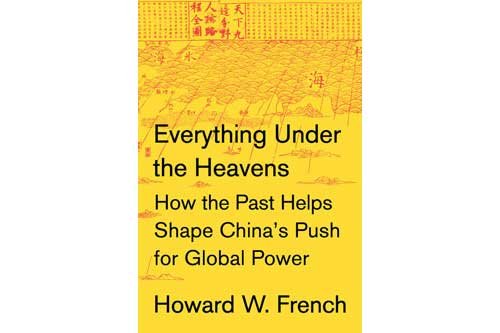
This book by French is a must read for anyone attempting to either deal with or understand China and its collective, historical mind set (and it will help you to understand much of Asian history and thought). Early in the book there is a map of China and its “sphere of influence” which was drawn up many years ago but which is still used in China. Within that sphere, which is the civilized world (i.e. the part of the world which China believes and appreciates the superiority of China in all things; cultural, language, trade, etc.) and owes homage to China; this includes Southeast Asia including Indo-China, the Philippines, Indonesia, Malaysia parts of India, Bangladesh and parts of Pakistan and outside of the “civilized” world is the uncivilized world. It is the belief within China that the “civilized” world is China’s natural sphere of influence and that the post-Cold War alignment must be overturned to unseat the U.S. and to allow China to assume its natural and historic place of predominance.
China’s claims over this vast area is based on their “discovery” of these lands, much as Columbus “discovered” the “New World”. According to Chinese historians, those lands, seas, islands, etc. were totally ignorant until China began to bestow their favor upon those lands and peoples. Harkening backing hundreds of years, China reflects on how their great admiral, Zheng He sailed to those lands with a great armada of over 200 ships and some 20,000 soldiers. During that time, when the admiral landed at any area with his 200 ships and 20,000 soldiers, the natives demanded to pay tribute to China for enlightening them. No, Zheng He was not a conqueror, for he did not build forts or destroy local villages, he just mentioned that he would be back. In the West, this is called protection money ala Al Capone, but to the Chinese mind, this was a simple give and take; we show up with overwhelming force and you pay us.
With that mindset, China looks out onto the lands and seas around them, bend on restoring the idea of Chinese superiority over its neighbors and undoing the humiliation that occurred during the 19th and 20th centuries when not only Europeans but even the Japanese took advantage of China’s weakness. The only thing standing in the way of the great correction is the United States.
China is aware of the current power of the U.S. but, reflecting on its long history, China takes the opposite approach of the U.S. to problem solving; whereas the U.S. sees a problem and moves to correct it, China is willing to wait for further developments which may change the dynamics of the situation. Of course, this can also work to the negative side of the equation, but China still has the option of immediate action.
Because of China’s view of the “civilized” vs the “uncivilized” world and their historical view, they have the ability and willingness to make what in our minds would be outrageous claims, such as claiming mineral rights hundreds of miles from their coast line or intimidating neighbors even up to the others territorial waters.
In the long term, China believes it can make the U.S. back down as they build an arsenal which can threaten our carriers at extreme long ranges, while our allies lack the will and financial strength to add substantial muscle our military efforts. Japan is an excellent example, with its huge long-term debt and low birthrate.
Is China fated to achieve its goals? There is a dangerous window, from 2020-about 2040 or 2050. But then demographics begin to work against China as the long-term result of the failed “one-child” policy creates the same problem as Japan only to a much larger extent. In the meanwhile, the growth of the U.S. through immigration (hopefully of skilled and fully westernized immigrants) will steadily decrease the long-term power of China. This does not mean that China, when it begins its decline, will not lash out in a violent reaction, but hopefully by that time its population will realize that they have more to lose than to gain by any such actions.





Leave a Comment