

American professor, George H. Stein wrote that the Waffen-SS was “the largest multi-national army ever to fight under one flag”. The Viking was represented as the model for this type of unit and it fought exclusively on the Eastern Front against the Soviet Union. It was limited to this theater as it represented the concept of a battle for Europe against the “Asiatic hordes” from the East. The Wiking fought in many of the hardest battles in the East, including Shitomir, crossing the Dnepr, the winter battle of Rostov, the invasion of the Caucasus, the defensive battle of Kharkov, Tcherkassy (a battle often called “Hell’s Gate”, Kovel, and Hungary.
How many non-German Europeans fought in Wiking and how important were they to the German war effort? In August 1941, it’s rolls showed 1143 Germanic volunteers, consisting of 631 Dutch, 294 Norwegians, 216 Danes, 1 Swiss and 1 Swede. Despite losses of over 120 killed and wounded, three months later the number had gone up to 1416 Germanic volunteers. Certainly not a significant number in an invasion that included about three million German troops. By the summer of 1943, the number had grown to about 2300 so the contribution to the German war effort was still numerically small, but large for propaganda purposes. It must be remembered however, that this number is after two years of hard fighting and often staggering losses. For example, even though the Finnish volunteers were only with the division for two years, they had suffered 255 members killed and there were no Finns in the unit in August 1941.
The concept of a pan-European army leading a crusade against the Soviet Union managed to produce several war time legends, one of which was the Rexist leader, Leon Degrelle. After the tactical success during the breakout at Tcherkassy, he was awarded the Knights Cross and greeted as a hero in Belgium. His unit suffered severe losses, but it was held up as an example of the fighting youth of Belgium. As the war drew to a close, the volunteers from all the nations faced a dilemma: do they go back home where they could easily be tried as traitors or fight to the end. French volunteers in the SS division Charlemagne (probably about a battalion in strength), fought to the death in the chancellery in Berlin, while other took their changes by returning home where most were given prison sentences. Degrelle fled to Spain where he lived in exile until his death in 1994. He was flamboyant while in exile, wearing his SS uniform with medals when his daughter wed in 1962.
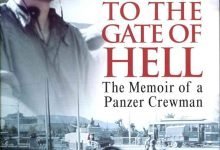
The book is written in a straightforward manner without any histrionics. It is an excellent reference book for anyone doing historical research.




Leave a Comment