

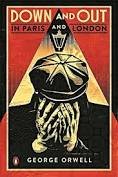
Orwell was a keen and brutally honest observer of poverty which he experienced firsthand during the early 1930’s. His descriptions of poverty and the struggle to survive in two of the most famous and richest cities of the world read more like something from the Middle Ages as individuals scurry from place to place hoping to find a meal, a crust of bread or a place of shelter. In fact, one is tempted to keep looking at the copyright date to make sure it is not a work of historical fiction set in some dark, dismal land and time.
Seeking employment in Paris, Orwell frequently went without food for three days as he went from restaurant to restaurant seeking the meanest employment. Finally, he finds a job in one of the best hotels in Paris but only as a plongeur or “diver”, the lowest rung of the kitchen staff. Assigned every filthy job, from cleaning out the grease traps so spending endless hours washing dishes, he was able to earn enough to at least pay his rent and feed himself on his one day off. The best thing of the job was that he was provided a meal by the restaurant, even if at times it was only the leftovers from the paying guests. Cleanliness was not a strong point in the kitchens as no one had time to sweep what ever fell on the floor, be it bit of meat, vegetable shavings, grease, etc. and one had to be careful as one shuttled through the kitchen to not slip and fall into the muck. If a cooked chicken slipped off the plate onto the floor, a quick wipe with a dirty towel made it good enough for the diners. The cook tasted each dish or tested the temperature with their thumb, cleaned it in their mouth and move onto the next dish.
Finally promised a better restaurant position, Orwell left his poorly paid but more secure position for a new restaurant, only to find after providing weeks of free labor, the working conditions were worse and the pay more erratic. He managed to borrow money and headed to London where he hoped for more opportunities. In London he found little work and spend weeks wandering London all the way to Kent, on foot, looking for a roof and hot meal. He learned that the word “tramp” came from the almost nomadic existence of the unemployed as they “tramped” from one county to another, seeking the best bed and charity ward. Surviving on bread and tea, only occasionally having a bath (often having to share the same bath water with several others, one after another), his descriptions of the personalities and charity wards against harkens back to an earlier age.
It is said the poor shall always be with us, but in Orwell’s time, drugs were not the scourge they are today, and many of the poor and “tramps” were honest laborers who had simply lost a job at the wrong time and during the depression, were unable to crawl back into the workforce. This is an excellent little book that is sobering in terms of poverty and society. It is truly timeless.