

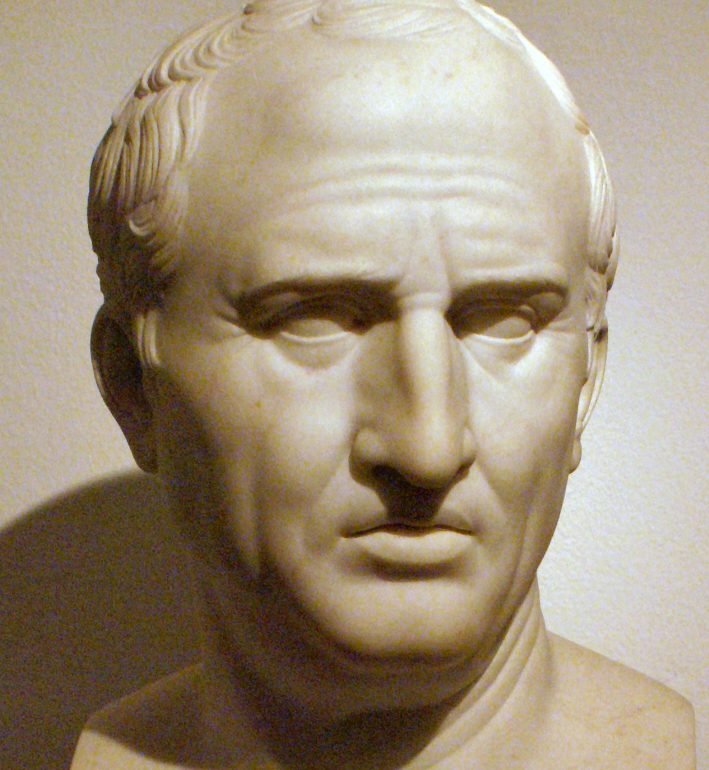
Marcus Tullius Cicero was well known during his life (and for centuries afterwards until the decline of a classical education), for his work as an advocate and speaker during dangerous times in Rome as it moved from a weak Republic, through Dictatorship and into the beginnings of the Empire. Why do we know so much about Cicero? Mostly because so much of his legal and philosophical writings survived through the ages, much of it written by himself, naturally putting himself in the best of lights. He loved to write about himself so much that he managed to write two biographies of himself (sounds like a certain President we know) concentrating on the one major accomplishment, his actions in putting down the Cataline conspiracies.
In Rome at that time, advocates such as Cicero did not charge fees, but their clients would make them “gifts” both during their lifetimes and often in their wills. The result was that Cicero could have been a wealthy man (he owned 9 villas) but he was also a spendthrift who never seemed to stay ahead of his debts. This became even more important during the time of the conflicts between Pompey and Caesar, as wells as during the time of the “good men” who opposed Caesar. While Cicero was a conservative and in favor of the Republic, when push came to shove, he tried to straddle both sides and, in the end, neither side needed or wanted him. Like Brutus, Cicero was (in my opinion) unprincipled and out solely for himself (contrary to the opinions of the author, Voltaire and Gibbon).
This is a good read, easy but it does help if you have at least a passing knowledge of the times and personalities.





Leave a Comment