

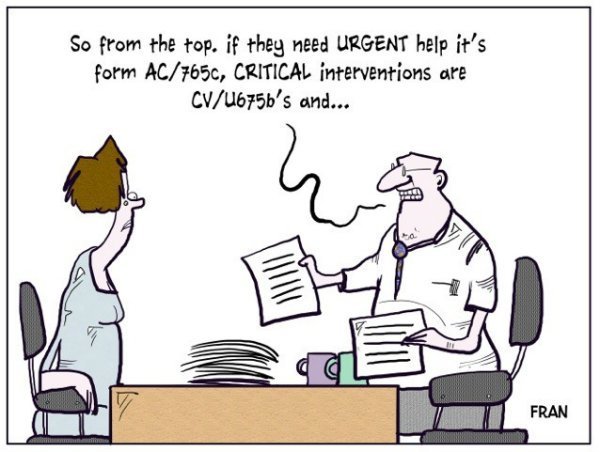
Several years ago, while on a visit to the U.K., I stopped at a small village north of the Cotswolds for some fish and chips. While I was happily munching on the excellent treat, I struck up a conversation with a local and the one thing led to another, and we began to discuss the NIH. I mentioned that I did not see any signs for a doctor’s office in the village. He replied that of course there were no signs or advertisements as the village had no doctor and that the nearest GP was some fifty miles away. I stated my amazement, and he went on to tell me that everyone in the village was excited as the traveling government dentist was coming to town for two days.
Never having heard of a traveling dentist, I asked for clarification. It seems that once a year, the dentist visits the village and sets up shop. There are no appointments, everything is on a first come, first served basis which of course, leads to quite long lines. You wait your turn; a procedure is done and out you go. I mentioned that the service must be quite perfunctory, and he agreed. What I asked if you need to come back for a follow up procedure. “Simple: come back the next day and get in line, no preference given. When it is quitting time, he packs up and leaves.” It was an amazing conversation and like the rich American, I sat there wondering how such a system could be endured. But as my new friend said, the service is free!
Just before the pandemic, my Canadian in-laws were visiting and one of them developed a nasty toothache. We called our dentist, and an appointment was set for the next day during which time the problem was solved. My father-in-law was amazed that he, a Canadian could be taken as a patient the very next day and treated in such a professional manner, all at a, in his opinion very reasonable fee.
I have had some interesting conversations with Canadians who seem to be very happy and proud of their “free” health care. When I mention that nothing is free and they spend several months more paying taxes than we do in the U.S., they could not make the connection. While they seem to be all for the system, the number of Canadians who come to the U.S. for procedures is quite large; perhaps when they have a life-threatening medical problem things look different.
There is no secret that we in the U.S. are beginning to feel a medical problem develop. Some friends have recently moved to Palm Desert, and they have been looking for a doctor who will take new patients but have had no luck for over half a year.
The linked article lays out the challenges that the U.K. faces with its’ NHS due to multi-generational welfare, massive illegal immigration, fraud, etc. The U.S. is facing and will be facing (thanks in part to the multi-million influx of illegal immigration during the past two years with no plans for corrective action) many of the same problems. Altering a system under stress is never easy, but reasonable minds must come together and look for solutions without being concerned about vocal activists’ minorities, upcoming election cycles, etc.
https://www.gatestoneinstitute.org/19089/socialized-medicine






Leave a Comment