
On The Other Hand -
Book Reviews
Lifestyle, Cigars & More
Musings
About
On The Other Hand -
  • Book Reviews
  • Lifestyle, Cigars & More
  • Musings
  • About
Government, Musings, Society

Sorry, You are too Late

October 22, 2023 by Barry J. Klazura No Comments

In an abrupt about face interview, Henry Kissinger has reversed his earlier support of massive immigration from Africa and the Middle East to Europe.  Unfortunately, this about face comes too late for the nations of Western Europe (Poland and Hungary have never subscribed to the promised but failed benefits of mass immigration).  No one likes to admit they are wrong, but Kissinger unlike Germany’s Merkel says in the connected article, that the inability of the immigrants to make attempts to assimilate to the dominate culture/laws/morals of their new homelands, have created an ever-expanding problem for most of Europe.

How so? 

  • In France there are over 750 “no-go zones”, which house about eight percent of the population of France.  The central government and local services have little if any authority in these zones.
  • Sweden’s number of rapes has exploded so that only Lesotho in South Africa has a higher per capita count (Lesotho 91.6/100,000, Sweden 53.2%/100,000, USA 28/100,000, Denmark 7.3/100,000).  Of those convicted of rape, nearly 60% have a non-European background.
  • Throughout the EU, because of the ease of travel from one country to the next, even court orders for extradition are difficult to enforce as immigrants order to be expelled simply cross-national borders and start anew in a neighboring country. 

Additionally, the cost of housing, schooling, and feeding the increased number of immigrants is being felt by the citizens who are the taxpayers and who are witnessing a decrease in their services.  The old social welfare agreement between the governments and the citizens is breaking down.  With no work requirements, there is little incentive for the immigrants to learn the local language, seek jobs, etc.

How Western Europe will resolve these problems is a topic for an upcoming EU conference on immigration.  Sweden for one has put forward a proposal to use its military to augment the local police who are overwhelmed by the growing crime rate. 

It is a terrible thing to be elderly like Dr. Kissinger and realize that your advice was so poor.  Being an immigrant himself, perhaps he assumed other immigrants would realize the opportunity offered to them.  He did not however, consider the entirely different mentality of immigrants who arrive from nations and areas where Western liberalism is often viewed with mistrust and disgust.

https://notthebee.com/article/100-year-old-henry-kissinger-says-that-mass-migration-was-a-grave-mistake-in-response-to-seeing-arabs-celebrating-hamas-in-europe

Share:
Reading time: 1 min
Uncategorized

The Fishing Fleet by Anne De Courcy

October 20, 2023 by Barry J. Klazura No Comments

From 1671 until the fall of the Raj and the independence of India, many thousands of English women would make a long and often dangerous journey to the Raj to find a husband. The voyage was known as “The Fishing Fleet” and those women who failed in their quest went back to England on a voyage called “The Empties.”  Most of the women were away from home for the first time and as the running of the Raj was a male endeavor, the women who landed at Madras, Calcutta and Bombay were outnumbered by English males who substituted sports for sex while they paid their dues in an attempt to create a successful career. Thrown into a whirlwind of parties, balls, and sightseeing, they were the center of attraction and could receive numerous proposals after speaking to a man for only a few minutes.

The process started while the English presence in India was the domain of the East India Company who would pay for the passage and a stipend for eligible women to make the long voyage. After the Mutiny, this type of arrangement fell off, but given that there was a surplus of eligible women in the U.K. (approximately 750,000 a year), well, what was a girl to do?

For the males in the Raj, especially those in the Indian Civil Service (ICS), the opportunity for female company became less and less, especially after three decrees which created a color and social barrier between the native Indians and the white population. A young man in the ICS could expect to wait at least ten years before he could obtain a position and income by which he could afford to marry and any thought of having a relationship with a native woman was simply beyond the pale and an excellent way to end ones’ career. The men therefore led almost monastic lives as they travelled across India performing their lists of duties. For the ICS, military, planters and any other Europeans, there were simply not enough white females to go around. Any excess energy was directed towards sports such as hunting, polo, cricket, etc.

De Courcy does a wonderful job of putting one into the society of the time; while all of the balls and parties sound wonderful, she reminds the reader that it was customary to change as many a four times a day, not for fashion reasons, but because clothing would turn black from all of the bugs that the wearer would kill in the normal course of events.  Imaging dancing on a floor which is covered in a white cloth but which during the evening turns black and red from the squashed insects. Then of course you have the diseases (cholera, diphtheria, etc.) and the danger of rabies (even today, there is a death every thirty minutes from rabies in India).

Despite the challenges for both men and women, many marriages were made and then for the new bride, she would follow her husband off into the mountains or jungles where she would lead an insular life, often cut off from the exciting would which had greeter her. The housing could be rudimentary, and her husband might not have a “leave” to go back to a major city for twelve to twenty-four months. In the case of childbirth, she might go to a neighbor’s home if she had time or must make do with whomever was at hand. Whatever comfort she would have from her children would often stop at the age of six as both boys and girls were sent back to England for their education. If the children were lucky, they would stay with an aunt or uncle, but if not, they would live years at the various schools, often alone during the holidays. Women were therefore torn between staying with their husband or leaving to care for their children. After ten years or so, the children would go to India to see a father and mother they hardly knew except through letters.

As usual, De Courcy has provided the reader with a realistic view of the subject matter. The decisions that individuals had to make and the challenges they faced will make most readers realize how fortunate we are in how we live today.

Share:
Reading time: 3 min
Cigar Reviews, Lifestyle, Cigars & More

A Macanudo Tasting

October 15, 2023 by Barry J. Klazura No Comments

I recently received a gift pack of four different Macanudo cigars and it provided an opportunity to have my very own taste test between two sets of two cigars.  I found a world of difference and thought you might find the results helpful. Note: I did not smoke the two cigars on the same day as it might have impacted my taste.

Cigar number one was the long standing Macanudo Hyde Park which is a 5.50 x 49 light colored cigar.  The wrapper is Connecticut, the binder is from Mexico and the filler a Dominican Republic/Mexico combination.  While it lit well and burned evenly, I found it to be a “hot” smoke right from the beginning and it had a harsh after taste.  It was a real surprise to me as the Hyde Park has been around for a long time so I might have just had an odd blend that was not quite right. Aside from the issue of being a “hot” smoke, I found the taste bland and uninteresting.

Cigar number two was from the Macanudo Cru Royale line; it was a Robusto 5 x50. Here was a pleasant looking cigar, darker in shade with an Ecuadorian wrapper, a binder from the Dominican Republic and a filler blend from Brazil, the Dominican Republic and Nicaragua.  This cigar was a much more pleasant smoke with a fuller flavor, an easy burn, and a bit of spice to add character.  The filler mixture really added so much to the taste. For a couple of dollars more, this cigar provided a better smoke and was much more interesting.

I hope this will help you the next time you are at your favorite cigar store looking for something new.  Enjoy!

Share:
Reading time: 1 min
Education, Government, Musings, Society

Dr. Mengele I Presume?

October 13, 2023 by Barry J. Klazura No Comments

The other day I was in a liquor store purchasing some liquid refreshment for a celebration and all around the store were signs warning that you had to be at least eighteen to purchase any alcohol.  Not eight years old, or fourteen, but eighteen.  Yet, there are those who walk among us who believe that children eight years old or younger can determine their “true” sex and demand that those children be treated with life altering drugs and operations.

The attached article by Christopher Rufo is shocking to read for he describes the hideous operations which are performed on children by licensed medical doctors. One immediately draws a parallel between those operations and the “war crimes” performed by Nazi doctors on children and adults in the concentration camps from 1940-1945.  Just as shocking and disgusting is the fact that many operations on performed on children who have the least amount of protection in our world, minorities from broken homes in the lowest income brackets.  Where are the advocates for those children whose lives are permanently altered and who will suffer pain for the rest of their lives, all in the name of “trans-genderism”?

I advise you to be prepared to be disgusted and outraged but read the article to fully understand the pain and perversity that some people are capable of inflicting on others.

https://imprimis.hillsdale.edu/wp-content/uploads/2023/10/Imprimis_Sept_8pg_9-23web.pdf

Share:
Reading time: 1 min
Book Reviews

The German War by Nicholas Stargardt

October 8, 2023 by Barry J. Klazura No Comments

 I seldom read any books on WWII any longer (as my library is chuck full of WWII histories and little that is new is published except for information provided by the opening of the Soviet archives in the early 1990’s), but this book caught my attention as it was reviewed as facing the question of the average German’s knowledge of the mass killings in the East.

From the Nuremburg Trials to the last 1980’s, Reitlinger’s The SS; Alibi of a Nation, shifted the blame and knowledge of mass murder to the SS, both front line and those SS in the concentration camps.  It did not matter that many SS were drafted from the navy or army or even the air force late in the war, those veterans were all branded as the ones to blame for all the crimes of Hitler’s Germany.

In the late 1980s, a new generation of academics and historians came out with important books such as Omer Bartov’s Hitler’s Army, Riess’s The Good Old Days, Ordinary Men  by Christopher Browning and even The Nazi Conscience by Claudia Koonz, in which the participation and knowledge of the murders became more widespread among the wider German nation during the period of 1939-45. 

Stargardt’s book, while not revolutionary (to anyone with basic knowledge of the period and subject), is interesting in that he lays out the argument that the combination of soldier’s letters home, amateur films taken by the troops at the locations where mass executions were taking place and soldiers stories while on home leave gave ample knowledge of the murders to the civilians on the home front. Further proof is offered as civilians, under increasing Allied bombing, stated that it was a reprisal for all that had been done to the Jews, while even as the Jews were expelled from Germany, Nazi propaganda blamed the Jewish worldwide conspiracy for the bombings and went on to exclaim that the war would only end up with the extermination of the Jews.

Near the end of the book (and the war), one can feel the desperation and hopelessness of the Germans as their illusions of miracle weapons evaporate and the realization that the war is lost; the sacrifice and work was for naught and the German’s came to see themselves as victims not only of the Allied bombing, but of a failed Nazi leadership (but they still retained faith in Hitler until he betrayed them by committing suicide).

A good book, well documented, a good read and I would recommend it to anyone interested in a concise history of the period.

Share:
Reading time: 2 min
Education, Environment, Government, Musings, Society

Junk Science

October 5, 2023 by Barry J. Klazura No Comments

When is science not science?  Apparently when you read about science in a “scientific” journal. It is one thing when demigods proclaim that science and math is racist, it is another thing when professional journals whose articles can impact people’s care and life decide to slant or exclude information which the editors dislike or dispute.  It seems unfortunately, that there are, indeed, individuals who willingly distort scientific papers that do not conform to their individual prejudices and/or political beliefs.

There is a great deal of pressure to publish in the academic and scientific community, and it appears that certain “professionals” have diluted or even changed the results of their studies to conform to these pressures.  That is bad enough, but what is even more ugly is when previously trusted professional journals set out informal or even formal guidelines for approved narratives. And, with the demand for more spectacular findings, a perfect storm is created between the pressure to publish and the demand for adhering to the “correct” narrative.

The attached link will take you to a sad tale that simply fuels the increasing mistrust of our governmental and social institutions.  Printing the truth of findings is not enough; findings must be exciting and adhere to the ideology of the editors.

https://www.wsj.com/articles/how-preapproved-narratives-corrupt-science-false-studies-covid-climate-change-5bee0844?page=1

Share:
Reading time: 1 min
Book Reviews

Independent People by Halldor Laxness

September 28, 2023 by Barry J. Klazura No Comments

After visiting Iceland, I was eager to read this book which won the Nobel Prize in Literature in 1955.  It is an interesting novel, based on an individual farmer who is determined to create and maintain his independence.  Having been a bonded man for eighteen years, he then spent twelve years paying off a piece of land which is remote and considered a poor prospect for a successful sheep farm.

The main character is an ignorant, dull man who knows little of the world and whose entire existence is centered around raising his sheep.  He is callous towards the women and children in his life, his life is brutish and dependent upon factors over which he has no control, such as the weather, markets, etc.  For several hundred pages we follow this man, hoping that at some point his struggle for independence will allow him to interact with others in a positive manner.  Good luck!  He stumbles through life, nobly facing adversity but seemingly unable to learn from his errors and life.

Reading this book, I fulfilled my yearly venture into Nordic literature and although this book is considered an “Icelandic epic”, it is in fact another of those dark, brooding Nordic stories which reflect the geography and history of the people.  Reviewers note the main character’s “flinty determination to achieve independence” when in reality he is a slave to his lack of rational thought.  There is something dark and brooding in Nordic/Scandinavian literature which one can feel when visiting the area.  Perhaps it is the long dark winters or the lack of grand purpose to their lives, perhaps it is the realization that their time has long passed and so they attempt to assume an air of moral superiority when they realize they are but bit players in the world, but this novel captures the isolation and distance of that land.  Caution! You do not want to read this novel while listening to Leonard Cohen.

Share:
Reading time: 1 min
Book Reviews, Government, Society

The Tragedy of Liberation: A History of the Chinese Revolution, 1945-1957 by Frank Dikotter

September 24, 2023 by Barry J. Klazura No Comments

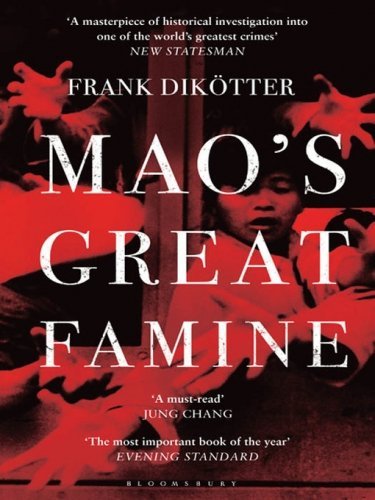
Following on the publication of the prize-winning history, Mao’s Great Famine, Dr. Dikotter’s history of the first twelve years of the seizure of China by the Communist Party under the leadership of Mao Zedong is the tale of brutality, cruelty, starvation, beatings, executions not of thousands, not of hundreds of thousands, but of millions.  The dream with the ending of WWII for the average Chinese, be they in the cities or as most lived, in the countryside of some sort of return to normality was not to be, and that average Chinese was the one who paid the price for the failure of that dream.

There can be no doubt that the regime of the Nationalist under Generalissimo Chiang Kai-shek and the various warlords was vicious, cruel, and corrupt.  Young men were dragooned, chained together, and marched off to fill the armies of both the government and the warlords.  Taxes were high and corruption existed at every level.  The occupation and war forced on China by the Empire of Japan extended and multiplied the suffering of the Chinese people.  The promises and strict discipline of the Communist forces under Mao created an image of stability and hope for the masses. Once in power however, the Communist regime exhibited every fault and cruelty that each Communist regime, be it the Soviet Union, Cuba, Albania, etc., has practiced since 1917.

Once in power, Mao mirrored the same tactics of the Soviet seizure of power; one by one, the landlords, the richer peasants, the small shop owners, the larger company owners and directors, the intellectuals, the students, and so forth were targeted for separation from the mainstream of society and persecuted.  Who did the persecuting?  Each of the other targeted groups who hoped that by joining the mob punishing the targeted group de jour that they would not be the next target, or if they were, that their willingness to show their zeal in supporting the purges would somehow buy them either a period of grace or a lesser punishment.  They found however, that there would be no mercy coming from Mao and his circle as they moved to create a “new man” in their idealized image.

Famines, floods, plagues and more were forced upon China not by nature, but by the ignorance and grandiose schemes of the ruling elite, all of whom were controlled by Mao.  Although Mao faced an awkward period after Khrushchev’s four hour “secret” speech against Stalin, he managed to maneuver himself and fool his potential rivals into giving him more power so that he could launch the infamous Let a Hundred Flowers Bloom campaign which led once again to a purge and murderous slaughter of those Mao felt could be against him.

A read of this book can be exhausting due to the excellent scholarship and information provided by Dr. Dikotter.  It seems somehow that the history of the CCP has not received the same type of public exposure as that of Hitler’s regime or the more murderous Soviet Union.  This excellent volume is a real contribution to a realistic public airing of the price that will be paid again and again if the lessons of history are ignored.  I know the old argument, “this time it will be different”.  Only a fool mouths those words.  Mao once declared that experience “has taught us to lean to one side”; every time I hear words like those, such as “lean in”, I fear that history has not been learned.

Share:
Reading time: 2 min
Book Reviews

The Forsaken Army by Heinrich Gerlach

September 18, 2023 by Barry J. Klazura No Comments

One of the great battles of World War II, Stalingrad consumed the lives of an estimated 1,000,000 men on both sides.  The stories of human suffering, and bravery, of lost illusions and shattered idealism are legion and yet we seldom really can understand the pain of the men involved in epic battles.

When you think of it, the concept of men fighting in sub-zero temperatures, with little or no shelter, for months on end with little food, who are shelled, outgunned and faced by a foe who is both vengeful and afraid is unknowable to we who read about the battles.  But Gerlach, who fought at Stalingrad and was one of the few (5000 out of 91,000 captured), did manage to survive and create a story woven from the experiences of other Germans who were captured. 

What few people realize is that the fighting was to a large extent, carried on by the few frontline troops who had to face the guns, tanks and cold alone on a windswept steppe.  Tens of thousands of other Germans were the support troops who lived in the ruins of the city in basements, shattered rooms and dug outs which provided them with a level of protection and comfort that was unknown to the frontline soldiers.  These support troops stayed behind the lines until late in the battle when some of them were placed into special “assault” battalions; untrained in combat, they were simple cannon fodder, thrown into the breach and accomplished little other than to die for the Fuehrer.

The unsung heroes of the battle were the doctors and orderlies who tried to perform miracles for the wounded.  Tired and overworked, lacking pain killers, clean bandages, even a warm room from which to work, they spent long hours cutting, stitching and battling to save lives.  And yet, even if they were successful in their operations, the wounded most likely faced little food, no heat and unsanitary conditions as they were lined up by the hundreds in basements or even outside to suffer and freeze.  The images of wagon loads of wounded men, slowly freezing to death because there was simply no more room for them in the pathetic shelters will make any reader realize how terrible and pitiless war is to the participants.

Gerlach has created an excellent history of a battle, seen from men at the point of danger.  No sweeping scenes of mass movements of men, no brave words to stir one’s heart, this novel brings war down to its lowest level; the men in the trenches whose only knowledge of the war and battle is as far as they can see.

Share:
Reading time: 2 min
Government, Musings, Society

Canada: The Cost of No First Amendment

September 15, 2023 by Barry J. Klazura No Comments

I believe that most Americans (citizens of the U.S.), view Canada as I use to; a beautiful country filled with polite citizens who are just like us.  The reality, however, is very often much different.  Many Canadians dislike the U.S., seeing us as being rude and crude, tending to throw our weight around too much.  That perception comes from watching our television programs who display far too often the absolute worse of American “culture”.  Being until recently, a relatively homogenous nation, Canadians could not grasp the problems of being a multi-ethnic nation where “minorities” number in the tens of millions (remember the population of Canada is slightly less than the population of California).  They marvel at our level of gun violence, and to a large degree, resent the fact that so much of their trade is centered on the U.S. They mock our health care system (while leaving Canada’s long wait times for treatment and coming to the U.S. for life saving operations) and cannot understand why we put up with a Bill of Rights which often flies in the face to Canadian policies.  In a way, over time, I have found many Canadians to be rather defensive, as if they are in awe of the giant next store to them.

The article linked below presents a recent overview of why we Americans should be so proud of our Bill of Rights, for it helps to protect us not only from the worse abuses of government but helps to limit the types of hoaxes which arise in Canada from time to time.  The Indigenous children who supposedly died (killed?) at various religious schools in Canada is an example of the weakness of the Canadian “commissions”, “inquiries” and “councils” and the semi-persecution of Jordan Peterson shows that no one in Canada is safe from the self-righteous anger of those who oppose honesty and blunt truth saving. I am hoping that at the very least it will make you investigate some of the examples mentioned in the article.

https://www.nysun.com/article/drive-to-re-educate-jordan-peterson-over-his-online-comments-underscores-growing-threats-to-freedom-of-expression

Share:
Reading time: 1 min
Page 21 of 70« First...10«20212223»304050...Last »

Barry J. Klazura

Barry Klazura sipping grappa

With a Masters Degree in Guerrilla Warfare and Totalitarianism, Mr. Klazura was well prepped for a career in Sales and General Management, consulting on corporate startups and turnarounds as well as lecturing on history and politics.  For the past twenty years he has focused on being a financial advisor and consulting.

Delivered To Your Inbox

Sign up to get an email when a new article is published.

Topics

  • American Civil War
  • Biography
  • Book Reviews
  • Cigar Reviews
  • Coronavirus
  • Current Affairs
  • Education
  • Environment
  • Factoids
  • Government
  • Lifestyle, Cigars & More
  • Liquid Refreshments
  • Musings
  • Quips and Historical Facts
  • Society
  • Travel
  • Uncategorized
  • World War I

Subjects

book Books-Russia/Soviet Union Books 21st Century Books 1919-2000 Books Ancient to 1900 Books Asia Books Biography Books Fiction Books Germany 1919-1945 Books Pre-WWI books Viet Nam books world war I Books WW1 Books WWI Books WWII Cigar Friendly Location Amsterdam Cigar Friendly Locations-London Cigar Friendly Locations-New Orleans Cigar Friendly Locations-New York Civil War Coronavirus Environment Korean War World War I World War One

Recent Articles

At Stalin’s Side by Valentin Berezhkov

July 15, 2026
The Price of Victory by N.A.M. Rodger

The Price of Victory by N.A.M. Rodger

June 26, 2026
Frontsoldaten: The German Soldier in World War II by Stephen G. Fritz

Frontsoldaten: The German Soldier in World War II by Stephen G. Fritz

June 5, 2026
Organizer of Victory, 1943-1945, George C. Marshall by Forrest C. Pogue

Organizer of Victory, 1943-1945, George C. Marshall by Forrest C. Pogue

May 26, 2026
Illegals Released & Our Leaders

Illegals Released & Our Leaders

May 10, 2026

Inquiries and Comments

For general inquiries and comments, email AOTOHcomments@gmail.com.

Facebook
© 2020 And On The Other Hand. All rights reserved.