
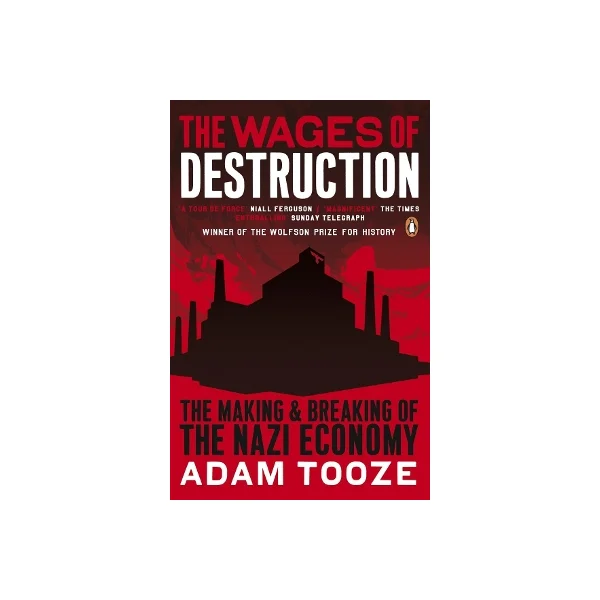
I have studied many aspects of the period from 1932-1945 such as military, mobilization, campaigns, politics, etc., but this book brings a neglected aspect of national power into sharp focus. Other histories have hinted at the fringes of the subject, but in this single volume we are able to examine how the economy, the quest for raw materials, how reserves of foreign exchange, etc. impact and drive both domestic and foreign policy.
Hitler was not a fool economically; he fully understood the long-term German economic and geo-political situation and he outlined it in Mein Kampf. In the long run, Germany could not win a war of attrition as it had neither the population, land mass, agricultural basis, raw materials, etc. of its combined potential adversaries, such as the Soviet Union, the British Empire or the United States. As a result, time was a crucial factor for Hitler as he sought to fulfill his goals. While his generals were supportive of his goals, they lacked the understanding of economics which forced Germany to fight wars that would be short and brutal.
An example of this need was Hitler’s demand that within a few weeks of the defeat of Poland, that his armed forces be able to strike in the West. His generals were filled with doubt; the British and French were much stronger than Poland and were in fact stronger than the German military; if the weather would not be perfect, the Luftwaffe could not be used to the best purpose; would it not be better to be on the defensive and let the enemy come to the Germans; the original plan for an invasion of the West was a re-warmed Schliffen plan that did not aim at a knock out punch but rather committed Germany to a possible replay of the First World War. Hitler understood that time was not on Germany’s side. The British were rearming, they were buying military hardware from the U.S., his war machine ran on oil and his supply was limited and a replay of the First World War could not come out any differently. Above all, economically, Germany could not afford to be on the defensive, nor could Germany afford to a war of attrition in the West. Thus, the appeal of von Manstead’s Sickle Plan.
In attacking the Soviet Union, while the racial hatred was a factor, the main goal of the war was to gain access to the oil, grain and minerals needed by Germany so that it could be able to hold off the power of the British Empire and the United States. Again, Germany needed a short, sharp, brutal war, one which could be won in six to eight weeks as after that, time, distance and economics would work against a German victory.
I recommend this excellent book to any serious student of Nazi Germany; it brings fresh information and an excellent viewpoint to any discussion of that time. After reading this book, you may have a second opinion of your perceptions of that time period.