
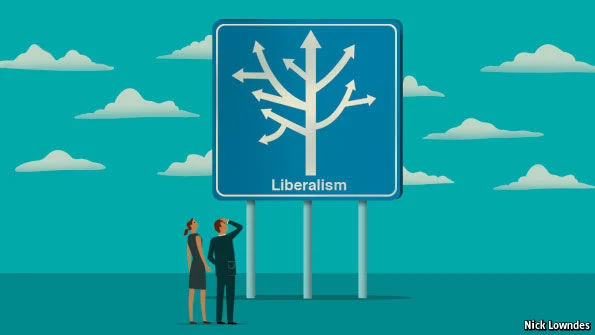
The term, “liberalism” or the idea of being a “liberal” has changed since its first coining in Great Britain. There have been four distinct phases of “liberalism,” each one responding to the changing economic and political currents of the time.
The linked article by John M. Owen IV outlines each separate phase starting with what he calls “first-stage” or “classical” liberalism. This phase considered that the main threat to individual liberty came from the despotic states of the time. Our Founding Fathers were liberals in the “classic” sense. This phase had its strong and weak points, but it was during a time of dramatic political change and its attempts to avoid contradictions were not always successful.
The second stage was when classical liberalism moved into “welfare liberalism” during the time of the industrial revolution and was in direct conflict with the theories of Marx. The third state of liberalism developed during the 1970s and it is commonly known as “open liberalism”. It threw out welfare liberalism which it viewed as being burdened by over regulation and concentrated on the development of the individual. This has led to societies which show few if any boundaries which has in turn led to a breakdown of traditional rules and regulations as well as a restriction of personal freedom. It has alienated non-western societies as it constantly tests any and all boundaries.
Finally, we come to “pluralistic liberalism” which “must create space for individuals who want to bind themselves to norms, communities, and ways of life that require long-term commitment.” Does this sound a bit like “conservatism”? Perhaps liberalism is in the process of going full circle in recognizing the chief threat to individual freedom by substituting the mindless mob for the despotic state.
It is worth an evenings reading to settle in and fully digest the linked article.
https://www.firstthings.com/article/2024/08/liberalisms-fourth-turning