

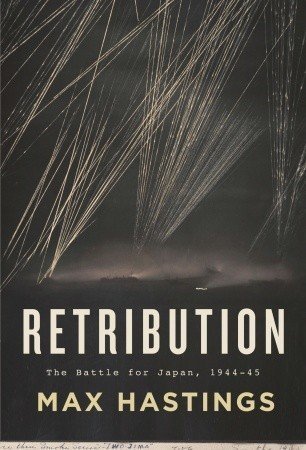
One of the advantages of building a library is the luxury of being able to go back and re-read the books which are worthy of being in your library. There are certain books in my library that I have read several times over the years; why? Some are wonderful novels (such as the trilogy by Sienkiewicz) or the dissent novels by Rybakov. Others are histories filled with a myriad of facts or insights (think of Richard Evans, Richard Overy or William Manchester). I love that they can clutter my brain with obscure facts that I can pull out during a conversation or discussion on a related topic. Those books are special and fall into a special category of those which can be re-read every five years or so and be as fresh and entertaining as the first time they are opened.
Retribution by Max Hastings is one of those rare military books that falls into that special category. It has all the prerequisites of a great history book. It provides a broad overview of events, then focuses down to the strategies and tactics involved in those events. Another key element is that it is loaded with obscure facts which I find so interesting and even useful (in the right company at the right time), an example of the obscure is when he writes about the development an problems with the largest single expenditure of the war (even more costly than the Manhattan Project). Did you know that “The construction of a B-29 required 27,000 pounds of aluminum, over a thousand pounds of copper, 600,000 rivets, nine and a half miles of wiring, two miles of tubing.”. Do you care? But it is that type of detail that when you realize the U.S. produced thousands of those planes that you begin to realize the enormity of the war. Or that with the defeat of Nazi Germany, Canada announced that only those citizens who did not wish to stay in the war to defeat Germany could cease war activities.
His narrative is especially excellent when he goes down to the basic level; that of those doing the actual fighters. Some are British troops fighting in Burma, one of the worse areas of combat in the war and the least reported and celebrated. The humidity, rains, foot paths which turned into thick, boot sucking mud, poor food and an enemy who fought with determination even though many died of hunger. What about the survivors of the kamikazes? How could they survive, how many volunteered, how many were drafted into the ranks and how did it feel for those who taught the new pilots to see their poorly trained students take off knowing that they were doomed. Every nation which fought in the Pacific is highlighted as brave and pathetic stories are woven through the book.
This was my third reading of this history, and it will occupy a special place in the library; a place where timeless quality of writing and research is noted and I confess, I shall read it again in a few years and enjoy it just as much.


Leave a Comment