

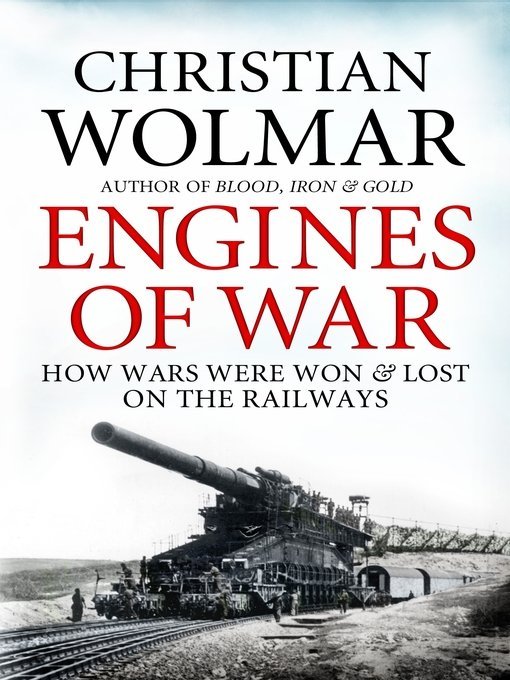
The logistics of war is a science often neglected. A prime example of this was when Japan attacked the US, their soldiers went to war with 2 pounds of logistical support (supplies, shipping, etc.) while the US soldier had 4000 pounds to support him. The result was a forgone conclusion and not even Japan’s best-case scenario (a negotiated truce where they could keep some of their gains) was possible.
The advent of trains added new dimensions to war; suddenly campaigns could be supplied further from the homeland and war did not have to take a break during the winter when traditionally armies were broken up and dispersed widely in order to not totally plunder the land. More men, more supplies could be moved to threatened points of conflict and the result was longer, bloodier wars.
This book is a bit of a disappointment in that it does not fully portray the full scope of the impact of railroads. There is an interesting discussion of A.J.P. Taylor’s thesis that railroad tables led to wars, but it is counter balanced by the strategic goals (in this case of Russia and France against Germany). Other volumes have pointed out the huge logistical undertaking of war; while it is interesting to try to grasp that 11,000 trains were re-directed in a campaign, that number does not tell you of the freight involved. How many meals, guns, coats, boots, etc. were moved and delivered to the right units at the right time? Or, there is no real discussion of how the lack to railroads going in the right direction led to French armies being beaten during mobilization by the more strategically designed Prussian railway system.
This is a good book for the novice, for someone who wants to get a very basic grasp of the impact of railways on war, but it will lead one to look for follow up volumes on the subject.





Leave a Comment