

A few years ago, my wife and I spent a month in France, starting at the Normandy battlefields and driving eastward towards Verdun. It was an amazing trip as we covered several different wine making areas and ran across many monuments to battles and wars. It was clear to us that France was a nation that had suffered from hundreds of years of war. One special find was just outside of the hedgerows of Normandy on a quiet side country road. A marker had been placed which outlined a skirmish between a U.S. infantry patrol and a German platoon backed up by an armored vehicle. A small accidental meeting of two groups of men in which the outnumbered and outgunned Americans were pushed back by the Germans. Some locals had decided to memorialize the long-forgotten clash so that later generations might realize that that lovely, quiet piece of land was not ruled by a hated enemy as it had been liberated at the cost American liberators.
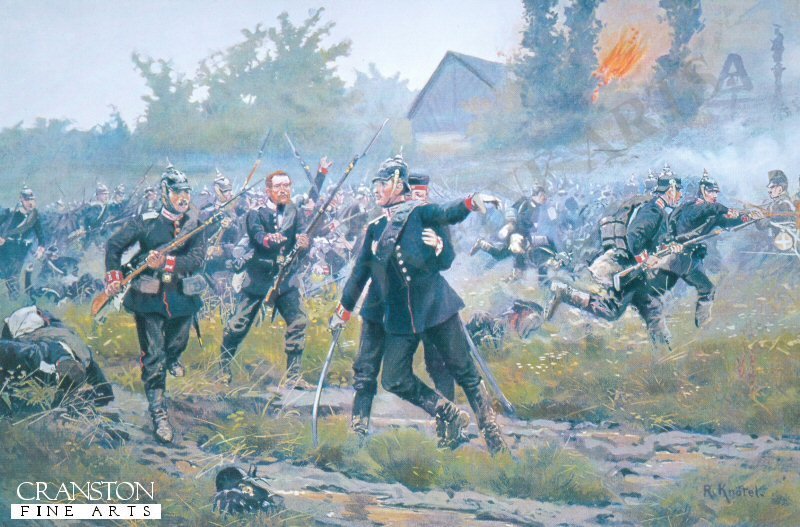
Later during the month, further east, we ran across a beautiful museum which was dedicated to the battle of Gravelotte, during the Franco-Prussian war of 1870. It is still vivid in my mind as it featured beautiful paintings of the battle which was the costliest of that war. The displays were so dignified and in keeping with the spirit of the current time and gave equal time and coverage to both the French and the Prussians. What a gem of a museum!
I bring those instances up because it was with great delight that I read a very positive review of Rachel Chrastil’s new book, Bismark’s War, The Franco-Prussian War and The Making of Modern Europe. While I was familiar with the war, it was primarily due to two biographies of Bismark, one by Alan Palmer and the other by Jonathan Steinberg, plus earlier books detailing the war. I was therefore surprised at the direction of this book, and I could not recommend this history to anyone who does not have some background of the war. Why? A few reasons:
- There is little attempt to put the war in context: Most histories would provide the basics of what led up to the war, which in this case could include Bismark’s two previous wars, the downward spiral of Napoleon III government, the tensions between the southern German states and Prussia, etc. The infamous Ems telegram is mentioned but not discussed. Given this lack of context, an uninformed reader would wonder why the title when it could have been Napoleon’s War.
- Military equipment: Why was the Prussian Guards unit so decimated by the French Chassepot rifle and the mitrailleuse and why did the Prussians use the needle gun? What made the Chassepot such a powerful weapon? Why was the Prussian artillery so superior to the French? How did the confusion at the start of the war on the part of the French impact their strategy? Etc.
- Personalities: While the major players are named, the reader is expected to know the experience/personality of each, such as von Moltke, von Roon, Crown Prince Wilhelm, etc. A bit of background would help the average reader understand the strategy and restraints on these individuals.
- Strategy: Early on there is a brief discussion of how military strategy had been changing, based in part on the foreign observers in the American Civil War. Unfortunately, that discussion was rather short so one is left to wonder why the lessons of that war were not more fully learned by some of the combatants. What was it about the European mind set that allowed it to ignore the terrible impact of modern weapons with their increase in range and rate of fire? Did the Europeans view the American experience as not applicable to Europe since the Americans were amateurs whereas the Europeans were the masters of war?
- Personal detail: Since the war was fought on French soil, it is natural that any discussion on the civilian population would be more French based but there is little discussion regarding the impact on the German population. How supportive was the average Southern German to the war and did the mobilization of so many men negatively impact those economies? Nearly all the personal detail was based on the French experience and given the higher literacy rate in Germany, one would expect to find more detail on the attitude of the German civilians from memoirs, news reports, etc.
- Lastly, how was Bismark able to string together the German coalition give the general dislike and mistrust of the Prussian power, the religious differences between the northern and southern Germans and the natural inclination of many German states to surrender their sovereignty over international affairs. That story is amazing and shows the brilliance of Bismark, but you will not find out about it here.
The author has done good research in several areas but seems to assume a general knowledge of the average reader. I believe that being the case that most readers who possess a modem of curiosity will walk away with more questions than answers. I would like to recommend another book for the first time reader of this war: The Franco-Prussian War by Geoffrey Wawro.




Leave a Comment