

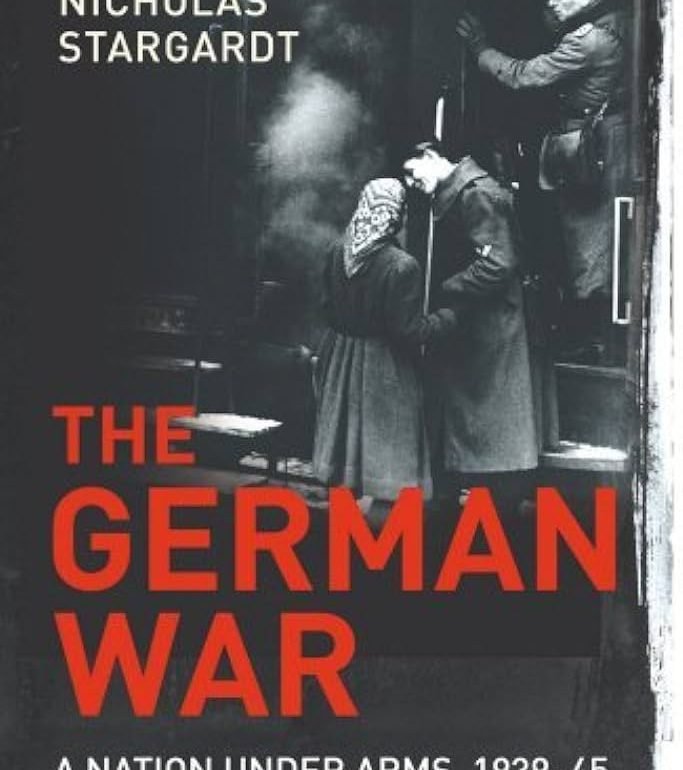
I seldom read any books on WWII any longer (as my library is chuck full of WWII histories and little that is new is published except for information provided by the opening of the Soviet archives in the early 1990’s), but this book caught my attention as it was reviewed as facing the question of the average German’s knowledge of the mass killings in the East.
From the Nuremburg Trials to the last 1980’s, Reitlinger’s The SS; Alibi of a Nation, shifted the blame and knowledge of mass murder to the SS, both front line and those SS in the concentration camps. It did not matter that many SS were drafted from the navy or army or even the air force late in the war, those veterans were all branded as the ones to blame for all the crimes of Hitler’s Germany.
In the late 1980s, a new generation of academics and historians came out with important books such as Omer Bartov’s Hitler’s Army, Riess’s The Good Old Days, Ordinary Men by Christopher Browning and even The Nazi Conscience by Claudia Koonz, in which the participation and knowledge of the murders became more widespread among the wider German nation during the period of 1939-45.
Stargardt’s book, while not revolutionary (to anyone with basic knowledge of the period and subject), is interesting in that he lays out the argument that the combination of soldier’s letters home, amateur films taken by the troops at the locations where mass executions were taking place and soldiers stories while on home leave gave ample knowledge of the murders to the civilians on the home front. Further proof is offered as civilians, under increasing Allied bombing, stated that it was a reprisal for all that had been done to the Jews, while even as the Jews were expelled from Germany, Nazi propaganda blamed the Jewish worldwide conspiracy for the bombings and went on to exclaim that the war would only end up with the extermination of the Jews.
Near the end of the book (and the war), one can feel the desperation and hopelessness of the Germans as their illusions of miracle weapons evaporate and the realization that the war is lost; the sacrifice and work was for naught and the German’s came to see themselves as victims not only of the Allied bombing, but of a failed Nazi leadership (but they still retained faith in Hitler until he betrayed them by committing suicide).
A good book, well documented, a good read and I would recommend it to anyone interested in a concise history of the period.





Leave a Comment