

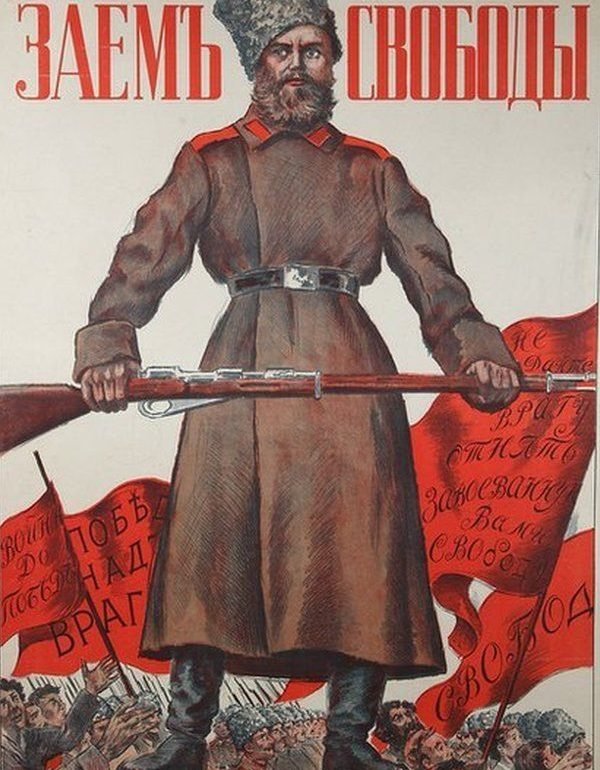
A revolution is a terrible time of death and destruction. Some revolutions are justified, some are not; some are begun with the highest of intentions, some are started with the most common of intentions. If followed by a civil war, the misery and destruction to lives, property, morals, industry, and traditions is even greater. Finally, add an ignorant and easily led mass of humanity that has suffered under a form of government which has only used those masses for its own enrichment, and you will begin to understand the revolution and civil war in what was known as Russia from 1917-1921. Millions of people, most of them innocent and caught between forces they neither supported nor understood were tortured, raped, robbed, and murdered often by methods that only the most insane and hate filled savages could have devised.
Anthony Beevor, an excellent military historian has tried to put together in one place a comprehensive history of the Russian revolution and civil war. It was a huge task as the period is filled with countless political, military and outlaw factions that ranged across a land that covers one-seventh of the globe. Each faction is filled with personalities guided by, for the most part, the basest of emotions, greed, illusions of grandeur, ignorance, hatred, etc. Few of those factions have any real program except survival and a hope that they can eliminate some other faction that is in the neighboring town or province. They are used and discarded by allies and often just as quickly ally themselves with yesterday’s foe.
All do except the Communist faction. Driven by a vision that was simple for the most ignorant to grasp, and enforced by a single-minded discipline, the Communists were, from a central position able to fight and defeat their poorly disciplined enemies. In a time when entire villages were destroyed for providing horses or food to one faction, normally at the point of a gun, the “Reds” as the Communists were called, were able to our terrorize the masses and their foes, the “Whites”, a loose group of armies over-officered, reactionary and possessing no simple program to offer anyone in the middle.
The groups which made the first Russian revolution in March 1917, the bourgeoise and “intellectuals” were quickly devoured in the terrible times that followed the seizure of power by the “Reds”. Of course, the “Reds” were driven by the fierce will of Lenin and his will was enforced by the drive of Trotsky, the terror of Dzerzhinsky (in my mind, the purest revolutionary I have run across) and to a lesser degree Stalin. As was to be seen later, the other “intellectuals” among the “Reds” would easily fall to the pragmatic Stalin.
As the civil war drew to a close, Lenin seemed to believe his own propaganda as he turned his armies westward in an invasion of the newly created Polish state. Seeing a land of magnates who oppressed the peasants, he misjudged the hatred of the Poles for anything Russian. Instead of being the first step in the eventual invasion of Germany and the beginning of a worldwide revolution, the “Reds” were soundly defeated at the battle of Warsaw, a battle of importance equal to the defeat of the Turks at Vienna in 1683 by the Poles.
Beevor has done an outstanding job of allowing one to view the enormity of the revolution and civil war. Most people will have a challenging time keeping track of the various factions and leaders, especially if one is not comfortable with Russian names (the more the syllables, the more beautiful the name). A pad of paper and a pen might be of help. The one area that was a disappointment in this book is the same that I have for other of his volumes: not enough of the personal touch. Many historians used diaries, unpublished manuscripts, etc. to bring that delicate touch to the narrative, but Beevor, in my opinion or my personal taste, falls short. Perhaps one of the reasons in this book is that we have to remember two things: 1) most of those who participated were illiterate peasants who could not leave a record and 2) both the victors and vanquished used their memoirs to either justify their actions at a higher level or in order to show the correctness of the party line (especially those of the “Reds”). Yet I would still strongly recommend this fine work but be prepared that after you put it down, you will know that it shall be re-read in the future to truly begin to appreciate its excellence.






Leave a Comment