

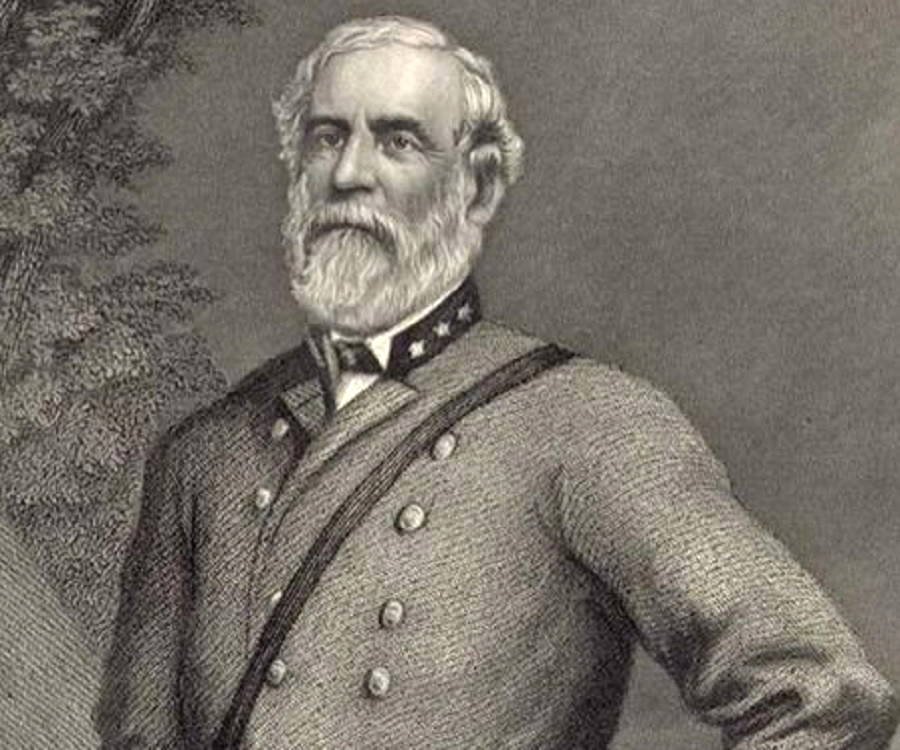
At the end of last November, I posted a review by Victor David Hanson of the new biography by Allen C. Guelzo. I purchased the book although I thought I was familiar with Lee’s life, but I was very pleasantly surprised by this book. Although the author considers Lee a traitor, he is very even handed and treat Lee as a man full of doubts, cares, and desires so that you feel a connection with Lee.
Lee had his own devils, including adoring his father, Henry Lee, a hero of the Revolutionary War, also known as “Light Horse Henry,” for his daring wartime actions. A failed land speculator, Henry left his son early to escape creditors and each time Lee looked at a business venture, he always saw the image of his failed father over his shoulders. Those land failures were also at the base of Lees’ constant concern about money and attempts to safeguard his families’ small holdings in Virginia. In turn, those concerns were part of his reason to side with the Confederacy during the war. He was devastated when Arlington, his father-in-laws property (todays Arlington Cemetery) was seized by Federal troops, and he realized after the war that the property would never be his in anything except a dream and a memory.
Although we tend to think of Lee as a military man, he had never commanded troops in battle until the outbreak of the war and he was at heart, an engineer. Several times he thought of leaving the military with its low pay, slow promotion, and postings which he disliked (including Superintendent of West Point Academy). Each time, he pulled back due to the security of the army and its steady paycheck.
As a military commander, he is a mixture of positive and negative. He allows his commanders as good degree of freedom to conduct his general orders which worked with Jackson and Longstreet, but it was a disaster as the war went on and the thin core of competent officers was decimated. He had a difficult time discipling failed officers such as Stuart’s disappearance at the time of Gettysburg and would often merely show his displeasure by a time of silence. Finally, he did not stand up to Jefferson Davis who meddled in military affairs by appointing favorite officers who had terrible records, such as Hood and Bragg.
After the war, Lee tried to keep a low profile as the calls for his trial, especially after the murder of President Lincoln enflamed many high politicians. His work at Washington College was good although he took no steps to integrate the school. It reflects his view of blacks and his unwillingness to move against popular feelings. He did broaden the curriculum and was said to have regretted having received a military education (he went as far as to advise his sons to avoid a military career).
While Lee appeared to dislike slavery, he did nothing to move against it. He was a man of his time and as in his personal life, took a slow and cautious time in his movements.
Lee comes across as a solid man, conservative, considerate and gentle. He was a man who kept his feelings to himself and the humiliation of his surrender to Grant was borne with little commend for the rest of his life. One does not come away with a feeling that he was a happy or content man; his life had numerous failures and lost dreams, but he presented himself as a dignified, kind, confident man who others would gladly follow. An interesting combination and in some ways an enigma.



Leave a Comment