

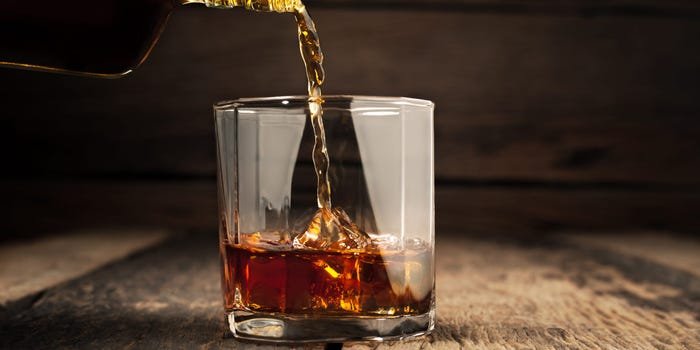
I was recently invited to participate in a whiskey tasting/seminar, and being of strong intellectual curiosity, I was persuaded to attended (someone must do it!). It turned out to be quite interesting and cleared up some questions I have had for years. So, let’s see what we found out!
The tasting was of three quite different whiskeys:
- From Japan, Kikori, a rice whiskey
- From the U.S., from the Hirsch distillery, The Horizon, a straight bourbon whiskey
- From Scotland, Old Pulteney, a single malt scotch whiskey
Firstly, there are a few simple things to know regarding some terms in the whiskey world. For example, a single malt is simply a malt whiskey from a single distillery, while a blended is a blend from two different distilleries. One might believe that a single malt might be “purer” in the sense of having a consistent taste, but the taste can vary based on a number of factors, such as the outside temperature. A hot or cold year impacts how the wood of the barrel expands or contracts which affects the taste.
Another interesting thing to remember is that bourbon is a mix of corn, barley and rye as opposed to scotch which is based on barley. The amount of corn, barley and rye will naturally impact the taste, but bourbon must be at least 51% corn or higher and at least two years old to be labeled bourbon. The more rye in the bourbon, the spicier, the more corn, the sweeter.
When tasting, you spirit should not hit the tip of the tongue as there are few taste buds there; the most taste buds are on the center and sides of the tongue. For a first taste, keep your tongue just outside of the rim of the glass, and open your mouth more to catch more of the aroma of the liquor.
But what about the three samples? Let’s take a taste and see what we found but I admit that my sense of smell or even taste is not of the highest order, so I make not claim to being a gourmet!
KIKORI: A very lightly colored whiskey as you would expect, as it is made from rice. It is 41% alcohol and eighty-two proof and has a noticeably light taste. If you add water to it, the flavor may increase a bit but can dissipate very quickly. This might be a whiskey for a beginner or (excuse the assumption) a woman who is about to explore whiskey. Although I am hardly a whiskey connoisseur, this is too weak for me, I want to feel I am drinking something with more of a fight.
HIRSCH, THE HORIZON (Bourbon): Here we have a 46% alcohol and a 92-proof bourbon whiskey. A nice bronze-gold color is attractive and on the back of the bottle is the ratio, age and mash bill of the liquid. For example, 94% of the mix has aged four years and eleven months and it is made up of 75% corn, 21% rye and 4% barley malt. This has much more of a fight to it and a splash of water or a small ice cube releases more aroma and taste. It can be drunk neat (no water) and is a real sipping liquor. A nice taste, easy to come to appreciate.
OLD PULTENEY, 12-YEAR-OLD SINGLE MALT SCOTCH WHISKEY: The distillery is in Wick, Caithness which is about as far north in Scotland as one can go. It is not the end of the world, but about two blocks from it. Interestingly they used American Oak barrels (well, there are not many local trees). It is a lighter color than The Horizon and is 40% alcohol and eighty proof (I would have assumed that Scotch had a higher proof than bourbon). It has a stronger taste to it and a bit of water does it little harm. I have found that I personally prefer scotch that is about 12 years old vs a 15-year-old but then it is all personal taste. This is a sipping scotch, when you are reading or solving the problems of the world with your friends.
All three run in the $48-53 price range.
I hope my experience will help you approach your next whiskey with a bit more knowledge and who knows, help you set up your own tasting. Enjoy!






Now I can call you for sure: Gentlemen and a scholar and a judge of a good whiskey!
Good job Berry, I am sure that your favorite wife Caroline is very proud of you !