

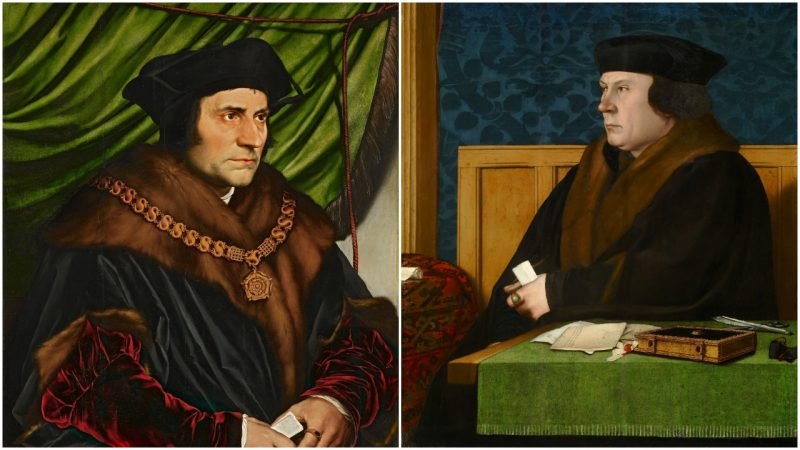
There was a seried called “Wolf Hall” on PBS which painted a vavorable impression of this man who has been painted as the arch-enemy of a saintly Thomas More. I have read two bios of Thomas More and have come to see him as an early totalitarian; he dogmatic, given to wearing horse hair shirts, and given to burning heretics while enjoying the company and debates with Erasmus. In “A Man for All Seasons”, Cromwell was painted as the money grubbing, sneaky servant of the King, so I looked forward to this book. If the movies favorable to More could be so slanted, what is the truth about Cromwell?
Borman paints Cromwell as a complex, self-made man in an age where such talents and drive, coming from a “common man” were seen as a danger to the established order, represented by the old noble families in Europe. Yes, he was corrupt but not outside the accepted bounds of his time. Yet he was generous to the poor and helped even the families who fell from favor (often with his help) of an egotistical, paranoid and shallow king.
A fighter who succeed despite the prejudices of his day, he was a faithful servant of the king as the king only realized after Cromwell’s fall from power.
A well written book, the hardest part reading some of the passages written in Old English (if you read quickly Old English is not that difficult, it is merely that the words are often spelled according to the writer; it is before standardized English was adopted). One comes away with a respect for the man who survived in a harsh political atmosphere; his faults were exaggerated by history and his enemies. A worthwhile read.






Leave a Comment