

In April 1939, just before Hitler invaded Poland “officially” beginning the Second World War, Franklin Roosevelt wrote a letter to Hitler making a case for peace. It was a good letter, written with sincerity but it was a waste of effort. Roosevelt felt that he could win over Hitler (as he later felt he could win over Stalin) with his charm, logic and reason. In the letter, Roosevelt wrote, “Are you willing to give assurance that your armed forces will not attack or invade the territory or possessions of the following independent nations: Finland, Estonia, Latvia, Lithuania, Sweden, Norway, Denmark, The Netherlands, Belgium, Great Britain and Ireland, France, Portugal, Spain, Switzerland, Liechtenstein, Luxembourg, Poland, Hungary, Rumania, Yugoslavia, Russia, Bulgaria, Greece, Turkey, Iraq, the Arabias, Syria, Palestine, Egypt and Iran.“
Hitler received the letter and a few days later during a speech to the Reichstag, read the letter to the assembled Nazi members. It is a famous bit of film (available on You Tube, “FDR & Policing the World: Hitler’s Threat) as Hitler mocks the President and as he reads out the list of nations above, the deputies burst out in roaring, extended laughter. The saddest part, is that at that time, the President knew that a letter like that was his only weapon against Hitler at that time. It was a dark day for the United States.
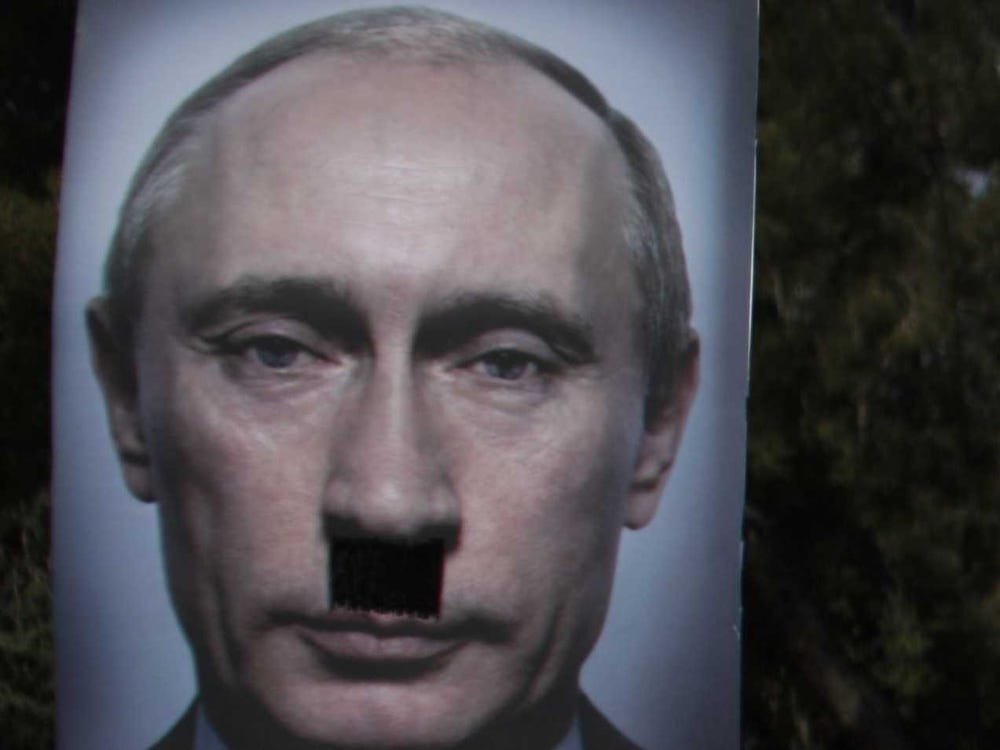
During the recent meeting between President Biden and Putin, our President presented a list of sixteen key infrastructures in the U.S. that are “off-limits” to Russian cyber-attacks. Apparently, other areas of the U.S. economy are just fine to attack. Although the list was clearly meant as a warning of sorts to Putin, the fact that such a list was presented was in itself, a sign of weakness. Why would any cyber-attacks be permissible, especially given the long record of successful Russian cyber- attacks in the past few years?
President Biden does not have a stunning record of successful foreign policy beliefs or actions. He has said, “I know we make foreign policy out to be this great, great skill,” and “all foreign policy is, is the logical extension of personal relationships”. Unfortunately for the President, as Mike Watson (Associate Director for the Hudson Institute’s Center for the Future of Liberal Society) writes, “We no longer live in a world of monarchs who forge political alliances through marriage”. Even during those times, those relationships failed miserably as was shown in the First World War when royal cousins sent their nations armies against each other. While the President claims he has “met every major world leader in the past 35 years”, he should remember President de Gaulle’s famous quip, “Treaties are like roses and young girls. They last while they last.” The history of national interests has seen many betrayals, breeches and disappointments. I hope President Biden is doing more to protect our infrastructure than to count on his relationship with Vladimir Putin.




Leave a Comment