

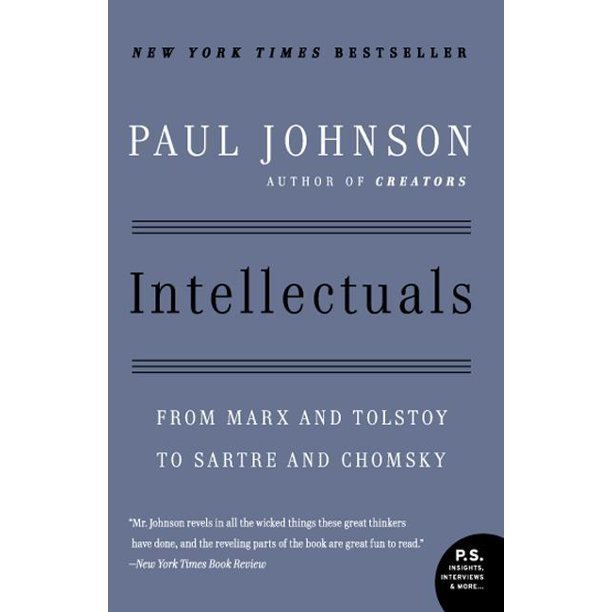
This book provides case studies of some of the major minds which shaped the modern world. These individuals were driving forces in literature, politics, economics and morals, not by the force of their expertise, but rather by their self belief that they had found secrets about mankind that no one else had found in thousands of years. Their egos were sufficient that they never bothered to ask, like Nietzsche, “if no God, then what?” for their answer was that they had become god, capable of constructing laws and rules for others. Each of them created their own universe at which they were the steady light, and despite their lack of morals, ability to lie outrageously, often lie around in their own filth and not pay back borrowed money, they found followers who hung on their every utterance.
Where did they come from and how could these individuals, many of who were boorish, crude and rude, gather such influence? Johnson provides the answer:
“Over the past two hundred years the influence of intellectuals has grown steadily. Indeed, the rise of the secular intellectual has been a key factor in shaping the modern world. Seen against the long perspective of history, it is in many ways a new phenomenon. It is true that in their earlier incarnations as priests, scribes and soothsayers, intellectuals have laid claim to guide society from the very beginning. But as guardians of hieratic cultures, whether primitive or sophisticated, their moral and ideological innovations were limited by the canons or external authority and by the inheritance of tradition. They were not, and could not be, free spirits, adventures of the mind.
With the decline of clerical power in the eighteenth century, a new kind of mentor emerged to fill the vacuum and capture the ear of society. The secular intellectual might be deist, skeptic, or atheist. But the was just as ready as any pontiff or presbyter to tell mankind how to conduct its affairs. He proclaimed, from the start, a special devotion to the interests of humanity and an evangelical duty to advance them by his teaching. He brought to this self-appointed task a far more radical approach than his clerical predecessors. He felt himself bound by no corpus of revealed religion. The collective wisdom of the past, the legacy of tradition, the prescriptive codes of ancestral experience existed to the selectively followed or wholly rejected entirely as his own good sense might decide. For the first time in human history, and with growing confidence and audacity, men arose to assert that they could diagnose the ills of society and cure them with their own unaided intellects: more, that they could devise formulae whereby not merely the structure of society, but the fundamental habits of human beings could be transformed for the better. Unlike their sacerdotal predecessors, they were not servants and interpreters of the gods but substitutes. Their hero was Prometheus, who stole the celestial fire and brought it to earth.” (Intellectuals by Paul Johnson, pp1-2)
Many of them believed that mans nature was changeable and in their desire to create a “New Man”, their philosophies lead to tens and tens of millions of deaths in wars, death camps, purges, as well as ruined careers, suicides, etc. The Progressive movement, home for many of the intellectuals in this book was an early supporter of the worse aspects of eugenics and advocated of birth control but only for certain segments of the population such as the poor, minorities and the uneducated. Despite their failed ideals and their person faults, they are today still read and followed.
Most people find meaning in their lives through their family, career, good deeds, etc., which means that they lead quiet lives which impact a small circle. Beware the “intellectuals” whose ego allows them to see themselves as endowed with special insights and who have found the way to Utopia as designed by their own prejudices and judgments.






Leave a Comment