

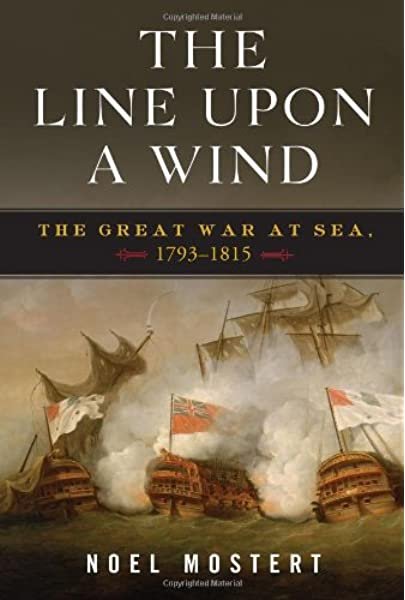
A massive (just over 700 pages) history of the naval battles between the United Kingdom and France during the time of Napoleon. It is an adventure story which spans the world as sea battles from India to the English Channel impact Napoleon’s campaigns from Egypt to Moscow.
There are two main characters for the first half of the book; naturally, one is Napoleon, the other is Lord Nelson. Nelson come across as driven, prone to military gambles (most of which succeed) and responsible for stopping Napoleon’s strategy at several points (Egypt of course, also in Italy and Spain) by a wise use of mobile naval power (Mahan would certainly enjoy this book). Napoleon was poorly served by his navy and the navy of his part time ally, Spain, but not for want of trying. Although the French navy comes off poorly both in the book and in history, it was suffering from the effects of the French Revolution which all but destroyed the artillery schools and the officer corps which was primarily from the aristocratic class. They ceased their lead in ship innovations and this allowed the British navy to catch up and then surpass the French.
It should be remembered that the victory by the British was not easily attained. The French and Spanish fleets were sheltered in harbors and their crews, while bored, had access to better food and of course, “entertainment”. On the other hand, the British fleet had to be at sea almost constantly, in any weather to keep the French fleet bottled up. This meant that, in the case of Lord Nelson, being on the ship and not touching land literally for years. Poor food, rough seas, bad water, etc. were the daily fare of the British fleet. Added to this is the fact that much of the British fleet was manned by men literally highjacked off the street and from taverns by naval personnel. There were not enough volunteers so any man could be taken off the streets and forced to work on the ships without notifying their families, etc. Many of these men never returned for the death rate on the ships was quite high. During the American Revolution, 1,243 British seamen died from battle, but 18,541 died from disease.
Given the harsh conditions of the navy, it is little wonder that there was only one mutiny in the fleet. It was harshly dealt with, but conditions did improve somewhat. Keel hauling was abolished and the number of strokes by the whip were reduced to a set number per day. Yet, despite this, the ordinary seaman did amazing sea duty and even performed well on several land campaigns.
This is a gem of a book in many ways. From the details of ship construction and provisioning, to the campaigns to the profiles of the various leaders, it satisfies on many levels. For the naval buff, it will also serve as a reference book for future referral.






Leave a Comment