

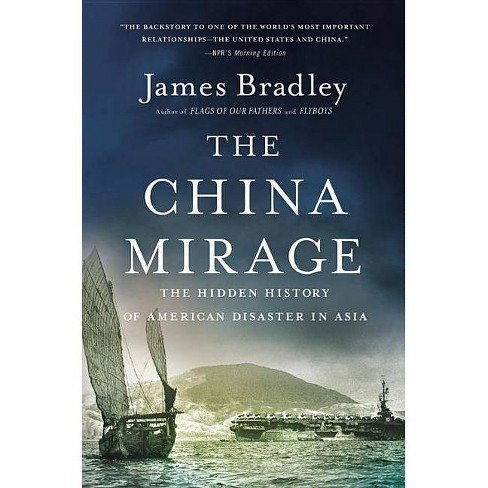
Mr. Bradley has written a number of excellent histories, including Flyboys and Flags of our Fathers. This volume covers the interesting history between the United States and China, from the time of the Yankee Clippers through the “opening of China” by President Nixon. In this book he unveils many interesting facts such as:
- That much of the money of the Eastern Establishment was made selling opium to the Chinese. In fact, the fortune that propelled Franklin Delano Roosevelt to the White House was based on the illegal trade of opium.
- The fabled “China Lobby” which helped to guide our Asia policy was based on an idealized vision of the average Chinese peasant wanting to be an American, believing in democracy and wanting to have a nice house with a beautiful lawn, etc.
- That due to the “China Lobby”, the U.S. spent billions to prop up the corrupt regime of Chiang Kai-shek and that he and his circle were responsible for the theft of hundreds of millions of dollars while not contributing to the war against Japan
- Finally, that U.S. Presidents, from Teddy Roosevelt to FDR to Truman were fooled by the Chinese, the “China Lobby” and their own ignorance of the world into believing that they could remake China into a western democracy.
Having read a number of books about the war in China, I am a bit skeptical of Mr. Bradley’s vision of the inaction by Chiang Kai-shek and unfortunately, he goes off on a complete revisions history of the U.S. in Asia after World War II. For example, he believes that Mao’s reaching out to the U.S. during and immediately after the war was an opportunity for the U.S. to steer Mao away from his Communist path. Does he really believe that Mao would have overthrown his life’s work, betrayed all of his writings and teachings and thrown over his base of support while shifting 180 degrees politically to work to create a democratic (as we understand it) China? In this, I believe Mr. Bradley is as optimistic, indeed as delusional as those in the China Lobby in their view of China.
The same can be said of his view of Ho Chi Minh with his thesis that Ho had reached out to the U. S. after defeating the French (and indeed during the war). Would a true democrat have slaughtered his political opponents as Ho did, and is it believable that Ho would have thrown over his writings, his disciples, etc. as Bradley suggest Mao would have done?
This book is in the first three quarters, well written and documented. There is no doubt that Chiang Kai-shek was a corrupt and brutal leader just as there is no doubt that the U.S. made many mistakes in dealing with China as a nation and in the terrible killings of Chinese here in the U. S., but to believe that the end result could be different than what we have experienced, seem to me to be optimistic and naïve. In the end, I believe the book is worth the read, but it will make you want to do more research.


Leave a Comment